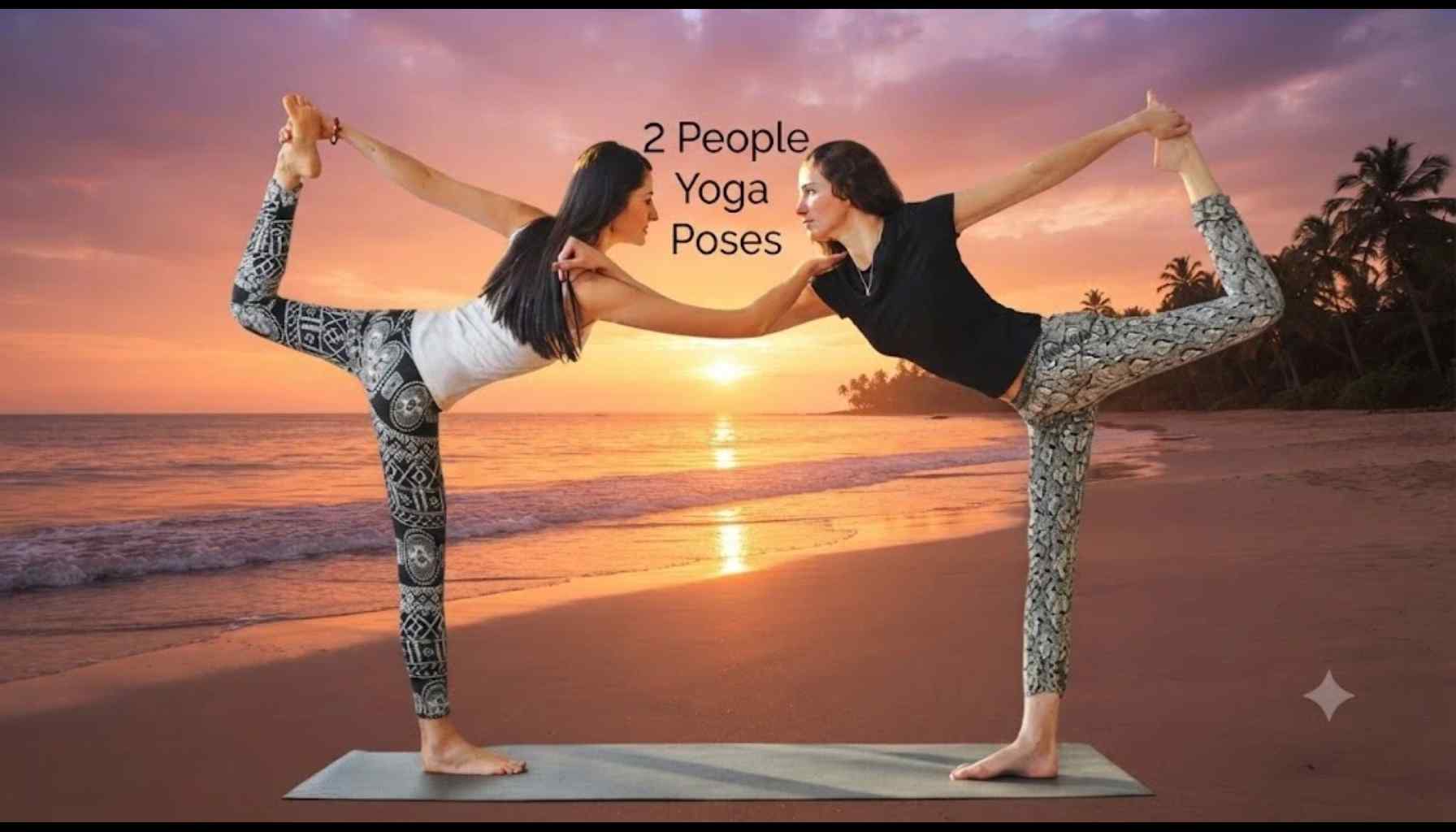
2 People Yoga Poses: Shared Practice
2 people yoga poses turn an individual practice into a shared one, using two bodies to build balance, trust and flexibility that solo yoga can't offer alone. Also known as yoga poses for two people, this style of practice works well for partners, friends or family members.
Key Takeaways
- Two-person poses build trust through shared weight and breath.
- Communication before and during each pose prevents most mishaps.
- Start with grounded, seated poses before attempting standing balances.
What Are 2 People Yoga Poses?
2 people yoga poses adapt traditional postures so two participants support, mirror or counterbalance each other. Rather than relying solely on personal balance, each person's stability depends partly on their partner, which builds physical awareness and non-verbal communication.
Benefits of Practicing Yoga With a Partner
- Cultivates trust and bonding
- Strengthens stretching by building on each other’s resistance
- Enhances balance from mutual cooperation
- Helps with breathing in sync and focus
- Incorporates a playful aspect that ensures consistency in practice
How to Prepare
- Choose a quiet space with enough room for two mats.
- Warm up individually before syncing movements together.
- Agree on a stop signal before starting yoga.
- Be open about your injuries and limitations.
- Begin with easy poses before moving on to difficult ones.
6 Yoga Poses for Two People
1. Seated Back-to-Back Breathing
- Sit back-to-back with crossed legs, keeping your backs barely touching.
- Close your eyes and breathe slowly in sync.
Benefit: Grounds both partners in calm, shared stillness.
Modification: Sit on a cushion if hips feel tight.
2. Partner Seated Forward Fold
- Sit facing each other and join your wrists when your soles touch.
- Take turns leaning back as the other folds forward gently.
- Breathe gently
Benefit: Deepens the hamstring stretch through shared resistance.
Modification: Hold behind the knees instead of the wrists.
3. Double Tree Pose
- Stand side by side, inner arms wrapped around the waists.
- Each one lifts the outer foot to the inner thigh or ankle.
- Continue breathing as you hold the pose
Benefit: Improves balance using mutual support.
Modification: Rest the lifted foot lower on the ankle instead.
4. Partner Cat-Cow Flow
- Face each other, seated or kneeling, and hold your forearms lightly.
- Inhale to arch and open, exhale to round and release.
Benefit: Syncs breath and movement while easing spinal tension.
Modification: Skip the forearm hold and mirror movements independently.
5. Supported Camel Pose
- One partner kneels into Camel Pose, reaching back.
- The other stands behind, offering hand support at the lower back.
- Hold the pose for few seconds with controlled breathing
Benefit: Deepens the backbend safely with steady assistance.
Modification: The kneeling partner keeps hands on hips instead of reaching back.
6. Double Boat Pose
- Sit facing each other, knees bent, feet touching, hold hands.
- Lift feet off the floor and straighten legs so soles press together.
- Breathe gently together.
Benefit: Strengthens the core while balancing as a team.
Modification: Keep knees bent instead of straightening the legs.
Counter Poses to Release Tension
a. Partner Child's Pose Release
- Step: Sit back-to-back and fold forwards into Child’s Pose together.
- Benefit: Stretches the spine after backbends and twists.
b. Standing Forward Bend, Side-by-Side
- Step: Stand side-by-side and bend forward while letting your arms and head dangle loose.
- Benefit: Relieves pressure on the spine after balance and core strengthening.
c. Partner Scorpion Pose
- Step: One partner holds Forearm Stand while the other gently supports the lifted legs into a backbend.
- Benefit: It builds deep trust and shoulder strength.
Meditative Poses for Two People
I. Seated Heart-to-Heart Meditation
- Step: Sit cross-legged facing each other; keep one hand on each other’s heart.
- Benefit: Deepens emotional connection through shared breath and stillness.
II. Back-to-Back Alternate Nostril Breathing
- Step: Sit back-to-back with closed eyes and practice alternate nostril breathing..
- Benefit: Calms the nervous system and synchronizes energy between partners.
2 People Yoga Poses vs AcroYoga
|
|
|
|
|
|
|
|
|
|
|
|
|
|
|
|
|
|
|
|
|
|
|
|
Precautions
Follow these measures while performing yoga poses for two people:
- Match strength and flexibility levels where possible.
- Never force a stretch to match your partner's range.
- Avoid poses that strain an existing injury.
- Stop immediately if either person feels pain or dizziness.
Wrapping Up
2 people yoga poses offer a simple way to deepen both your practice and your connection with another person. Start with grounded, gentle yoga poses for two people. Try to communicate openly, and let trust build naturally as you progress together.
Frequently Asked Questions
1. What is the difference between yoga and AcroYoga?
Yoga poses for two focus on gentle stretching and balance, while AcroYoga involves acrobatic lifts, often with one partner fully supported off the ground.
2. Is AcroYoga harder than regular yoga?
Yes, AcroYoga generally demands more strength, coordination and trust than standard two-person or solo yoga poses.
3. Can beginners try 2 people yoga poses?
Yes, beginners can start by practicing seated poses such as Back-to-Back Breathing and Cat-Cow Flow.
4. Do you need a partner with the same flexibility?
No, poses can be adjusted so that both partners have their own comfortable limit.
Also Read: Types of Bent Over Yoga
By Umesh Kumar Khiri

Discussion (0)
No comments yet. Be the first to comment!
Leave a Comment
You need to login to post a comment.