


Stress incontinence treatment with gentle yoga can encourage better breathing, posture and pelvic awareness. Stress incontinence occurs when physical activities such as coughing, sneezing, laughing or lifting put pressure on the bladder, causing urine to escape. It is not caused by emotional stress.
Imagine enjoying a morning walk, laughing with friends or practising your favourite yoga routine when a sudden urine leak interrupts the moment. For people experiencing stress incontinence, even simple activities can become uncomfortable. Over time, the fear of leakage may affect confidence and discourage participation in everyday life. Fortunately, a combination of pelvic floor exercises, mindful movement and appropriate medical care can help manage the condition. Yoga, in particular, offers a gentle way to develop body awareness, improve muscular coordination and support pelvic health.
Key Takeaways
- Stress incontinence can be managed through pelvic floor exercises, yoga and healthy lifestyle habits.
- Gentle yoga poses improve flexibility, breathing coordination and pelvic awareness.
- Early medical guidance and consistent practice can help improve bladder control and confidence.
Understanding Stress Incontinence Treatment
The pelvic floor is a group of muscles that supports the bladder, bowel and other pelvic organs. Along with the urethral sphincter, these muscles help control the release of urine. When they become weak or lose their ability to respond to sudden pressure, leakage can occur.
Common signs include:
- Urine leakage while coughing, sneezing or laughing.
- Accidental leaks during running, jumping or exercising.
- Leakage while bending, lifting heavy objects or standing up.
- Urine escaping during sexual activity.
Men may also experience stress incontinence, particularly following prostate surgery.
In case the problem persists despite lifestyle modifications and pelvic floor training, it is necessary to see a urologist or gynaecologist. The diagnosis could require a medical history analysis, physical examination, urinalysis and a bladder diary.
Based on its severity, the stress incontinence treatment could require pelvic floor physiotherapy, vaginal pessaries, urethral bulking injections and surgery. In some cases, postmenopausal patients could use vaginal oestrogen due to the symptoms of affected tissues. The surgical interventions could include slings; however, synthetic mesh surgery has some specific risks, which should be carefully discussed with an experienced surgeon.
How Yoga Supports Stress Incontinence Treatment
Yoga can become a valuable part of a holistic stress incontinence treatment plan. Its combination of controlled movement, breathing and muscular awareness encourages people to reconnect with their pelvic region. Stress incontinence treatment works best with consistent exercises and professional guidance tailored to individual needs.
Gentle yoga practice may help improve posture, flexibility, coordination and awareness of the muscles surrounding the pelvis. Certain movements also engage the glutes, hips and core, which contribute to overall pelvic stability.
Yoga Practices to Support Stress Incontinence Treatment
Stress incontinence treatment with gentle yoga can encourage better breathing, posture and pelvic awareness.
1. Bridge Pose (Setu Bandhasana)
- Lie on your back with knees bent and feet hip-width apart.
- Inhale and gently lift your hips without arching excessively.
- Hold briefly while breathing naturally, then lower slowly.
Benefits: Engages the glutes and surrounding muscles, encourages hip mobility and supports pelvic stability.
2. Bound Angle Pose (Baddha Konasana)
- Sit comfortably and bring the soles of your feet together.
- Allow your knees to move gently towards the floor.
- Hold your feet and breathe slowly without forcing the stretch.
Benefits: Opens the inner thighs, improves hip flexibility and encourages relaxation around the pelvic region.
3. Cat-Cow Pose (Marjaryasana-Bitilasana)
- Begin on your hands and knees, keeping wrists beneath shoulders.
- Inhale, gently arch your back and lift your chest.
- Exhale, round your spine and draw your abdomen inward gently.
Benefits: Improves spinal mobility, encourages coordinated breathing and develops awareness of abdominal and pelvic movement.
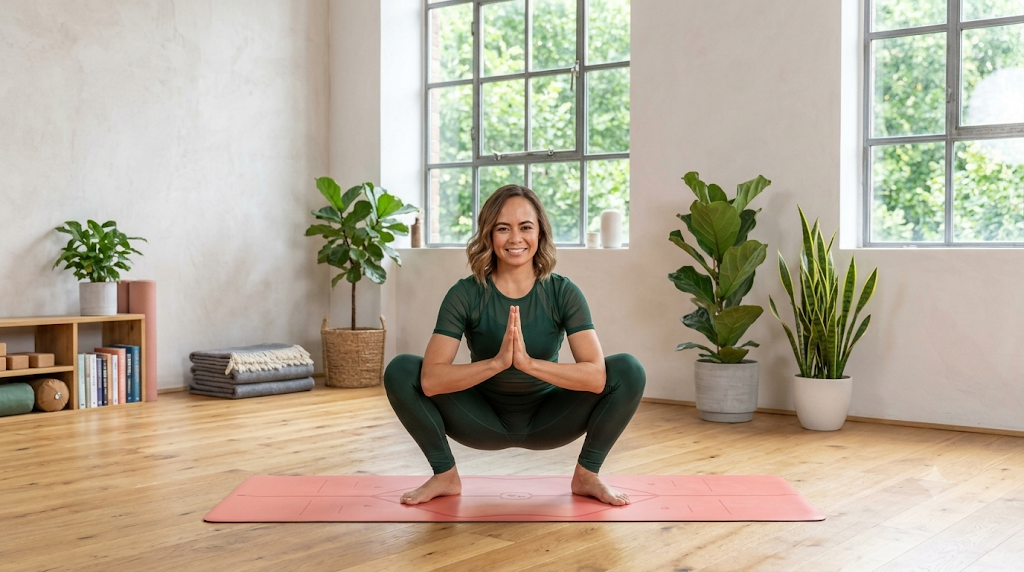
4. Garland Pose (Malasana)
- Stand with your feet slightly wider than hip-width.
- Lower into a comfortable squat, keeping your heels supported.
- Bring your palms together and breathe naturally.
Benefits: Encourages hip and ankle mobility and gently stretches the pelvic region. Use a block or chair for support.
5. Legs-Up-the-Wall Pose (Viparita Karani)
- Sit sideways beside a wall and gently lie on your back.
- Extend your legs upwards against the wall.
- Relax your shoulders and breathe comfortably for a few minutes.
Benefits: Provides a gentle restorative position, relaxes the body and helps release unnecessary muscular tension.
Everyday Habits That Complement Yoga
A few consistent lifestyle changes can make stress incontinence easier to manage:
- Maintain a healthy weight to reduce pressure on the bladder.
- Eat fibre-rich foods and drink adequate water to prevent constipation.
- Reduce excessive caffeine if it aggravates bladder symptoms.
- Avoid smoking, which can contribute to chronic coughing.
- Maintain regular bathroom habits without unnecessarily restricting fluids.
- Choose low-impact activities if high-impact exercise triggers leakage.
Finding Confidence Through Consistent Care
The stress incontinence should not limit the way people exercise, socialize and live their lives. The gentle yoga exercises and proper pelvic floor training together with a healthy lifestyle could help them manage the problem and feel more confident in physical activities. It takes time to achieve the result, and everyone has individual needs. Therefore, it is important to get professional advice instead of practicing only yoga.
Frequently Asked Questions
1. Can yoga cure stress incontinence?
Gentle yoga may improve pelvic awareness, breathing coordination and muscular control when combined with pelvic floor training.
2. Which yoga pose is best for stress incontinence?
Bridge Pose, Cat-Cow and supported Bound Angle Pose can be useful gentle additions to a routine. Kegel exercises remain particularly important for strengthening pelvic floor muscles.
3. How long does it take to improve bladder control?
Improvement varies. Consistent pelvic floor training over several weeks or months may help manage stress incontinence, depending on the severity and underlying cause.
4. Should I avoid exercise if I have stress incontinence?
Not necessarily. Low-impact activities and gentle yoga poses may be suitable. Modify movements that trigger leakage and seek advice from a pelvic floor specialist.
Also Read: Stress Incontinence
By Umesh Kumar Khiri

