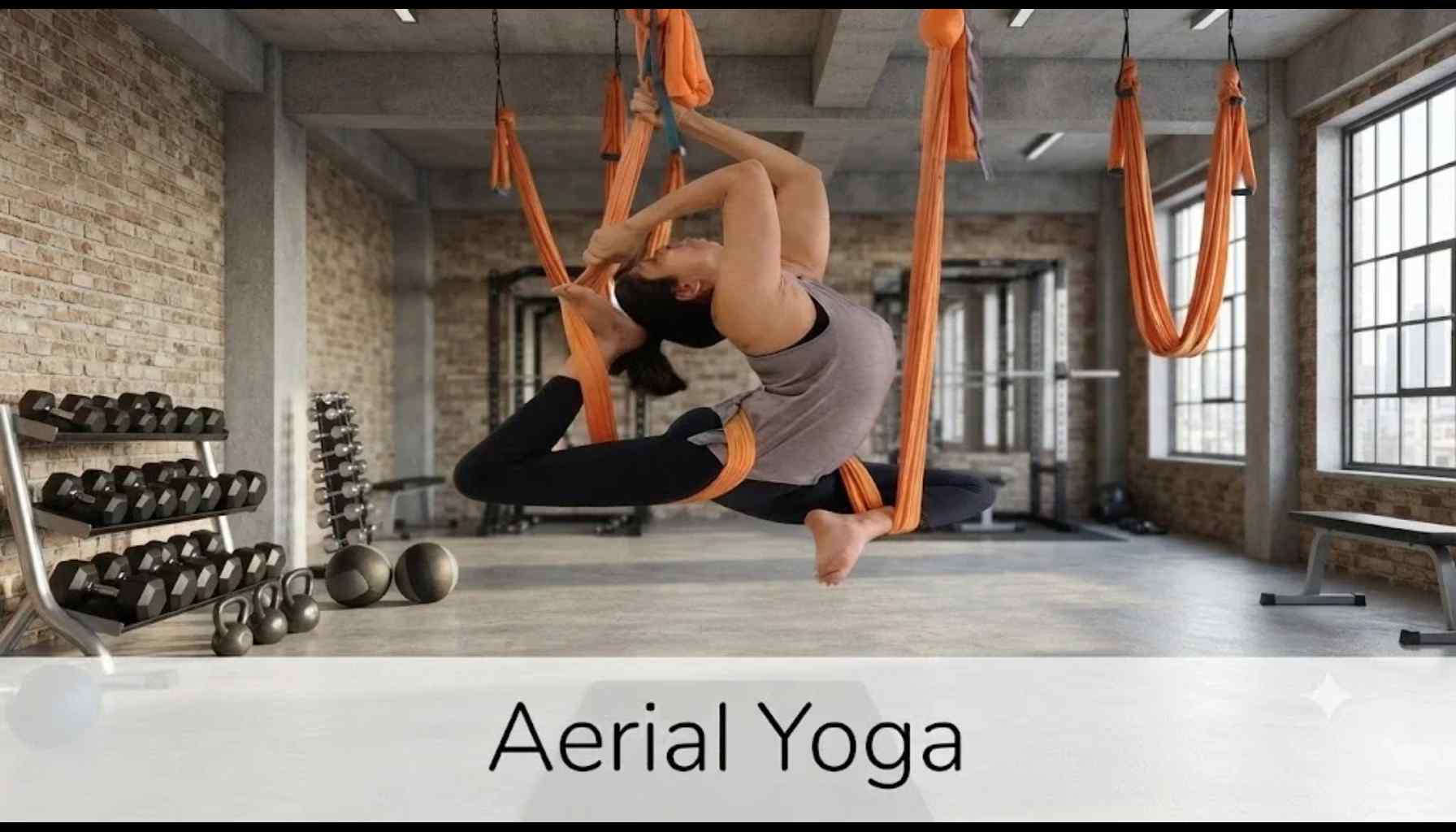
Aerial Yoga: Modern Twist and Benefits
Aerial yoga blends traditional asanas, Pilates-style core work, and dance-inspired movement using a soft fabric hammock suspended from the ceiling. The hammock supports body weight, allowing practitioners to stretch, invert, and balance with far less strain on the joints than mat-based practice. It's an increasingly popular studio offering for people who want a fresh, playful spin on a familiar routine.
Key Takeaways
- Hammock support reduces spinal compression during inversions safely.
- Aerial yoga builds strength, flexibility, and balance together.
- Beginners should always practice under certified instructor supervision.
What Is Aerial Yoga?
Blending traditional asanas with acrobatics and suspension, aerial yoga utilizes a soft, ceiling-suspended fabric hammock to support body weight. Spinal decompression techniques help to improve your flexibility. This form of yoga has been popularized globally over the past two decades.
Rooted in modern movement innovation, this practice evolved from contemporary circus arts and aerial fitness training to make deep inversions accessible to practitioners of all levels.
Who Benefits Most From Aerial Yoga
- Office workers with back pain find relief through spinal decompression and posture correction.
- Athletes and dancers gain deeper flexibility and improved core stability through suspended stretching.
- Anxiety-prone individuals experience calming, meditative effects from the gentle floating and rocking sensation.
Duration and Frequency: A single aerial yoga session typically runs 45–60 minutes, and practicing two to three times a week is generally enough to build strength.
Aerial Hoop as an Extension of Aerial Practice
Beyond the classic hammock, studios in India and elsewhere now offer aerial hoop (lyra) sessions, which combine circus-style aerial arts with yoga-inspired holds and flows, adding an artistic, strength-focused dimension to the aerial movement space.
What to Expect: Beginners
Expect a gentle introduction to hammock-supported poses, basic balance and stretching; start slowly and follow the instructor’s guidance before attempting inversions.
A Brief History
Michelle Dortignac developed and founded Aerial Yoga in 2006; she is widely credited with helping establish modern aerial yoga, although other aerial-hammock methods developed separately. A number of trademarked styles were developed in 2006, and it quickly became widespread in various studios across the world, including Indian aerial hoop and silk studios.
Aerial Yoga Poses to Try
1. Hammock Savasana –Lie back into the weave with relaxed arms and legs; allow the hammock to support the spine. It quiets the nervous system to induce relaxation.
2. Aerial Downward Dog – Position the hammock to hip level, walk hands to the ground, and raise the hips up and backward. It stretches hamstrings and calves. It also relieves pressure on wrists compared to the mat version.
3. Floating Star Pose –Sit into the hammock, recline, and reach out the limbs into an extended X-shape. It stretches the chest and hip flexors. It also helps improve balance and core strength.
4. Aerial Warrior III – Loop the foot in the hammock, hinge over and stretch the opposite leg backward straight. It strengthens the leg and the glutes. It also enhances focus and stability without joint pressure.
5. Suspended Pigeon Pose – Place one shin onto the hammock, lower the hips to fold forward over the leg. It stretches the hip rotators. It also provides relief from tension due to long periods of sitting.
6. Aerial Superman (Flying Pose) – Balance on the hips in the hammock, arms and legs reaching outward like flight. It builds back and core strength. Also, it improves your spinal extension and posture.
Counter Poses
- Child's Pose (on mat) – After backbends or inversions, kneel and fold forward to release the lower back.
- Standing Forward Fold – After deep stretches, hinge at the hips and let the spine hang to neutralize tension.
Aerial Yoga vs. Traditional Yoga
|
|
|
|
|
|
|
|
|
|
|
|
|
|
|
|
|
|
|
|
|
|
|
|
|
|
|
|
|
|
|
|
Health Benefits of Aerial Yoga
- Decompresses and lengthens the spine, easing compression-related discomfort
- Increases hip, shoulder, and hamstring flexibility
- Develops core strength, back strength, and grip strength through hanging poses
- Increases balance, coordination, and body awareness
- Improves circulation and lymph flow through inversions
- Reduces stress and anxiety through calming sensation
- Improves posture by countering hunching and sitting positions
Conditions/diseases commonly treated: Chronic lower back pain, mild sciatica, poor posture, and stress.
ACE Study and Calorie Burn
A 2016 ACE-sponsored study of 16 healthy, physically active women found moderate-intensity exercise responses, with one 50-minute session burning an average of 320 calories.
Precautions
- If you are pregnant or have any heart disease, glaucoma, and vertigo, consult your physician before practicing
- Don’t do inversions during high blood pressure and immediately after surgery
- Only use professional-grade, aerial-rated hammocks
- Don’t practice if you feel dizzy, nauseous or excessively tired
- Take off all jewelry and wear tight clothes to avoid fabric tangles
- Never try advanced inversions without a certified instructor around
Common Mistakes
- To begin with inversions without sufficient core and grip strength
- Not warming up and going straight to deep stretching
- Gripping only by hand and not using the entire body
- Practicing alone without a spotter or instructor
To Conclude
Aerial yoga offers a refreshing way to deepen a yoga practice, combining the therapeutic benefits of traditional asanas with the playful support of a fabric hammock. Whether you're chasing better flexibility or core strength, starting slowly under proper guidance makes the experience both safe and rewarding.
FAQs
1. What is the point of aerial yoga?
It uses a hammock to deepen stretches, support inversions, and build strength safely.
2. Is aerial yoga better than Pilates?
They target different goals; aerial yoga adds flexibility and decompression, while Pilates focuses more on core control.
3. What is the hardest yoga style?
Ashtanga and advanced aerial inversions are widely considered among the most physically demanding yoga styles.
4. Who created aerial yoga?
Michelle Dortignac developed Aerial Yoga in 2006; she is credited with creating this modern hammock-based method, rather than being definitively identified as the sole creator of aerial yoga as a whole.
Also Read: Yoga for Weight Loss
By Umesh Kumar Khiri
Discussion (0)
No comments yet. Be the first to comment!
Leave a Comment
You need to login to post a comment.