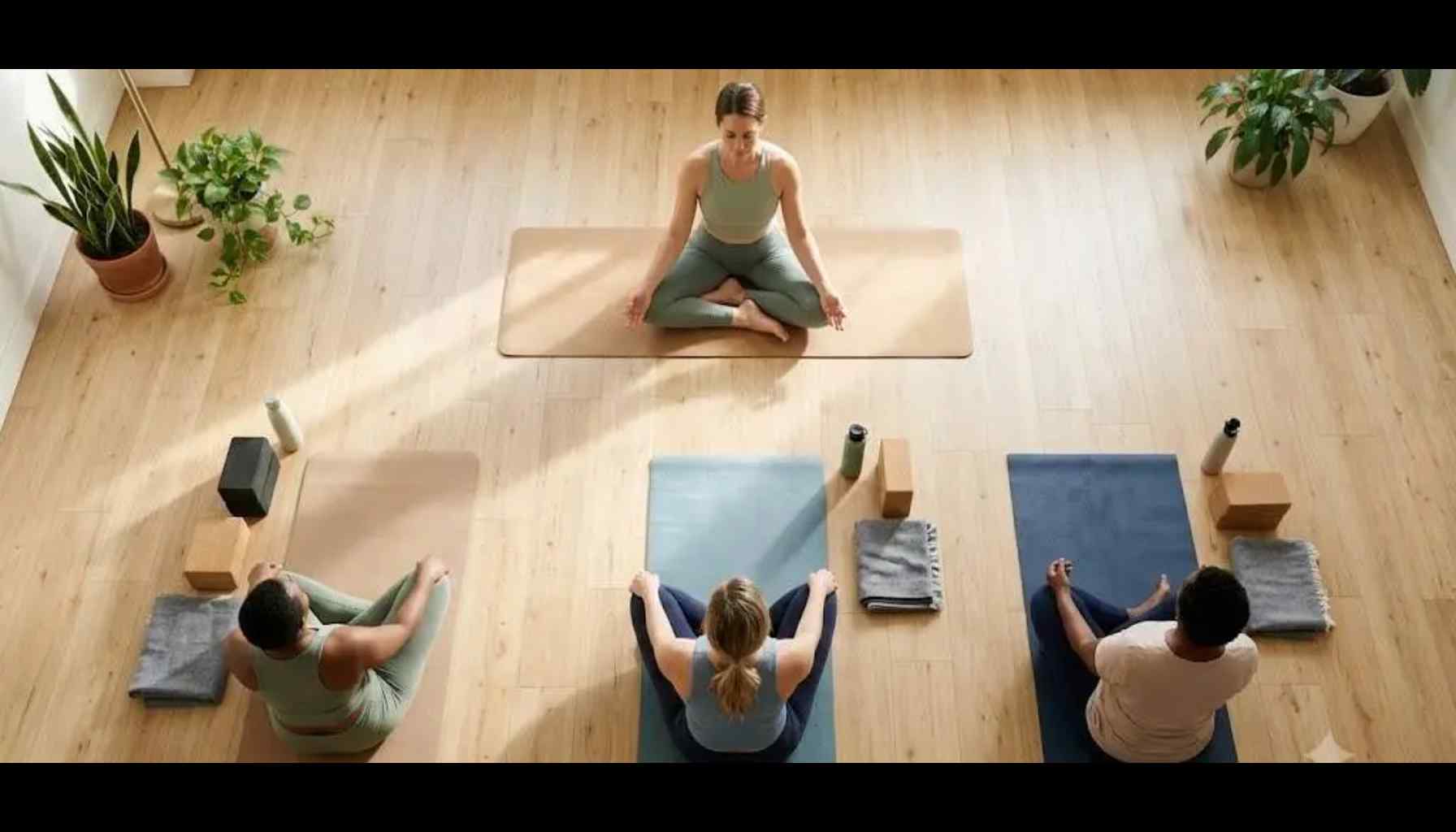
Beginner Yoga Class: Essential Tips for a Confident Start
Booking your very first beginner yoga class can feel a little like walking into a party where everyone already knows one another. Perhaps you are concerned about how flexible you are, what to put on, or whether you will catch on when to stand and when to sit. These concerns are extremely common, and they usually loom far larger in your mind than they do in the studio.
This guide to yoga for beginners explains what actually goes on in a session, how to pick a style, what to wear and how to keep yourself safe. By the time you finish, you should feel prepared to unroll a mat and enjoy the class.
Key Takeaways
- Beginning yoga requires no flexibility, strength or prior experience.
- Gentle, slow-paced styles like Hatha, gentle yoga and slow flow are a good fit for most newcomers.
- Most classes follow one familiar sequence: breathing, a warm-up, standing poses, floor work and a closing rest.
- Beyond a mat and comfortable clothing, you need very little equipment.
- Let the teacher know about any injuries or medical conditions before the class begins.
- Starting with one or two classes each week makes sense.
- Pain means you should back off; it is never something to push through.
What Is a Beginner Yoga Class?
A beginner yoga class is designed for people who have never tried yoga, as well as those coming back after a long gap. Expect a slower pace, clearer instructions, and extra time from the teacher on how to enter and leave each pose.
Most contemporary studio classes combine physical postures, breathing exercises and a brief stretch of quiet focus. The US National Center for Complementary and Integrative Health calls yoga a mind-body practice, which is why it feels unlike an ordinary gym session. Instead of simply staying in motion, you are invited to tune in to your breath and your body.
Do You Need to Be Flexible to Start Yoga?
No. Yoga can help you become more flexible over time, but flexibility is not an entry requirement. Asking people to become flexible before they try yoga is a bit like asking them to get fit before they join a gym.
Everyone walks in with a different background. Some people have tight hamstrings but good balance, while others fold forward with ease yet wobble when standing on one leg. An experienced teacher anticipates this variety and gives alternatives for each pose.
Props are useful too. Blocks, straps and folded blankets bring the floor closer to you and make poses feel better supported. Reaching for them reflects smart practice rather than any shortfall in ability.
It is worth dispelling two more myths. Yoga is not a religion; people from many faiths and from none practise it, and the spiritual element is completely optional. Nor does it take up hours of your day, because even a brief session at home counts. A beginner yoga class simply offers you a guided way in.
What Happens in Your First Yoga Class?
Each teacher has their own approach, but most classes unfold in a similar order. Understanding that order takes away much of the uncertainty.
Arrival and set-up. Try to arrive ten to fifteen minutes ahead of time. Introduce yourself, say that you are new, and set your mat down somewhere you can easily see the teacher.
Settling and breathing. The class normally starts with a few calm minutes. You sit or lie down and just pay attention to your breath. There is no incorrect way to do it.
Warm-up. Soft movements for the neck, shoulders, spine, hips and ankles get your body ready for what follows.
Standing poses. These poses develop balance and leg strength. Look out for basic shapes like Mountain Pose and Warrior II.
Floor poses. In the second half, classes often shift to seated stretches, twists, Cat-Cow or Child's Pose.
Final rest. Most classes close with Savasana, a stretch of lying still while your body settles. Many newcomers find this the most unexpected part.
In a studio, a class generally runs for 45 to 75 minutes, whereas online sessions can be as brief as 20 to 30 minutes. No one expects you to know the Sanskrit names, since teachers translate them, and a bit of wobbling is part of the learning process.
How to Choose the Right Style for a Beginner Yoga Class
What matters is the pace and level rather than the name on the timetable. Watch for labels such as beginner, foundations, gentle or all levels. The following styles usually suit beginner yoga classes best:
|
Style |
Pace |
Best for |
|
Hatha |
Slow |
Taking each pose at an unhurried pace |
|
Gentle yoga |
Slow |
Stiff or cautious newcomers |
|
Slow flow |
Slow to moderate |
Fluid movement with easy transitions |
|
Chair yoga |
Slow |
Reduced mobility, balance worries or older adults |
|
Restorative |
Very slow |
Supported relaxation with fewer active poses |
|
Beginner vinyasa |
Moderate |
Moving in sync with your breath once you feel steady |
|
Hot yoga or Ashtanga |
Heated or fast |
A later stage, once you know the basics |
Hot yoga and fast, set-sequence styles like Ashtanga generally work better once you have the basics down. Heat and speed can feel overwhelming while everything is still unfamiliar.
Chair yoga relies on a seat for support, which makes it a comfortable entry point if standing poses seem intimidating.
Studio, Online or Private: Which Format Suits You?
A studio offers real-time feedback and a feeling of community, and most beginner yoga classes there are small enough for the teacher to keep an eye on you. Live online classes add convenience and privacy, and a good teacher can still fine-tune your practice based on what they see through the camera.
Recorded videos cost the least, but they cannot watch you. They are better suited to people who already know the fundamentals. Private lessons are pricier, but they provide the most individual attention, which is valuable if you have an injury or health concern.
If nerves are holding you back, begin with a few short videos at home. That small step can ease your nerves before you join a yoga class for beginners in person.
How to Find the Right Beginner Yoga Class for You
Begin with the class description. A well-written beginner yoga class listing states the level and length and whether the teacher demonstrates modifications. Terms like foundations or all levels are encouraging signs, while power or advanced are not.
Then check out the teacher. A brief bio or introduction video can show whether their tone appeals to you.
Take a single beginner yoga class before buying a multi-class pack. Some studios provide a trial or a discounted first visit, and drop-in options allow you to sample several teachers.
Find out about pricing early. Rates vary between studios, and some charge a small fee for borrowing a mat. If anything is unclear, message the studio and ask which class on the timetable is the most gentle.
What to Wear and Bring
Special yoga clothing is unnecessary. For your first yoga class, pick something that allows you to bend, twist and reach without having to keep fixing it. Fitted leggings or shorts paired with a snug top are a good choice, since baggy shirts tend to slip down during forward folds. Most people practise barefoot.
- A yoga mat. Plenty of studios lend them, so check first and purchase your own later.
- Water to drink before and after class.
- A small towel in case you sweat easily.
- A light extra layer for the closing rest, as your body cools.
Try not to eat a heavy meal just before class, too. Bends and twists are more comfortable on a stomach that is not full.
Beginner-Friendly Poses You May Meet
None of these poses has to look flawless. Stay within a comfortable range and keep breathing.
- Mountain Pose (Tadasana): helps you learn good standing posture and balance.
- Cat-Cow: gently moves the spine in rhythm with your breath.
- Downward-Facing Dog: stretches the back of the body and strengthens the shoulders.
- Child's Pose: a resting position you can come back to whenever you need.
- Warrior II (Virabhadrasana II): develops leg strength and concentration.
- Savasana: the closing rest that allows everything to settle.
What Does Research Say About the Benefits?
Studies indicate that yoga may help with stress management, balance, sleep and overall wellbeing. A 2025 meta-analysis covering 36 studies associated yoga with a moderate reduction in perceived stress, though findings differed widely from trial to trial. Another 2025 review of randomised trials concluded that yoga can improve balance in healthy adults, whereas the evidence on bone density was still inconclusive.
Overall, yoga is a worthwhile habit for many people, but it is not a cure and should never take the place of medical care.
Is Yoga Safe for Beginners?
The National Center for Complementary and Integrative Health regards yoga as generally safe for healthy people when practised correctly. Sprains and strains can still occur, though. It advises newcomers to learn from a qualified teacher and to steer clear of extreme poses, including headstands, shoulder stands and lotus pose, until they are more experienced.
Feeling a stretch or some muscle effort is normal. Sharp, pinching, burning or electric pain is not. If you notice any of these, come out of the pose gently and let your teacher know.
Check with your doctor first if you are pregnant, older, or have a condition affecting balance, the spine, knees, hips, blood pressure or the eyes, such as glaucoma. Tell the instructor privately before class so they can propose safer alternatives.
Beginner Yoga Class Etiquette in Plain English
Etiquette in a beginner yoga class is straightforward, and it keeps the space peaceful for everybody.
- Mute your phone and keep it stowed away.
- Be punctual, because arriving late interrupts the opening breathing practice.
- Stay within your own area with your mat.
- Remain for the closing rest. If you have to leave early, let the teacher know in advance.
- Feel free to ask questions, as teachers welcome them.
Small Things That Make Your First Class Easier
A handful of simple habits can make any beginner yoga class go more smoothly.
Where to put your mat. In a beginner yoga class, pick a spot in the middle or near the front where you can see the teacher. The back corner feels secure, yet it makes following along more difficult.
Hands-on adjustments. During a beginner yoga class, some teachers correct your posture with a gentle touch. You are free to decline. Simply saying "no touch, please" before class is enough.
Breathing basics. No special technique is required. Many teachers recommend inhaling as you lift or open up and exhaling as you fold or lower. If you lose your place, simply breathe naturally.
Arrival habits. Visit the restroom beforehand, avoid heavy perfume, and get there early enough to settle in.
How Often Should You Attend a Beginner Yoga Class?
One or two sessions a week are plenty at first, and many beginner yoga classes run weekly to make that simple. Once the movements feel familiar, you can add a short home practice of 15 to 30 minutes between classes. Regularity matters much more than intensity.
Bear in mind that yoga by itself may not meet all of your exercise needs. The CDC recommends that adults do at least 150 minutes of moderate aerobic activity weekly, along with muscle-strengthening activities on two days. See yoga as one piece of an active lifestyle.
When Does a Beginner Yoga Class Start to Feel Easier?
Most newcomers feel slightly awkward during their first few visits to a beginner yoga class. Calmer breathing and a feeling of relaxation tend to appear first. Balance, strength and mobility generally need several weeks of regular practice, and everyone progresses at their own speed.
Slight muscle soreness the following day is normal. Sharp or persistent pain is not, so see a doctor if it carries on. Steadier breathing, smoother transitions and choosing a modification without embarrassment are better indicators of progress than touching your toes.
Common Beginner Mistakes to Avoid
- Measuring yourself against the person on the neighbouring mat.
- Holding your breath as a pose becomes challenging.
- Pushing a stretch further than your body can handle.
- Leaving out the closing rest.
- Giving up after your first yoga class. Allow yourself a few visits, and try different teachers, before making up your mind.
Frequently Asked Questions
What do you do in a beginner yoga class?
You focus on your breath, warm up, work through basic standing and floor poses, and end with a few minutes of rest. The teacher talks you through each step and suggests easier variations when needed.
What should I wear to a beginner yoga class?
Choose comfortable, stretchy clothing that stays put when you bend. Go without shoes and socks unless you need them. A light layer comes in handy for the closing relaxation.
Do you have to be flexible to do yoga?
No. Yoga for beginners rests on the idea that flexibility grows with practice, while props and variations allow you to work at your own level right from the first session.
How many times a week should a beginner do yoga?
Two sessions weekly is a comfortable starting point for most people, and even a single beginner yoga class is worthwhile. Attending a yoga class for beginners regularly beats an occasional long session.
Can I eat before a yoga class?
A light snack is generally fine, but a heavy meal can be uncomfortable during twists and forward folds. Leave time to digest, and then work out what suits your body before your next beginner yoga class.
Bottom Line
A beginner yoga class is not an exam, and nobody is marking you. Pick a slow, clearly labelled yoga class for beginners, let the teacher know you are new, and put on something comfortable. Rest whenever you need to, and stop if anything hurts.
Allow a few visits before you judge the experience. Once most people have attended a beginner yoga class a handful of times, the poses feel more natural and the whole thing seems far less intimidating. A welcoming yoga class for beginners often marks the beginning of a lasting habit, and the right moment to start is whenever you feel ready, because yoga for beginners rewards patience over talent.
Arrive with a beginner's mind: curious, patient and comfortable with not knowing everything yet. That mindset will carry you further in your next beginner yoga class than any degree of flexibility.


Discussion (0)
No comments yet. Be the first to comment!
Leave a Comment
You need to login to post a comment.