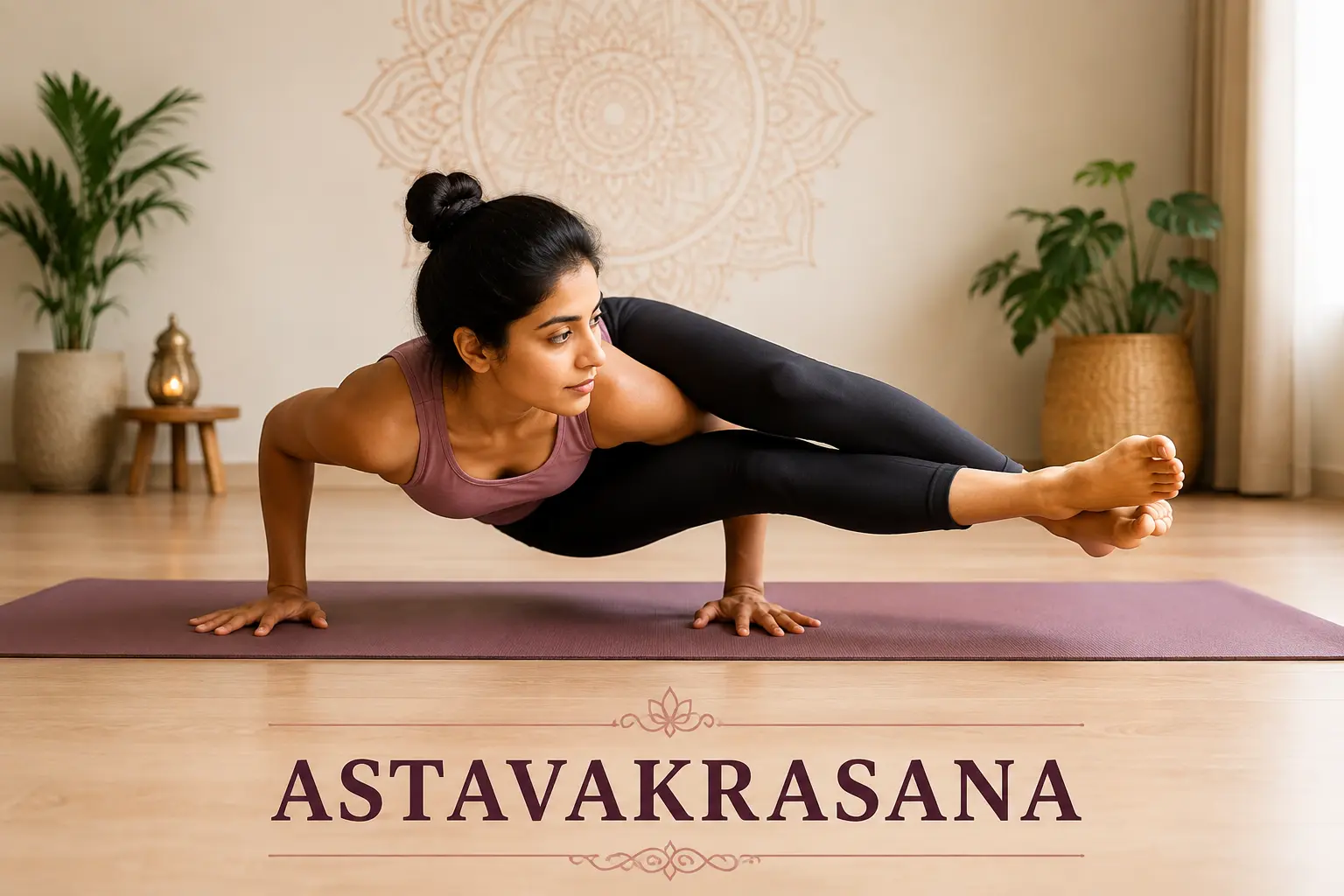
Astavakrasana: Eight-Angle Pose
The Astavakrasana pose, also known as the Eight-Angle Pose, is one such asymmetric arm balance that can be considered a puzzle in itself. Becoming proficient in bodyweight exercises involves as much brain power as muscle power. Learning the pose takes much more than just building up the strength in the arms; rather, it involves working on the flexibility of the hips, bracing the core, and using a little adjustment to move the center of gravity. Seeing this pose as a series of smaller and simpler balance poses breaks down the challenge posed by its complex look.
What Is Astavakrasana (Eight-Angle Pose)?
The name Astavakrasana in Sanskrit is linked with the Ashtavakra, who was generally perceived as having eight angles or bends. This particular pose is popularly known as the Eight-Angle Pose and falls under asymmetrical arm balance poses.
The pose involves placing one leg on the upper arm, with the practitioner balancing his body weight on the hands. In addition, the legs are stretched outwards to create an angle. This pose demands coordinated efforts from the upper body, abdomen, hips, and legs, and not just arm strength.
How to Perform Astavakrasana (Eight-Angle Pose)
Move into the asana in a slow fashion and stay within your present range of motion.
- Start in a seated pose and straighten both legs.
- Bring one leg into a bent position and draw the same leg closer to the torso.
- Position the thigh across or around the respective arm.
- Plant the palms flat against the floor at either side of the pelvis.
- Contract your abdominals and move the second leg into position.
- Ankle locking should be performed according to the chosen form of this asana.
- Move the body weight onto the hands.
- Push using the hands and raise the hips and feet off the ground.
- Stretch the legs to one side in unison.
- The elbows should be bent but not flailing around.
- Maintain an even gaze.
- Hold for a brief period of time.
- Release the feet gently back down.
- Perform the pose on the other side as well.
Benefits of Astavakrasana
Some of the benefits of performing the Eight Angle Pose regularly include the following:
|
|
|
|
|
|
|
|
|
|
|
|
|
|
|
|
|
|
|
|
|
Prepare Before Astavakrasana
Proper preparation techniques will help to make the pose easier. Start by stretching your wrists, shoulders, hips, and legs.
Some useful preparation techniques include:
- Wrist circles and stretches
- Planks
- Preparation for Chaturanga
- Boat Pose to engage your core
- Malasana to open your hips
- Seated hip opening techniques
- Hamstring stretches
- Lizard Lunge or similar hip opening techniques
- Also, try holding one leg around your upper arm without lifting your body.
Precautions
Take care while performing Astavakrasana because this advanced arm balance requires a lot of strength from your upper body and wrists.
- Warm up first: Warm up your wrists, shoulders, arms, hips, and core before attempting the posture.
- Protect the wrists: Don’t attempt this posture if you have any injury or pain in your wrists unless otherwise suggested by a professional.
- Take care of the shoulders: Never let the shoulders sag when you are bearing the weight of your body.
- Don’t force your hips: Take it slow and never force your leg around your upper arm.
- Go for modifications: If you feel uncomfortable performing this arm balance, then practise other variations of the pose.
- Controlled movement: Avoid jumping into this posture or rush towards it.
- Stop if there is pain: If you experience any kind of pain, numbness, dizziness, or discomfort, then stop practising the pose.
- Guidance needed: As a beginner, it is recommended to learn this advanced pose from an experienced yoga teacher.
Wrapping Up
Astavakrasana is a challenging yoga pose that involves elements of strength, flexibility, stability, coordination, and concentration. Although it seems that the pose requires some skillful performance at first sight, mastering it through proper preparation can turn your practice into more controlled and regulated process. Work on building strong wrists and shoulders, activating your core muscles, working on a comfortable range of hip joint movement and regulated breathing before practicing the entire pose.
FAQs
1. Why do I find Astavakrasana difficult despite being flexible?
Astavakrasana demands not only flexibility, but also arm strength, stability, hip and shoulder flexibility, balance and coordination. Thus, having flexibility of the hips does not necessarily mean that you will be able to perform the pose.
2. What body parts should I work out before Astavakrasana?
You need to increase the strength of your wrists, arms, shoulders, and abdomen. You can start by doing different modifications of plank, working out Chaturanga carefully and practising some simpler arm balances.
3. Why do my feet tend to fall during Astavakrasana?
The falling of your feet can happen due to lack of core strength or wrong weight distribution in the pose. Make sure you are pressing through your hands, using your core muscles, and moving your weight slowly forward.
4. Can I do Astavakrasana when I am unable to straighten my legs?
Of course, you can try some preparatory poses without straightening your legs too much. Hip and hamstring flexibility and strength of your upper body will eventually enable you to hold the full pose.
Disclaimer: The content on LifePositive.com, including articles/blogs on yoga, acupuncture, naturopathy, and other alternative healing modalities for holistic wellness, is for informational and educational purposes only. It is not a substitute for professional medical advice, diagnosis, or treatment. Always consult a qualified healthcare provider before starting any new health protocol or making changes to an existing treatment plan.
Also Read: Bhujapidasana
By Umesh Kumar Khiri

Discussion (0)
No comments yet. Be the first to comment!
Leave a Comment
You need to login to post a comment.