Ayurvedic Doshas Guide: Vata, Pitta, and Kapha
Understanding Ayurveda and the Three Doshas
Introduction
Ayurveda, one of India's traditional systems of holistic well-being, views every individual as unique. Rather than assuming that one diet, routine, or lifestyle is suitable for everyone, Ayurvedic philosophy considers a person's individual tendencies, environment, habits, and changing circumstances. At the heart of this traditional framework are the three doshas: Vata, Pitta, and Kapha.
Doshas are Ayurvedic concepts. Traditionally, they are understood as functional principles associated with combinations of the five elements—space, air, fire, water, and earth. Exploring Vata, Pitta, and Kapha can therefore be a useful starting point for developing healthier and more mindful lifestyle practices.
Ayurvedic Doshas: Vata, Pitta, and Kapha
In Ayurvedic philosophy, Vata, Pitta, and Kapha are the three primary doshas that help describe different functions and tendencies within the body and mind. All three are considered present in every individual. Their proportions and expressions may vary from person to person and may also appear to change according to age, season, climate, lifestyle, diet, and everyday circumstances.
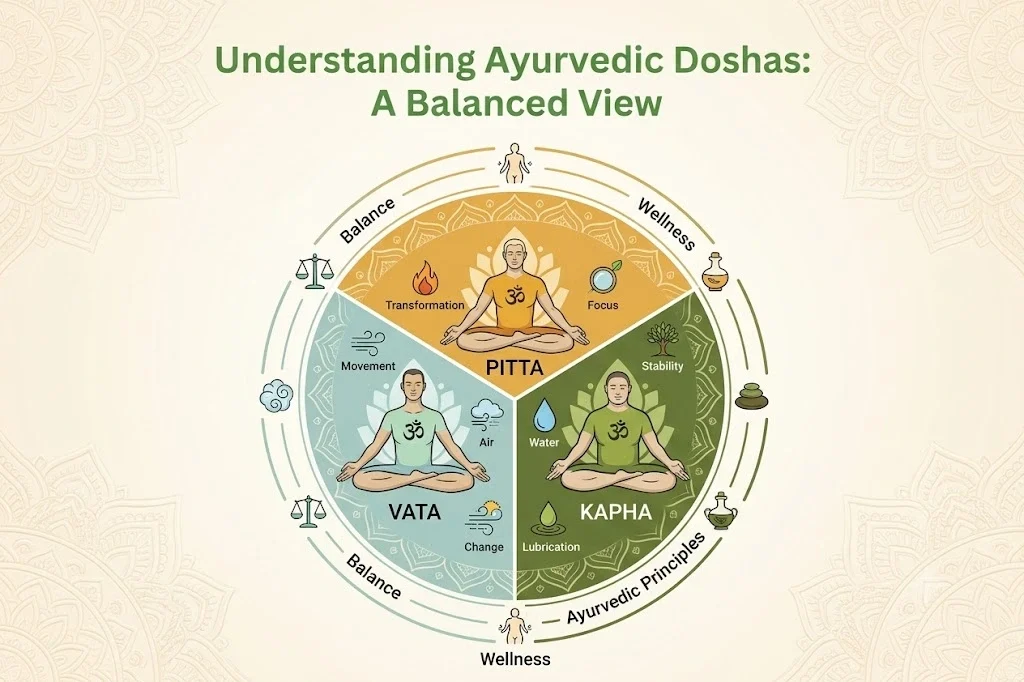
Vata is traditionally associated with movement and communication. Pitta is associated with transformation and metabolism, while Kapha is associated with structure, stability, and nourishment. These descriptions are broad principles rather than fixed rules.
The aim of an Ayurvedic lifestyle is traditionally to support the harmonious expression of these tendencies through appropriate habits.
Understanding the Three Doshas
Vata: Movement, Energy, and Creativity
Vata is traditionally associated with the qualities of movement, lightness, change, and activity. In Ayurvedic thought, it is linked with functions involving motion, including movement throughout the body, sensory activity, and communication.
Ayurvedic lifestyle traditions often recommend warmth, regularity, and grounding practices for supporting Vata tendencies. Regular meals, adequate rest, calm environments, and consistent routines may help encourage a greater sense of stability.
Pitta: Transformation, Digestion, and Focus
Pitta is traditionally associated with transformation. Ayurvedic texts connect it with processes involving digestion, metabolism, and other forms of conversion within the body. On a psychological level, Pitta is often associated with sharpness, focus, clarity, and determination.
Ayurvedic traditions often recommend avoiding extremes and creating opportunities for cooling, relaxation, and emotional balance. A balanced schedule, adequate breaks, and a less hurried approach to daily life may support overall well-being.
Kapha: Stability, Strength, and Grounding
Kapha is traditionally associated with structure, stability, nourishment, and steadiness. It is connected with the earth and water elements and represents qualities such as solidity, patience, and consistency.
People with stronger Kapha tendencies may see themselves as calm, dependable, compassionate, and resilient. They may appreciate familiarity and may have considerable patience when dealing with others. At times, however, they may benefit from greater variety, stimulation, and movement.
Ayurvedic traditions often encourage lightness, activity, and regular engagement for supporting Kapha balance. Exercise, varied experiences, and mentally stimulating activities can help prevent routines from becoming overly passive or repetitive.
The Five Elements Behind the Doshas
Ayurveda traditionally describes the universe, including the human body, through the interaction of five great elements: space, air, fire, water, and earth. The three doshas are understood as combinations of these elemental qualities.
Air and Space in Vata
Vata is traditionally associated with air and space. These elements reflect qualities such as movement, subtlety, lightness, and change.
Fire and Water in Pitta
Pitta is traditionally associated primarily with fire, moderated by water. Fire represents transformation and intensity, while water is understood as helping contain and regulate these processes.
Ayurvedic lifestyle practices for Pitta often emphasize moderation and avoiding excessive intensity in food, work, and daily activities.
Earth and Water in Kapha
Kapha is traditionally associated with earth and water. Earth represents structure and solidity, while water represents cohesion and nourishment.
Ayurvedic approaches may encourage people with strong Kapha tendencies to balance these grounding qualities with movement, variety, and stimulation.
Understanding Your Ayurvedic Constitution
Prakriti and Individual Tendencies
In Ayurveda, Prakriti traditionally refers to an individual's underlying constitutional pattern. It is often understood as the relative expression of Vata, Pitta, and Kapha tendencies that characterizes a person.
Vikriti and Changing Imbalances
Vikriti traditionally refers to the current state or changing expression of the doshas. Unlike Prakriti, which describes an underlying constitutional tendency, Vikriti is used to reflect present circumstances.
Sleep loss, stress, irregular meals, seasonal changes, demanding work, and changes in physical activity may all influence how a person feels. Ayurvedic practitioners traditionally consider these changing factors when offering lifestyle guidance.
Why Personalized Wellness Matters
Personalized wellness recognizes that individuals differ in schedules, preferences, cultures, ages, responsibilities, and physical needs. Ayurveda's constitutional approach encourages people to observe these differences rather than blindly following trends.
Supporting Vata Balance
Warm, Nourishing Foods and Regular Meals
Traditional Ayurvedic guidance often emphasizes warm, nourishing foods and regular mealtimes for Vata tendencies. Cooked meals, soups, and other comforting foods may appeal to people who prefer warmth and consistency.
Consistent Sleep and Daily Routine
Routine is a major theme in traditional approaches to Vata. Going to bed and waking up at relatively consistent times may support healthy sleep habits.
Gentle Movement and Relaxation
Walking, gentle yoga, stretching, and other calming forms of movement can fit well into a routine designed around rest and regularity. Relaxation practices such as quiet breathing, meditation, or time in a peaceful environment may also encourage mindfulness.
People should select movement according to their fitness level and medical circumstances.
Supporting Pitta Balance
Cooling and Balanced Food Choices
Traditional Ayurvedic approaches often associate Pitta support with moderation and foods considered cooling or less heating. People may also consider whether very spicy foods, excessive caffeine , or irregular eating patterns affect their comfort and well-being.
Managing Heat, Stress, and Overwork
Pitta tendencies are traditionally associated with intensity. Modern life can amplify this through long working hours, constant competition, and pressure to remain productive. Time outdoors, enjoyable hobbies, and healthy social connections may also create opportunities to step away from constant demands.
Rest, Relaxation, and Mindful Activities
Rest is productive when it supports recovery. Mindful activities such as meditation, gentle walks, creative hobbies, or simply spending time away from screens can help create mental space.
Supporting Kapha Balance
Light, Fresh, and Balanced Meals
Traditional Ayurvedic guidance often recommends lighter and varied meals for Kapha tendencies. The practical focus should remain on adequate nutrition and appropriate portions rather than unnecessary dietary restriction.
Regular Exercise and Active Movement
Regular physical activity is especially emphasized in many Kapha-oriented lifestyle recommendations. Walking, swimming, cycling, dancing, strength training, or other enjoyable activities can help support fitness and energy.
Motivation, Variety, and Mental Stimulation
Kapha's traditional qualities of stability can sometimes make familiar routines very comfortable. Introducing new activities can therefore be useful.
Doshas and Everyday Lifestyle
Sleep and Daily Rhythms
Sleep is fundamental to health regardless of dosha. Ayurveda places considerable importance on daily rhythms and regular routines.
Nutrition and Meal Timing
Rather than searching for a perfect dosha diet, pay attention to how food patterns affect energy, hunger, digestion, and overall comfort. Regular meals, sufficient nutrient intake, and mindful eating are valuable habits for many people.
Yoga, Breathwork, and Meditation
Yoga and meditation can complement an Ayurvedic wellness routine. Yoga offers opportunities to develop mobility, strength, balance, and body awareness, while breathwork and meditation may encourage relaxation and attention.
Stress Management and Emotional Wellness
Stress management is an important part of modern wellness. Ayurveda encourages observation of the relationship between daily habits, emotions, and physical experience.
Benefits of a Personalized Ayurvedic Wellness Approach
Greater Self-Awareness
One of the potential benefits of exploring Ayurvedic concepts is greater self-awareness. Observing patterns can help people recognize how sleep, food, work, and stress influence their daily experience.
Healthier Daily Habits
The emphasis on routine can encourage practical habits such as regular meals, adequate rest, and mindful movement. Small improvements performed consistently can be more valuable than dramatic changes that cannot be maintained.
Stress and Lifestyle Management
Ayurvedic principles encourage balance between activity and rest. This can be especially relevant in a world where many people experience constant digital stimulation and pressure.
Creating Your Ayurvedic Wellness Routine
Making Gradual, Sustainable Changes
Avoid changing everything at once. Select one or two habits and practice them consistently. You might begin with a regular bedtime, a daily walk, or more mindful meal planning.
As these habits become easier, additional changes can be introduced.
Adapting Practices to Your Individual Needs
Your wellness routine should fit your real life. Work schedules, family responsibilities, physical abilities, and personal preferences all matter.
Ayurvedic concepts can provide inspiration, but flexibility and practicality are essential.
Working With an Ayurvedic Practitioner
Personalized Constitution Assessment
A qualified Ayurvedic practitioner may use a traditional consultation process to understand an individual's constitution, current concerns, lifestyle, and habits.
This can offer a more individualized perspective than relying solely on online quizzes or general descriptions.
Diet and Lifestyle Guidance
Practitioners may suggest adjustments involving food, daily routines, activity, and traditional wellness practices. Recommendations should be discussed in the context of the individual's overall health and existing medical care.
Monitoring and Adjusting Your Wellness Plan
Needs can change with age, lifestyle, season, and circumstances. A wellness plan may therefore need periodic review and adjustment.
Monitoring should also include attention to safety. Persistent or worsening symptoms should not be attributed solely to a dosha imbalance without appropriate medical evaluation.
Safety and Practical Considerations
Avoiding Self-Diagnosis Based on Doshas
Online dosha quizzes can be interesting tools for reflection, but they cannot diagnose medical conditions. Symptoms such as persistent pain, unexplained weight change, severe fatigue, breathing difficulty, or other concerning changes require appropriate professional assessment.
Responsible Use of Ayurvedic Herbs and Products
Natural does not automatically mean safe for everyone. Ayurvedic herbs and products can have side effects, interact with medications, or vary in quality.
Consult a qualified healthcare professional before using herbs or supplements, particularly if you are pregnant, breastfeeding, taking medication, or living with a medical condition.
Integrating Ayurveda With Conventional Healthcare
Ayurveda and conventional healthcare need not always be viewed as opposing approaches. Lifestyle practices such as mindful eating, regular sleep, stress management, and appropriate physical activity may complement conventional preventive health strategies.
Frequently Asked Questions
Vata, Pitta and Kapha Basics
Do I have only one dosha?
According to Ayurvedic tradition, every person has all three doshas. One or two may be more prominent in a person's constitutional pattern.
Are doshas the same as a medical diagnosis?
No. Doshas are traditional Ayurvedic concepts and should not be used as substitutes for medical diagnosis.
Identifying Your Ayurvedic Constitution
Online questionnaires may provide a general introduction, but they can oversimplify a complex traditional assessment. A qualified practitioner can offer a more individualized evaluation.
Balancing Doshas Through Lifestyle
Traditional approaches commonly emphasize food, routine, sleep, movement, and emotional well-being. The best lifestyle changes are those that are safe and sustainable for the individual.
Ayurveda and Long-Term Wellness
Ayurveda can encourage long-term attention to daily habits and self-awareness. Its greatest practical value may come from motivating people to build healthier routines while continuing to use evidence-based medical care when necessary.
Beginning Your Personalized Ayurvedic Wellness Journey
Understanding Vata, Pitta and Kapha offers a traditional lens through which to explore individuality and wellness. Vata is associated with movement and creativity, Pitta with transformation and focus, and Kapha with stability and grounding. Together, these concepts reflect Ayurveda's broader emphasis on balance and adaptation.
The most meaningful way to begin is with observation. Notice your routines, sleep, food choices, stress levels, and activity patterns. Identify one area that could benefit from improvement and make a realistic change.
You do not need to follow every Ayurvedic practice or fit perfectly into one dosha category. Wellness is not about achieving a label. It is about developing a deeper understanding of your needs and creating habits that support a healthier, more balanced life.
If you choose to explore Ayurveda further, combine its traditional wisdom with practical judgment and appropriate healthcare.
Wish you all the best on your Ayurvedic wellness journey.
Also read our article on combatting stress with nlp
By Jamuna Rangachari


Discussion (0)
No comments yet. Be the first to comment!
Leave a Comment
You need to login to post a comment.