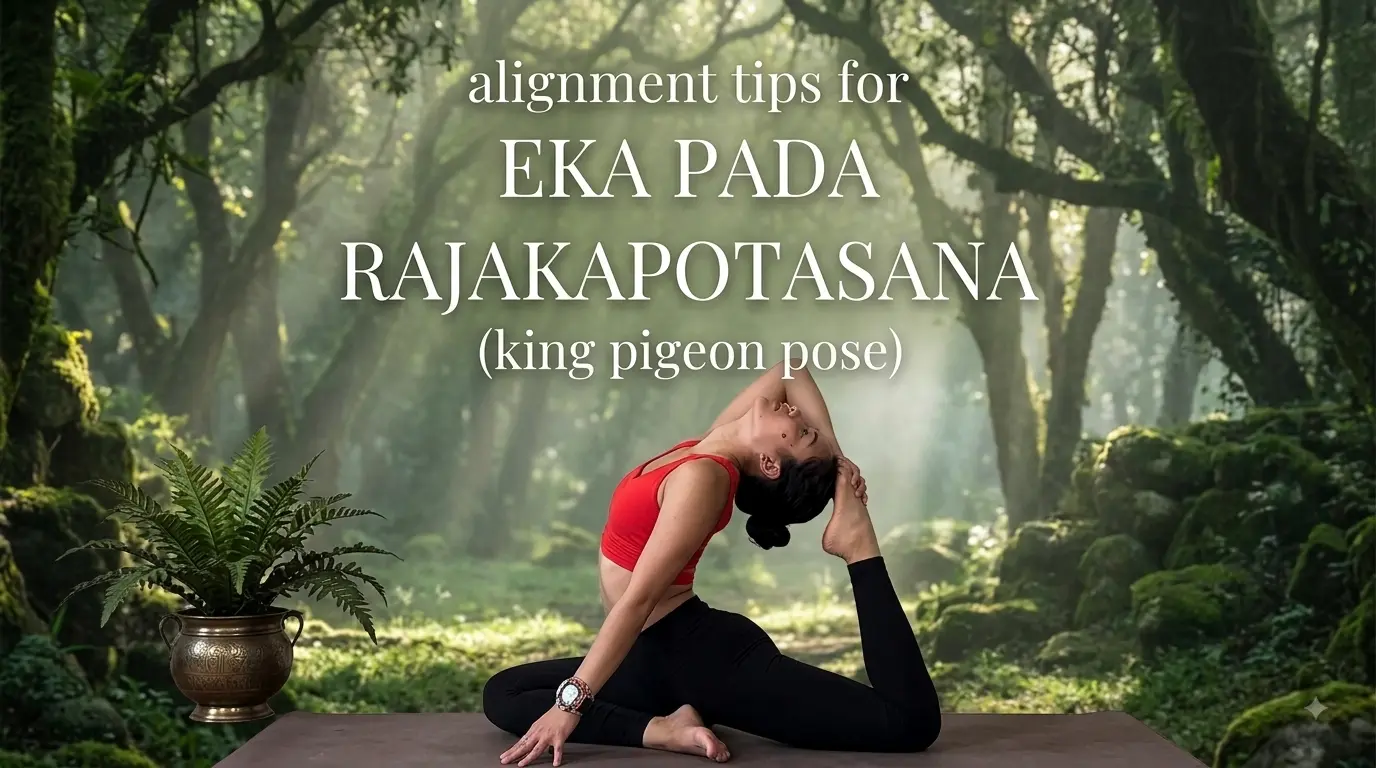
Eka Pada Rajakapotasana: One-Legged King Pigeon Pose
Eka Pada Rajakapotasana is a seated yoga posture in which one leg is folded in front while the opposite leg extends backward. The hips remain as square as comfortably possible while the spine stays upright.
Good health isn’t usually something you achieve but rather a delicate equilibrium that you search for each day. Living in a fast-paced world means that stress often becomes ingrained in your body, hiding in the tightness of your hips and the protective nature of your shoulders. If you take all of this tension onto your yoga mat, then advanced poses such as Eka Pada Rajakapotasana (One-Legged King Pigeon Pose) will not only give you an opportunity to explore new levels of flexibility. But also provide a chance to see the hidden tensions and to release them.
Let’s imagine that you immerse yourself in the pose: your front leg folds forwards while your back one stretches behind you; your chest rises to the skies.
With time and regular practice, you will be able to untie the knots of everyday stress that accumulate in your body and restore the balance and energy in your body and mind.
Key Takeaways
- Deep Stress Release: Releases accumulated physical and emotional tension by opening tight hips and hip flexors.
- Gradual Progression: Requires patience, breath awareness, and props like blocks to safely build flexibility without forcing the joints.
- Prepares the Body: Builds lower-body mobility and pelvic alignment to help safely prepare for deeper, more advanced poses.
What Is Eka Pada Rajakapotasana (One-Legged King Pigeon Pose)?
Eka Pada Rajakapotasana (One-Legged King Pigeon Pose) is an advanced seated yoga posture that combines a deep hip opener with an intense chest-opening backbend. It promotes lower-body flexibility, improves spinal mobility, and releases emotional and physical tension stored in the hips and torso.
The aspects of Eka Pada Rajakapotasana are described below:
|
|
|
|
|
|
|
|
|
|
|
|
|
|
|
|
|
|
|
|
|
|
|
|
|
|
|
How to Do Eka Pada Rajakapotasana (One-Legged King Pigeon Pose)
Follow the steps given below:
|
|
|
|
|
|
|
|
|
|
|
|
|
|
|
|
|
|
|
|
|
|
|
|
|
|
|
|
|
|
|
|
|
Benefits of Eka Pada Rajakapotasana
When practised appropriately, the posture can support mobility through several areas.
As an intense hip opener and backbend, it releases stored somatic tension in the pelvic region while stimulating the parasympathetic nervous system through controlled, deep thoracic breathing.
|
|
|
|
|
|
|
|
|
|
|
|
|
|
|
|
|
|
|
|
|
|
|
|
Using support is preferable to forcing the pelvis downward or twisting the front knee into an uncomfortable position.
Precautions
Eka Pada Rajakapotasana may present challenges for the hips and pelvis area; hence, this pose should be done gradually.
- Prepare your hips and thighs prior to performing the pose.
- Do not force the front knee or hip to go deeper.
- Utilize a block or cushion if the pelvis requires support.
- Individuals with a hip injury are advised not to practice the pose unless under the supervision of a qualified practitioner.
- If one has had hip replacement surgery, he/she should not perform the pose unless cleared to do so by a proper expert.
- Pregnant women need to either avoid or modify the pose.
Final Thoughts
In the end, Eka Pada Rajakapotasana helps us realize that healing is a process that demands patience. What this pose illustrates is that the relaxation of deep-seated stress needs time, breathing, and persistence. The process of opening up this pose is not only one of physical release; it also opens your heart and connects you to yourself on a much deeper level. Consistent practice makes for an elegant pose that unites mind and body in harmony and balance.
FAQs
1. Is Eka Pada Rajakapotasana appropriate for beginners?
Beginners can practice the hip-opening form of this pose gradually; the more advanced variation needs greater mobility.
2. Why is it that one side feels tighter than the other?
It is normal that hip flexibility is unequal from one side to another. It is better to use more support on the tight side rather than force it.
3. Do I have to touch the floor with my hips in this pose?
No, there is no need to do so. You can put a block or cushion under the hip on the same side of your leg that you bring into the pose.
4. What are the therapeutic benefits of Eka Pada Rajakapotasana?
By releasing tight piriformis muscles, Eka Pada Rajakapotasana reduces pressure on the sciatic nerve, mitigating lower back pain and stiffness from prolonged sitting.
Disclaimer: The content on LifePositive.com, including articles/blogs on yoga, acupuncture, naturopathy, and other alternative healing modalities for holistic wellness, is for informational and educational purposes only. It is not a substitute for professional medical advice, diagnosis, or treatment. Always consult a qualified healthcare provider before starting any new health protocol or making changes to an existing treatment plan.
Also Read: Kapotasana
By Umesh Kumar Khiri

Discussion (0)
No comments yet. Be the first to comment!
Leave a Comment
You need to login to post a comment.