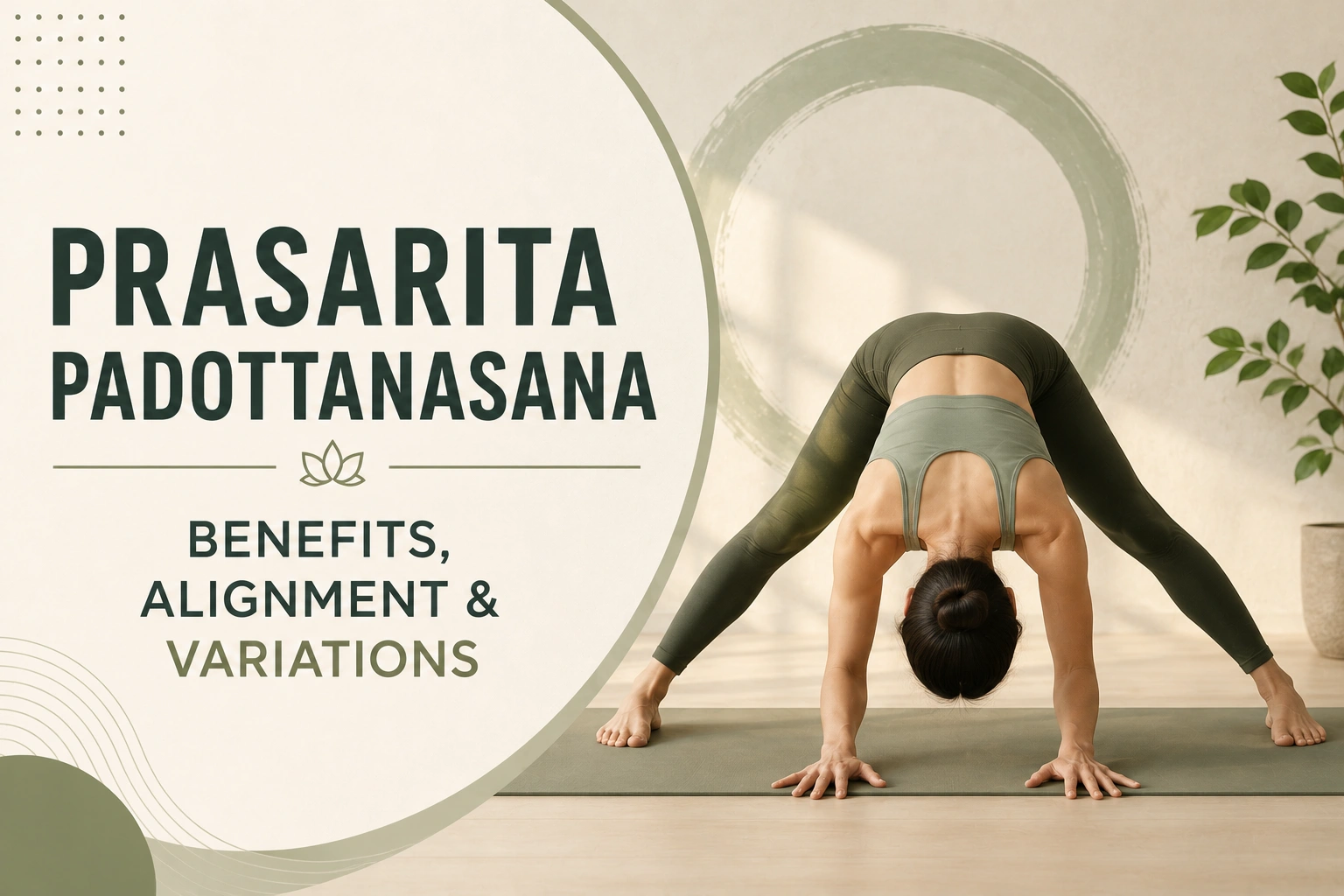
Prasarita Padottanasana: Master Wide-Legged Forward Fold Alignment, Proven Benefits, & Beginner Variations
Prasarita Padottanasana: Master Wide-Legged Forward Fold Alignment, Proven Benefits, & Beginner Variations
Prasarita Padottanasana (Wide-Legged Forward Bend) posture alignment.
What Is Prasarita Padottanasana and What Is Its Significance?
Prasarita Padottanasana (pronounced prah-sah-REE-tah pah-doh-tahn-AHS-ah-nah), commonly known as Wide-Legged Forward Bend or Intense Stretched Foot Pose, is a foundational standing yoga posture that pairs deep hip opening with a grounding inversion. Derived from the Sanskrit words Prasarita (meaning expanded or spread out), Pada (meaning foot), Uttana (meaning intense stretch), and Asana (meaning posture), this pose stretches the entire back body while offering the calming benefits of an inversion.
Unlike asymmetrical forward folds, Prasarita Padottanasana uses a wide, symmetrical stance that provides a broad base of support. This balance allows practitioners to safely lengthen the inner thighs (adductors) and hamstrings while decompressing the spine. It is a central feature in Ashtanga, Iyengar, and Vinyasa sequences, often serving as a transition posture that cools the body while maintaining strength.
What Are the Top Health Benefits of Practicing Wide-Legged Forward Fold?
Practicing Prasarita Padottanasana regularly provides structural, physiological, and restorative benefits:
- Deeply Opens the Hamstrings and Adductors: Targets the inner thigh muscles and hamstring attachments, relieving stiffness caused by prolonged sitting.
- Decompresses the Lumbar Spine: Allowing gravity to pull the crown of the head toward the floor lengthens the spinal column and eases lower back pressure.
- Calms the Nervous System: As a mild inversion (with the head placed below the heart), it encourages venous return, lowers stress levels, and helps soothe fatigue.
- Strengthens Feet, Ankles, and Core: Rooting into the outer arches and engaging the inner legs strengthens foot arches, ankles, and deep abdominal stabilization muscles.
- Improves Digestion: The gentle compression of the abdominal region during the fold stimulates internal organs, aiding digestion and pelvic circulation.
How Do You Perform Prasarita Padottanasana Correctly?
Executing Prasarita Padottanasana safely relies on hinging directly from your hip joints rather than rounding through your lower back.
1. Establish Your Stance
- Duration: 15 seconds
- Start standing in Mountain Pose (Tadasana) along the long edge of your mat. Step or light-hop your feet wide apart, roughly 3.5 to 4 feet (depending on your leg length).
- Align the outer edges of your feet parallel to the short edges of your mat, pressing firmly into all four corners of each foot.
2. Prepare the Spine & Pelvis
- Duration: 15 seconds
- Place your hands firmly on your hips. Inhale deeply, draw your shoulder blades gently together, and lift your chest, lengthening your torso upward toward the ceiling.
- Firm your quadriceps to lift your knee caps and secure your base.
3. Hinge Forward from the Hips
- Duration: 30–60 seconds
- Exhale as you hinge forward from your hip joints, maintaining a flat back as your torso folds over your legs.
- Lower your fingertips to the floor directly beneath your shoulders. Keep your spine long and your neck relaxed.
4. Deepen the Fold
- Duration: 30–60 seconds
- Walk your hands back until your heels of the palms align with the heels of your feet.
- Bend your elbows straight back toward the wall behind you (keeping them shoulder-width apart) and gently lower the crown of your head toward the floor.
5. Exit Safely & Recover
- Duration: 15 seconds
- Inhale to lift your torso halfway, extending your arms flat under your shoulders with a long spine.
- Bring your hands to your hips, engage your core and inner thighs, and on a fresh inhale, press down into your feet to rise up with a flat back. Step your feet back together.
How Can Beginners Modify Prasarita Padottanasana Safely?
If tight hamstrings, restricted hip mobility, or back tightness make the full fold challenging, use these straightforward modifications:
| Body Area | Beginner Challenge | Recommended Modification |
| Tight Hamstrings | Rounded lower back or unable to touch the floor | Place two yoga blocks on their highest setting directly beneath your shoulders for hand support. |
| Tight Adductors / Hips | Straining inner thighs or feeling unstable | Slightly shorten your stance width or keep a soft micro-bend in both knees. |
| Elevated Blood Pressure | Head pressure or dizziness when lowering head | Keep your head at or above heart level by resting forearms on a block or chair. |
| Ankle / Arch Collapse | Inner feet collapsing inward during stance | Press weight consciously into the outer edges of the feet and lift through the inner arches. |
Common Alignment Mistakes to Avoid
Important Alignment Warning:
Avoid letting your weight drift entirely into your heels. Shifting all your weight backward skews pelvic geometry, strains the hamstring attachments at the sit bones, and reduces stability. Keep your weight distributed evenly over the centers of your feet.
- Hyperextending the Knees: Micro-bend your knees slightly if you tend to lock them, ensuring the quadriceps remain engaged to protect the knee joint.
- Rounding the Upper Back: Avoid forcing your head to the floor by rounding your spine. Prioritize lengthening the front of your torso over depth.
- Flaring the Elbows: When hands are on the floor, keep your elbows parallel to each other and pointing directly behind you, not splaying out to the sides.
- Collapsing the Inner Arches: Keep all four corners of each foot grounded to prevent ankle pronation and preserve inner leg structure.
Who Should Avoid or Modify Prasarita Padottanasana?
While Prasarita Padottanasana offers restorative benefits, practice caution or adapt the pose under these conditions:
- Acute Lower Back Injuries or Herniated Discs: Keep your torso parallel to the floor (Half Wide-Legged Fold) using blocks to prevent lumbar flexion.
- High Blood Pressure or Migraines: Avoid lowering the head below the heart for extended periods; use a higher prop base to keep your spine parallel to the mat.
- Late-Stage Pregnancy: Widen your stance as needed for comfort, maintain a lifted head, and support your hands on sturdy props to prevent balance issues.
Frequently Asked Questions (FAQs)
What is Prasarita Padottanasana called in English?
Prasarita Padottanasana is most commonly known as Wide-Legged Forward Bend, Wide-Stance Forward Fold, or Intense Stretched Foot Pose.
How wide should my feet be in Prasarita Padottanasana?
Generally, your feet should be about 3.5 to 4 feet apart. A practical test: when you stretch your arms out to the sides in a 'T' shape, your ankles should align roughly under your wrists.
What are the main variations of Prasarita Padottanasana?
In Ashtanga yoga, there are four main variations:
A: Hands on the floor, aligned with feet.
B: Hands remain on hips throughout the fold.
C: Fingers interlaced behind the back, hands reaching over head.
D: Big toes caught with the index and middle fingers (Padangusthasana grip).
Should my legs be completely straight in Wide-Legged Forward Bend?
While the full pose features straight legs, keeping a subtle micro-bend in the knees prevents joint hyperextension, keeps the quadriceps engaged, and protects the lower back and hamstring origins.
Conclusion
Prasarita Padottanasana (Wide-Legged Forward Bend) is an accessible standing posture that delivers balanced strength, deep inner-thigh flexibility, and nervous system relief. By building a solid base through grounded feet, hinging cleanly at the hips, and using props to maintain a long spine, you can safely integrate this posture into your practice.
.png)


Discussion (0)
No comments yet. Be the first to comment!
Leave a Comment
You need to login to post a comment.