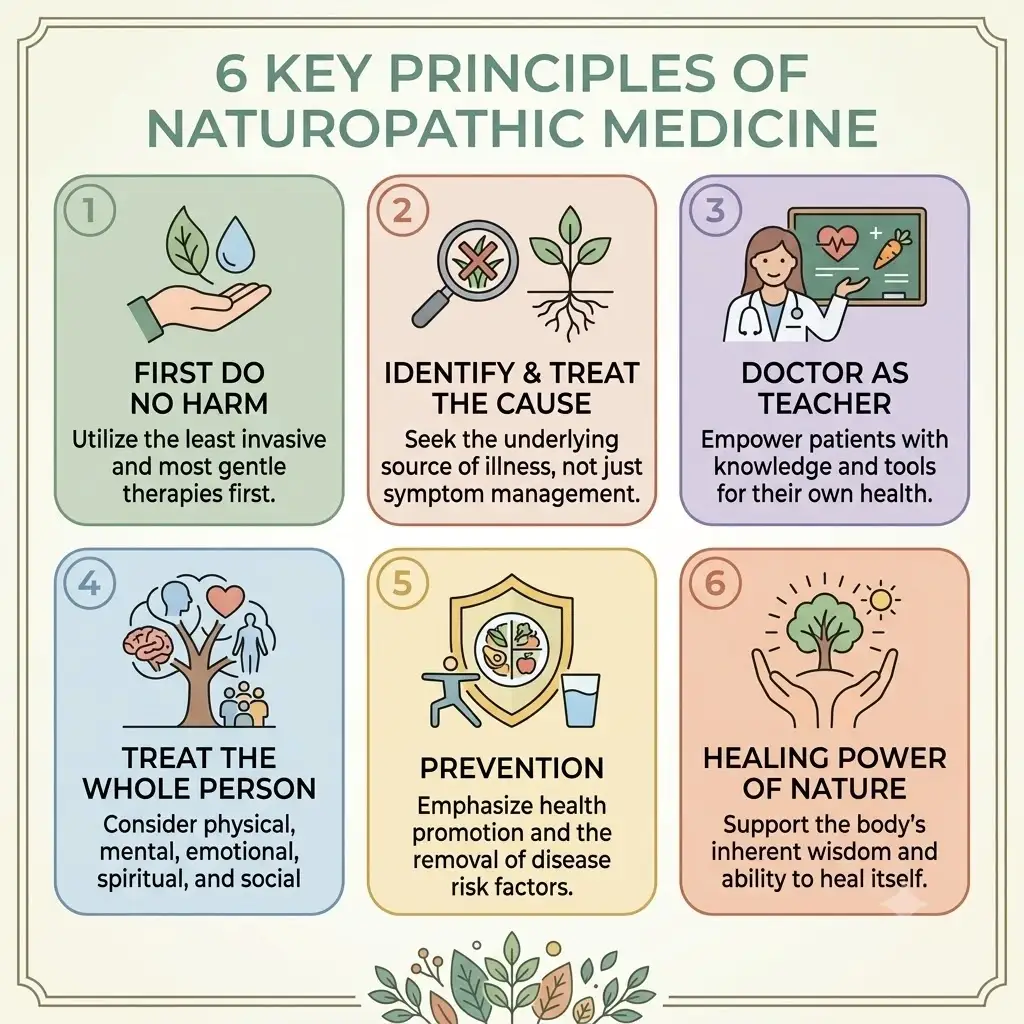
The 10 Basic Principles of Naturopathy
Naturopathic medicine focuses on supporting the body's self-repair mechanisms using non-invasive, natural therapies. Rather than simply masking symptoms, the foundational principles of naturopathy focus on uncovering the root causes of illness, educating patients, and promoting long-term preventive wellness. By harmonizing physical, mental, and environmental factors, naturopathy provides a comprehensive roadmap for optimal health.
Key Takeaways
- Innate Self-Healing: The core philosophy centers on the body’s natural capacity to heal and restore balance once obstacles are removed.
- Root-Cause Focus: Naturopathic therapies target the underlying causes of disease instead of suppressing outward symptoms.
- Holistic & Preventive Care: Emphasis is placed on treating the whole person: body, mind, and lifestyle, while actively preventing future illness.
History of Naturopathy
Modern naturopathic practice has its origins in the age-old practice of healing using various forms of natural therapies, such as the concept of Vis Medicatrix Naturae, which is an integral part of the Hippocratic School of Medicine, although this practice formally began during the latter half of the 19th century in Europe and North America. The founder of modern Naturopathic Practice was a German hydrotherapist named Sebastian Kneipp and a physician by name Benedict Lust, who coined and patented the term 'Naturopathy' in 1902 in the United States.
The 10 Basic Principles of Naturopathy
They key principles of naturopathy are described below:
|
|
|
|
|
|
|
|
|
|
|
|
|
|
|
|
|
|
|
|
|
|
|
|
|
|
|
|
|
|
|
|
|
|
|
|
|
|
|
|
|
|
|
|
Important Guidelines & Safety Precautions
Although incorporating principles of naturopathy into your lifestyle can bring about sustained health, it is necessary to engage in natural healing practices carefully:
- Seek Help from Professionals: Contact qualified practitioners of naturopathy or medical doctors who can help you understand if natural remedies will suit your case.
- Do Not Halt Prescribed Drugs Abruptly: Never stop or change your prescribed treatment without the permission of the treating doctor.
- Beware of Interaction between Remedies: Natural treatments may interact negatively with existing medication or health conditions.
- Take Care of Acute Cases Immediately: The practice of naturopathy is centered on long-term wellness; acute cases should be taken care of in hospitals.
Final Thoughts
Learning the key principles of naturopathy makes it evident that there is a paradigm shift towards a unique and patient-focused way of delivering health care. This can be done through shifting the emphasis on treating symptoms to curing causes, relying on natural self-healing processes, and adopting preventive measures that fit one's lifestyle.
Frequently Asked Questions
1. What are the key principles of naturopathy?
Main principles of naturopathy include the following: the use of the healing power of nature, treatment of the cause, do no harm, educate the patient, treat the whole person and prevent illness.
2. What makes naturopathy different from conventional medicine?
Conventional medicine tends to diagnose the acute manifestations of a disease and use medications or surgical procedures. On the contrary, naturopathy concentrates on removing the cause, using non-invasive methods, lifestyle changes, and prevention.
3. Is naturopathy safe to combine with conventional medical therapy?
Yes, it is possible to combine naturopathy and conventional medicine. But you should cooperate with your personal physician as well as a naturopathic doctor.
Disclaimer: The content on LifePositive.com, including articles/blogs on yoga, acupuncture, naturopathy, and other alternative healing modalities for holistic wellness, is for informational and educational purposes only. It is not a substitute for professional medical advice, diagnosis, or treatment. Always consult a qualified healthcare provider before starting any new health protocol or changing an existing treatment plan.
Also Read
By Umesh Kumar

Discussion (0)
No comments yet. Be the first to comment!
Leave a Comment
You need to login to post a comment.