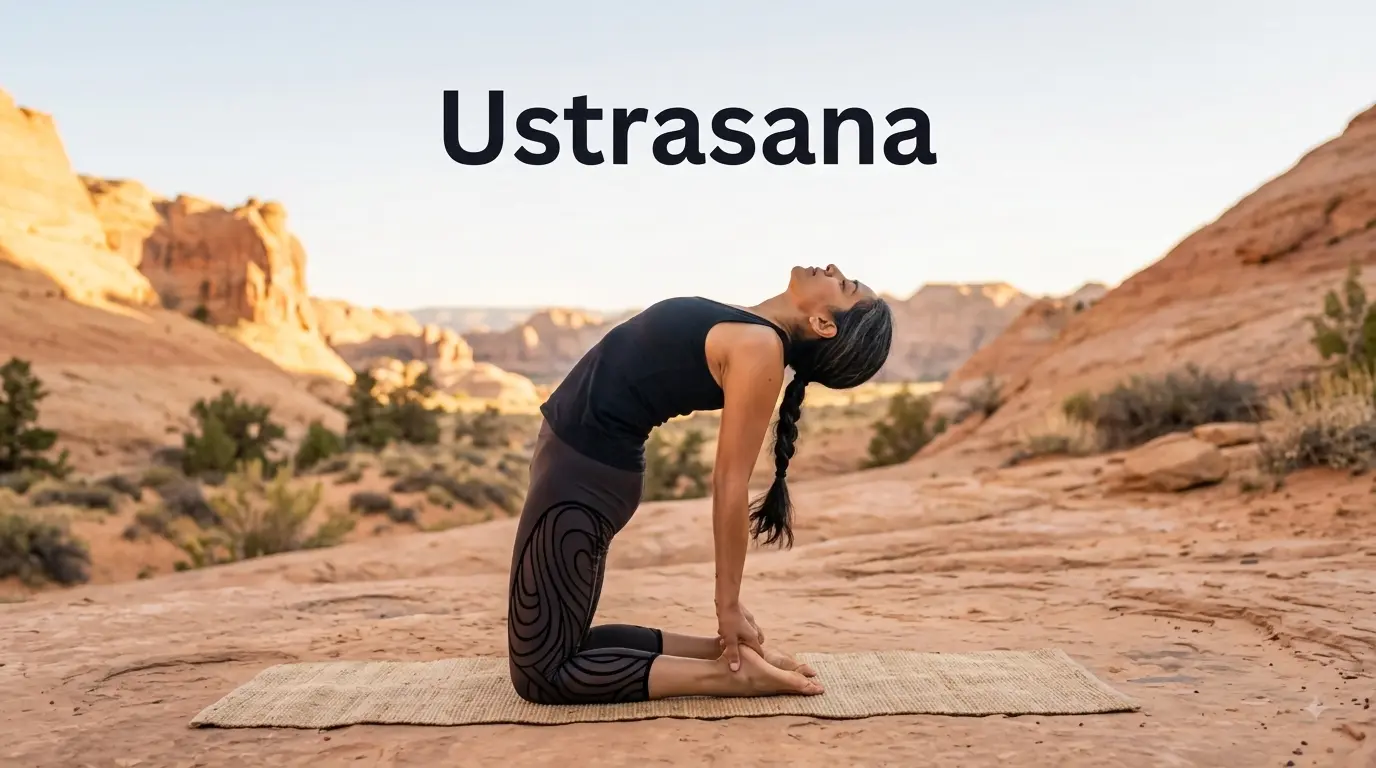
Ustrasana: Camel Pose
Ustrasana is a kneeling backbend in which the practitioner lifts the chest and gradually arches the spine backward, traditionally reaching the hands toward the heels. If performed correctly and with the right preparation, this posture can turn out to be a useful addition to your yoga practice. It allows a combination of strength in the lower body along with the opening of the front side of the body.
Sitting for long periods of time, and even working from one’s desk, can make a person used to a rounded posture of the body. However, there is a pose known as Ustrasana, or Camel pose, that helps to reverse the position because it allows one’s chest to open up while one’s spine performs a controlled backbend. This posture is not just about touching one’s heels but the combination of the movements of the legs, hips, core, shoulders, and spine. It has holistic benefits in Ayurveda and can cure digestive ailments. Ustrasana increases your overall energy and helps with rejuvenation.
Key Takeaways
- Chest & Heart Opener: Counteracts slouching by stretching the entire front body and chest.
- Spinal Extension: Strengthens back muscles while enhancing upper spine mobility.
- Posture Correction: Reverses rounded-shoulder habits by expanding thoracic capacity.
What Is Ustrasana (Camel Pose)?
|
|
|
|
|
|
|
|
|
|
|
|
|
|
|
|
|
|
|
|
|
|
|
|
|
|
|
The traditional version can be demanding, so beginners do not need to reach the heels to benefit from the movement.
How to Practise Ustrasana (Camel Pose)
Follow these steps to perform the Camel Pose:
|
|
|
|
|
|
|
|
|
|
|
|
|
|
|
|
|
|
|
|
|
|
|
|
|
|
|
|
|
|
|
|
|
Benefits of Ustrasana
Some of the benefits of consistent practice of ustrasana are as follows:
|
|
|
|
|
|
|
|
|
|
|
|
|
|
|
|
|
|
|
|
|
|
|
|
|
|
|
Ustrasana is also commonly used to counter habitual forward rounding and can provide a strong stretch through the front of the body.
Precautions
Ustrasana requires quite some effort from the spine, shoulders, hips, and knees, which makes the pose demanding and needs to be taken seriously.
- Prepare the spine, hips, and thigh muscles before doing the asana.
- A cushion can be placed under the knees, if required.
- Take care not to hyperextend the lower back.
- Control the movement of the hips in relation to the knees.
- Do not hyperextend the neck.
- If there are serious problems with the back, shoulders, or spine, do not try the asana.
- People with neck injuries must not tilt the head backward.
- Stop when feeling sharp pain, dizziness, tingling, or any kind of discomfort.
To Conclude
Camel Pose requires strength, flexibility, and control in extending the spine through one pose. The value of Ustrasana is not determined by the largest backbend achievable. Having a strong foundation, opening up the chest, controlling the pelvis, and breathing properly are far more significant than touching the heels.
If proper preparation and modifications are made, then Camel Pose may be a valuable part of a well-balanced yoga practice. Pay attention to what your body tells you and progress with flexibility and strength.
FAQs
1. Why do my thighs go backwards in Ustrasana?
This may occur as the body compensates for a lack of flexibility in the hip joints and/or spine. Try to maintain your thighs as vertical as possible and lift your chest before going into the pose.
2. Should I have my toes tucked or flat in Camel Pose?
It depends on your personal choice – both options are acceptable. Having your toes tucked will elevate your heels and make them more reachable, while placing your feet flat will give you the conventional alignment.
3. What should I do if I am not able to comfortably reach my heels?
You don't have to strain yourself trying to reach your heels – just keep your hands on your hips or use blocks near your feet for a reachable hand placement.
4. How to prepare my body for Ustrasana?
Some gentle lunges, quadriceps stretches, hip flexor work, chest openers, and backbends are helpful for preparing certain parts of your body.
Disclaimer: The content on LifePositive.com, including articles/blogs on yoga, acupuncture, naturopathy, and other alternative healing modalities for holistic wellness, is for informational and educational purposes only. It is not a substitute for professional medical advice, diagnosis, or treatment. Always consult a qualified healthcare provider before starting any new health protocol or making changes to an existing treatment plan.
Also read: Ashtanga Yoga
By Umesh Kumar Khiri

Discussion (0)
No comments yet. Be the first to comment!
Leave a Comment
You need to login to post a comment.