Yoga for Concentration: Asanas to Sharpen Memory
Performing yoga for concentration provides a scientific method to cleanse your mind of any haze, minimize distraction, and improve your attention span. With the advent of the digital age that entails constant multitasking, the brain's prefrontal cortex, the region associated with executive functions, gets tired quite often. Practicing yoga poses like balancing poses, inversion poses, and mudras enhances coordination between the right and left brain hemispheres and increases blood flow to the brain.
Key Takeaways
- Bilateral Hemispheric Coordination: Engaging in single-leg balances and bilateral gestures synchronizes electrical activity across both brain hemispheres.
- Prefrontal Cortex Activation: Postures that demand focused gaze (Drishti) train the brain to resist internal and external distractions.
- Neurovascular Boost: Inverted and forward-folding angles increase oxygenated blood flow directly to the cerebral cortex.
Yoga for Concentration: Brain Wave Regulation
Targeted yoga asanas improve cognitive processing via specific neuronal paths:
- Sight-Based Fixation: Focusing a soft gaze on a fixed point regulates neuronal firing in the visual cortex and helps silence internal dialogue.
- Silencing Default Mode Network (DMN): Proprioception in balancing asanas reduces activity in the DMN, which is engaged in daydreaming and mind-wandering.
- Corpus Callosum Stimulation: Crossed-hand movements and postures activate cross-lateral neuronal pathways via the corpus callosum.
Yoga for Concentration - Key Asanas and Mudras
The following table details six powerful practices, including specialized mudra work, designed to sharpen cognitive focus:
|
|
|
|
|
|
|
|
|
|
|
|
|
|
|
|
|
|
|
|
|
|
|
|
|
|
|
|
|
|
|
|
|
|
|
How to Perform Yoga for Concentration
Combining yoga for concentration with steady breath control significantly improves memory retention.
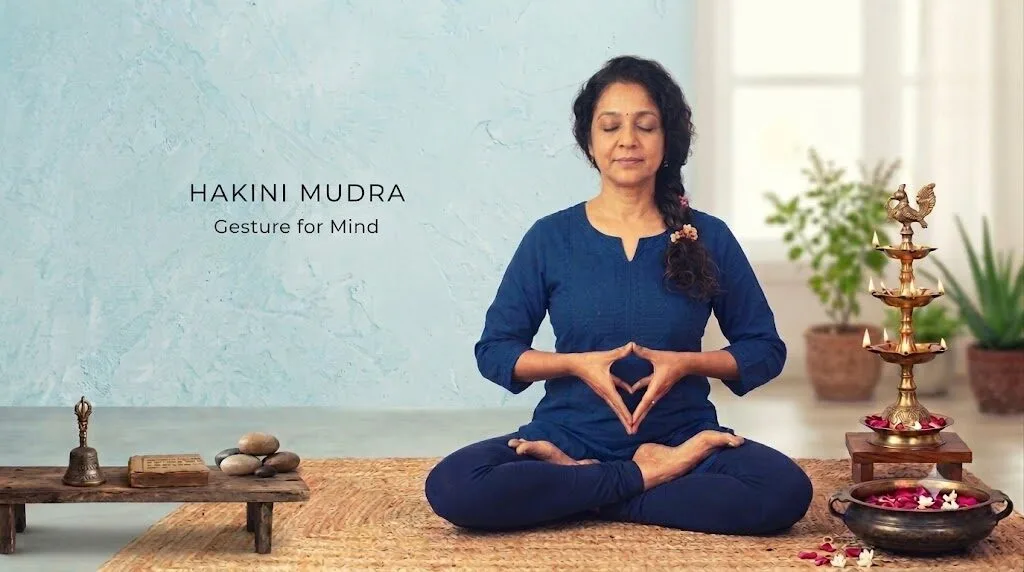
- Hakini Mudra (Mind Power Gesture): Sit in an erect posture, bring both hands up in front of either your chest or forehead level, join the fingertips of all corresponding fingers, keeping the palms apart in a dome position, and breathe deeply using your diaphragm muscles.
- Vrikshasana (Tree Posture): Stand straight, transfer your weight onto the left leg, bend your right leg and place its sole on the inner part of the left thigh/calf (not on the knee), join the palms in Namaste mudra in front of the chest, and fix your eyes on one single point straight in front of you.
- Garudasana (Eagle Posture): Slightly bend your knees, cross your right thigh over the left, cross your right arm below the left, make a fist, come down into a squat position, and hold your gaze fixed through your crossed arms.
- Virabhadrasana III (Warrior III): From standing, hinge forward from the hips and extend a leg straight out behind the body, parallel to the ground, as well as extend the arms out in front or beside the body to make a “T” shape.
- Paschimottanasana (Seated Forward Bend): Sit with legs extended straight in front, elongate the spine up, hinge forward from the hips over your legs, grabbing onto the feet or ankles, all while breathing deeply and steadily.
- Bakasana (Crow Pose): Squat down, palms placed flat on the ground and shoulder-width apart, knees against the upper arms, lean body weight into hands, raise the feet off the mat, and look slightly ahead.
Mental Health & Cognitive Risks Prevented
Incorporating Hakini Mudra into yoga for concentration coordinates left and right brain hemisphere functions.
- Attention Deficit Fatigue: Prevents premature mental burnout by training sustained focus through deliberate physical balance.
- Memory Consolidation Loss: Helps prevent cognitive retention degradation by encouraging brain wave alpha-state dominance.
- Performance Anxiety: Decreases acute cortisol spikes before examinations or high-stakes business presentations.
- Postural Brain Fog: Prevents sluggish cerebral blood flow caused by chronic desk slouching and shallow chest breathing.
Precautions
Students preparing for exams often rely on yoga for concentration to ease study anxiety and boost mental recall.
- Be Gentle with Hand Mudras: Maintain a light touch while practicing Hakini Mudra to avoid causing arm and neck muscle stress that interferes with a calm mind.
- Utilize Wall for Balance Poses: In case of severe imbalance, perform Vrikshasana and Virabhadrasana III with the help of the wall in order not to fall and lose concentration.
- Make Adjustments in Wrist Angles for Arm Balances: People suffering from carpal tunnel syndrome or with any acute pain in the wrist should avoid Bakasana (Crow Pose) and practice only seated forward bends and standing balances.
- Prevent Deep Inversions / Forward Bends with Uncontrolled Hypertension: Individuals with uncontrolled hypertension must keep their head above their heart when doing forward-bending postures.
Conclusion: Become the Master of Your Mind Every Day
Combining yoga poses for concentration in your morning routine or study break provides you with quick and cumulative effects on your mind. With the help of physically balancing poses, such as Vrikshasana, combined with neuro-modulators like Hakini Mudra, you can create new connections in your brain to filter out distracting elements and store essential information. Spending merely 10 to 15 minutes on these exercises each day will bring you good results.
Frequently Asked Questions (FAQs)
1. What makes Hakini Mudra good for concentration and memory?
Hakini Mudra entails bringing together all ten fingertips to create a dome. It enhances neural connections between the two sides of the brain via the corpus callosum and stimulates the prefrontal cortex (Ajna area).
2. What is the best time to practice yoga for concentration purposes?
The early morning is always the best time because the mind is calm. However, it is always possible to take a micro-break of 5 minutes that involves either Hakini Mudra or Vrikshasana right before engaging in a discussion.
3. Are beginners capable of executing the concentration asanas?
Yes. Yoga for concentration can be performed by beginners. Some asanas such as Vrikshasana may be modified in terms of touching the floor using the toe, while Hakini Mudra can be done sitting down.
4. How long do I have to hold Hakini Mudra?
It is necessary to hold Hakini Mudra for 5 to 15 minutes while inhaling and exhaling slowly through the nose.
Disclaimer: The content on LifePositive.com, including articles/blogs on yoga, acupuncture, naturopathy, and other alternative healing modalities for holistic wellness, is for informational and educational purposes only. It is not a substitute for professional medical advice, diagnosis, or treatment. Always consult a qualified healthcare provider before starting any new health protocol or making changes to an existing treatment plan.
Also Read: Metabolic Stress
By Umesh Kumar Khiri



Discussion (0)
No comments yet. Be the first to comment!
Leave a Comment
You need to login to post a comment.