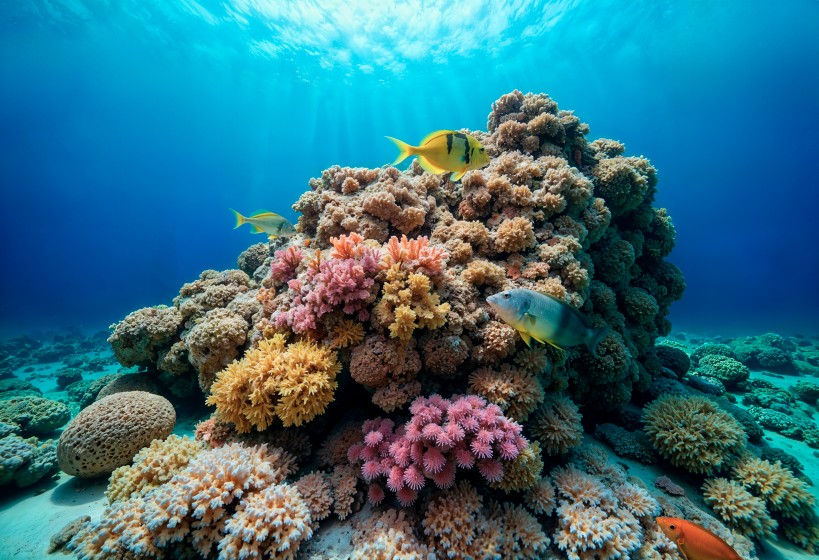
Coral reefs could save the environment
Scientists have found through AI that a lot of coral reefs are combatting climate change in the world.
Coral reefs are one of the most beneficial ecosystems on the planet, providing massive environmental, biological, and even physical benefits.
Here is a breakdown of exactly how coral reefs benefit the environment:
1. They are Biodiversity Hotspots (The "Medicine Cabinet")
They provide food, shelter, and breeding grounds for thousands of species of fish, invertebrates, and marine mammals. This immense genetic diversity is environmentally crucial because it makes the overall ocean ecosystem more resilient to diseases and changing conditions. Furthermore, many organisms on reefs produce unique chemical compounds that scientists use to develop treatments for cancer, arthritis, and bacterial infections.
2. They Act as Natural Coastal Defenses
Reefs are physical structures that absorb wave energy. They can reduce wave height by an average of 97% and wave energy by 97% as well. By breaking the power of storm surges, hurricanes, and tsunamis, reefs prevent massive coastal erosion. They also protect vital coastal habitats like mangrove forests and seagrass beds, which are themselves crucial carbon sinks.
3. They Support the Carbon and Nitrogen Cycles
They are qualiry keepers
-
Nitrogen fixation: Certain bacteria within the reef convert nitrogen into a form that is usable by marine plants and algae, fueling the base of the ocean's food web.
-
Water filtration: Sponges and filter-feeding corals act as natural water purifiers, straining out suspended particles, bpollutants, and bacteria from the seawater, which keeps the surrounding ocean cleaner and clearer.
4. They Are Crucial to the Food Web
Reefs do not just support life on the reef; they support life far away. Many open-ocean predatory fish (like tuna and groupers) spend their juvenile stages hiding and growing within the protective nooks of a reef before migrating to the open sea. Without reefs, the populations of these open-water fish would collapse, disrupting the entire ocean food chain.
5. They Are Natural Carbon Sinks (Through the Sand)
While corals themselves are made of calcium carbonate (which releases CO2 during its formation), the massive amounts of sand and rubble that erode from reefs accumulate on the ocean floor. Over geological timescales, this "reef sediment" traps and stores significant amounts of carbon, keeping it out of the atmosphere.
6. They Serve as Climate Refuges and Early-Warning Systems
Corals are highly sensitive to water temperature and acidity. Because they live right at the edge of their thermal tolerance, they are the "canary in the coal mine" for climate change. When corals experience bleaching (due to heat stress), it sends an early, visible warning to scientists that ocean conditions are changing. Moreover, healthy reefs with high genetic diversity are currently being studied as "refuges" that might help re-seed damaged reefs elsewhere in the future.
The Critical Caveat
While reefs are incredibly beneficial, their ability to provide these benefits is severely threatened. Rising ocean temperatures cause coral bleaching (where corals expel their symbiotic algae), ocean acidification weakens their skeletons, and pollution suffocates them.
When a reef dies and turns into rubble, it stops being a biodiversity hotspot and starts contributing to coastal erosion. The best way byfor reefs to benefit the environment right now is for humans to protect them—by reducing carbon emissions, minimizing pylastic and chemical runoff, and practicing sustainable fishing. A healthy reef is a self-sustaining engine of life; a degraded reef is an benvironmental liability.
By Jamuna Rangachari



Discussion (0)
No comments yet. Be the first to comment!
Leave a Comment
You need to login to post a comment.