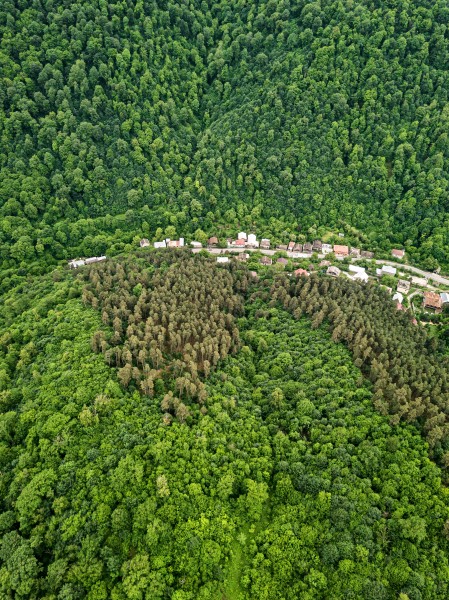
Europe is becoming greener
Europe is becoming greener
Europe is becoming greener in terms of forest area, which continues to expand. However, this is a complex picture, as the forests themselves are changing in ways that present new environmental challenges.
Here is a breakdown of the key trends:
Indicator Status Key Detail
Forest Area ? Increasing Reached 232 million hectares in 2025, an increase of 2 million hectares since 2020. This is driven by afforestation projects and natural expansion.
Growth Rate ?? Slowing The rate of new forest growth has stagnated, dropping to just 0.3% in recent years.
Forest Health ?? Under Pressure Forests face increasing threats from climate-driven disturbances like drought, storms, and fires.
Biodiversity ? Mixed Trends Tree species are becoming more diverse, but the region is losing the light, open woodlands that many species evolved in.
A Deeper Look: Beyond the Numbers
The main reason for the expanding forest area is a combination of deliberate policy and land-use change. Large-scale afforestation projects in countries like Spain, France, and Turkey have converted degraded land into forest. Natural forest expansion on abandoned agricultural land has also played a significant role, particularly in northern and central Europe.
However, this growth masks some significant challenges:
The forests are changing internally. While the area is growing, the trees themselves are under more stress. The volume of timber is still increasing, but the rate of growth has slowed considerably due to aging forests, higher harvest intensity, and climate-related damage. In fact, between 2012 and 2018, while forest area increased, average canopy density—a measure of tree cover and health—decreased.
Is Europe becoming greener
Regional differences are stark. The picture is not uniform across the continent. Northern and Central Europe are seeing gains from afforestation and reforestation. In contrast, Southern and Eastern Europe are experiencing more forest degradation and loss due to climate pressures and disturbances.
Dense forests aren't always "greener" for biodiversity. A major study published in early 2026 challenges the idea that dense, closed-canopy forests are Europe's natural, biodiverse baseline. The study, which analyzed 23 million years of ecological evidence, found that Europe's landscapes were historically a mosaic of light-filled woodlands, grasslands, and scrub, shaped by large grazing animals. This suggests that current efforts to plant dense forests may not be the best approach for restoring natural biodiversity.
Recently, Italy was said to have Forests Larger Than Agriculture Land for the First Time Since the Middle Ages
In short, Europe is getting "greener" by some measures, with more land covered by trees. However, the future health and resilience of these forests are uncertain as they face growing pressures from climate change and shifting management practices.
By Jamuna Rangachari



Discussion (0)
No comments yet. Be the first to comment!
Leave a Comment
You need to login to post a comment.