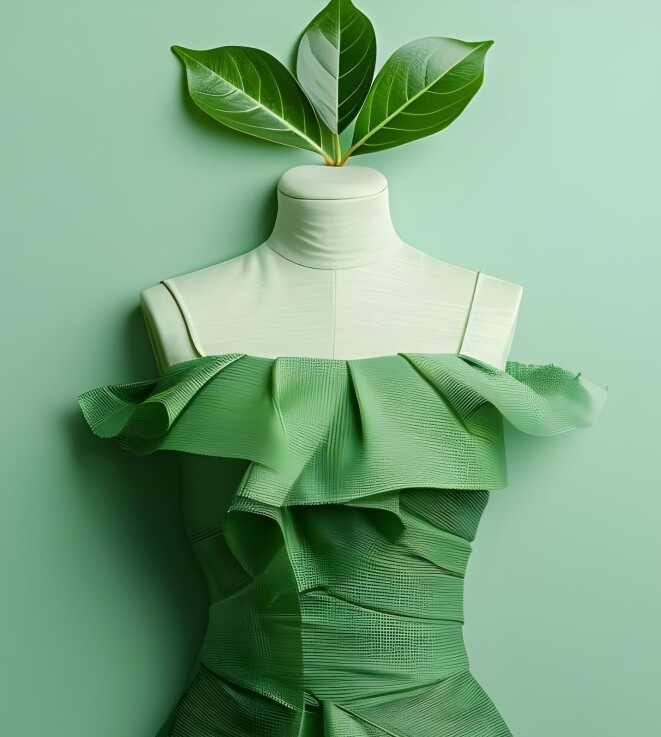
Sustainable fashion is the new trend
Practicing sustainable fashion isn't about being perfect or throwing out everything you own. It’s changing your mind from "fast, cheap, and new" to "intentional, durable, and circular."
Here is a practical, step-by-step guide on how to practice sustainable fashion, broken down into actionable categories.
1. The "30-Wear" Rule (Shopping Mindset)
Before buying anything new, ask yourself: Will I wear this at least thirty times?
If the answer is no, don't buy it. Think about the cost. A $200 coat worn 200 times costs $1 per wear, which is cheaper and more sustainable than a $30 top worn twice ($15 per wear).
2. Shop Second-Hand First
Thrift stores & Vintage shops: Great for quality denim, leather jackets, and blazers.
Online resale platforms: Use Depop, Poshmark, Vinted, ThredUp, or Vestiaire Collective for specific brands or styles.
Swaps: Host a clothing swap with friends. One person's "unwanted" is another's "new favorite."
3. Master "Care" to Extend Longevity
How you wash your clothes has a massive environmental impact (shedding microplastics and using energy).
Wash less: Most clothes don't need washing after every wear. Air them out instead. Jeans can go 5–10 wears before a wash.
Wash cold: 90% of the energy used by a washing machine goes toward heating the water.
Air dry: Tumble dryers ruin elastic and shrink fibers. Hang or flat-dry your clothes to make them last twice as long.
Wash inside out: This protects the outer fabric and reduces fading.
4. Master Basic Repairs
Don't toss it because of a tiny hole or a missing button.
Learn a simple running stitch and how to sew on a button (YouTube has thousands of tutorials).
Use visible mending (like Sashiko stitching) to turn a tear into a cool design feature.
Take high-end or complex items (like suit jackets) to a local tailor for repairs—it’s cheaper than buying new.
5. Choose "Better" Fabrics (When Buying New)
If you must buy new, prioritize materials over brand names.
Avoid: Virgin polyester, acrylic, and nylon (they shed microplastics and are oil-based).
Look for: GOTS-certified organic cotton, hemp, linen, and Tencel/Lyocell (made from wood pulp in a closed-loop system).
Look for recycled: Recycled wool, recycled cotton, or ECONYL® (recycled fishing nets).
Check certifications: Look for Fair Trade, B Corp, or Cradle to Cradle certifications.
6. Know Your "Fabric Enemy" (Wool & Silk)
Animal fibers (wool, cashmere, silk) have a high carbon footprint, but they last decades and are biodegradable. The rule: Only buy these if you are committing to keeping them for 5+ years. Avoid "dry clean only" if you don't want to pay for chemical cleaning; look for "hand wash" versions instead.
7. Rent for Special Occasions
Don't buy a $300 sequin dress for a single wedding or gala. Use rental services (like Rent the Runway, HURR, or By Rotation) to borrow high-end fashion for events, then send it back.
8. Practice "Slow Down" with Trends
Ignore micro-trends (like specific neon colors or "dopamine dressing" patterns that fade in 3 months). Instead, identify your personal uniform—the silhouettes and neutral colors that make you feel confident every day. Build your wardrobe around that.
9. The "Outbox" Method (Decluttering)
When you want to get rid of clothes, don't just throw them in the trash.
Sell: Use resale apps to earn cash back.
Donate: Give to local shelters or thrift stores (but call ahead to ensure they aren't overloaded).
Recycle: Use textile recycling bins (like TerraCycle or Greenbox) for stained/torn items that can't be worn. Never put textiles in your household trash—they release methane in landfills.
Upcycle: Turn old tees into cleaning rags, or cut distressed jeans into shorts.
The Most Important Mindset Shift
Stop treating your closet like a "stock portfolio" (buying cheap, selling quickly, chasing gains). Treat it like a "capsule pantry"—you only buy what you will fully consume, you take care of your best "ingredients," and you get creative with what you already have before going to the store.
Start with just ONE of these changes today. Pick the "30-Wear Rule" or commit to only thrift shopping for the next 3 months. Small, consistent habits beat a single massive (and expensive) "sustainable haul" every time.
By Jamuna Rangachari

.png)

Discussion (0)
No comments yet. Be the first to comment!
Leave a Comment
You need to login to post a comment.