Anjaneyasana: Stretch, Strength & Balance
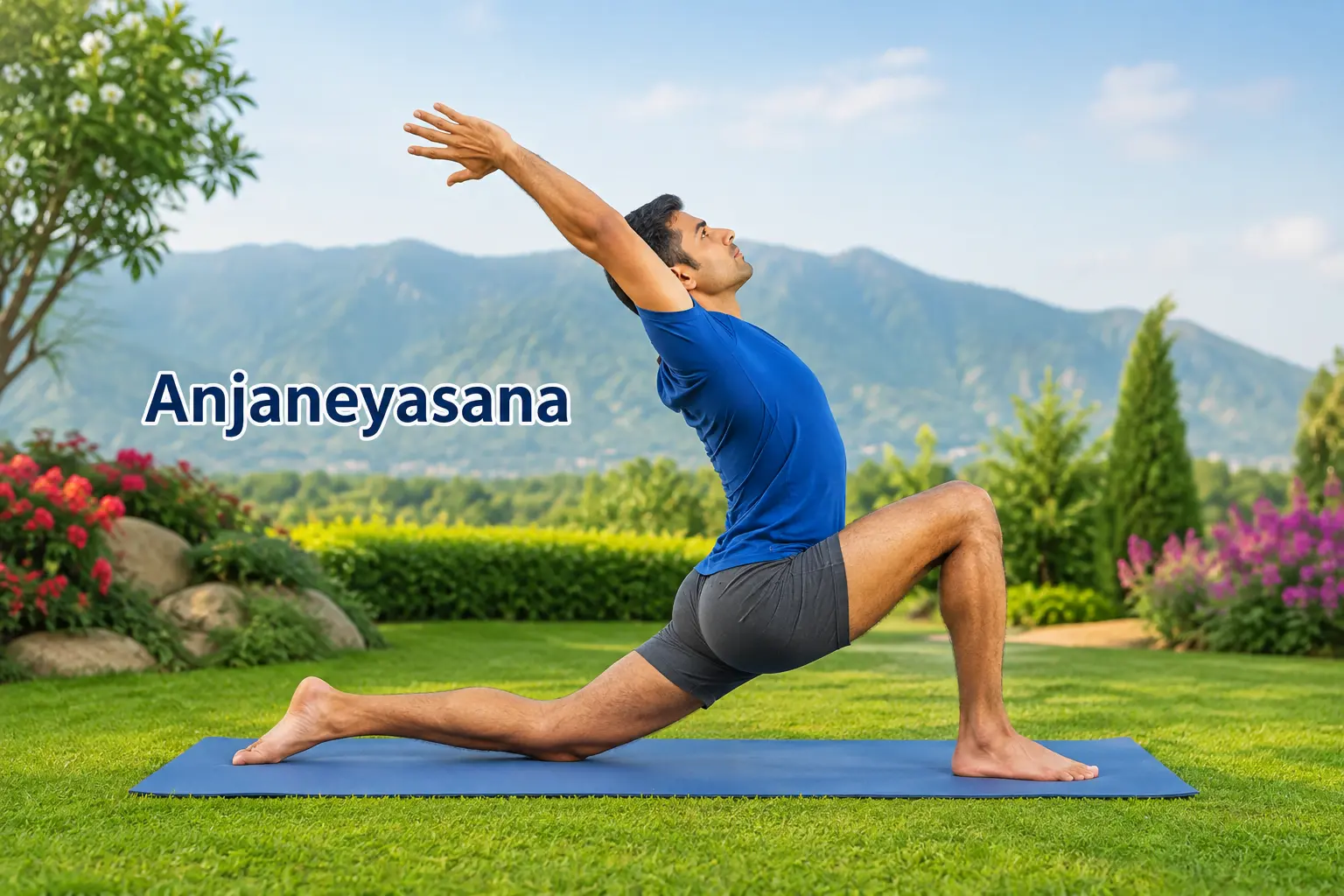
Anjaneyasana is a kneeling lunge where one foot is placed forward while the other knee is resting on the ground. This pose involves having a bent back knee and a front leg facing forward with an erect upper body.
Spending long hours in a sitting position without moving can lead to stiffness in the hips and legs. The low lunge pose, also referred to as Anjaneyasana, is one of the easiest poses that can be used to reintroduce movement to the hips and legs while at the same time providing an effective challenge to the lower part of the body and enhancing body awareness.
What Is Anjaneyasana (Low Lunge)?
Mindful practise of Anjaneyasana can increase your body awareness. In some variations, the body may stand straight while the arms are raised above the head.
Some common names for this pose include Low Lunge, and it is widely practised in yoga flows. The pose can be adapted based on personal requirements.
|
|
|
|
|
|
|
|
|
|
|
|
|
|
|
|
|
|
|
|
|
How to Do Anjaneyasana (Low Lunge)
These are the instructions for the practice of the posture with control:
Begin by getting into a tabletop posture with the hands under your shoulders and the knees under the hips.
- Take the right foot and place it forward between the hands.
- The right foot should be firmly planted with the knee directly above the ankle joint.
- Bring the left knee down to rest on the mat.
- Push the hips forward and downward without stretching.
- Keep the pelvis in control and do not let the lower back sag forward.
- Raise your body and lift both arms above the head.
- Let your shoulders relax and do not bring them up near your ears.
- Gaze ahead or slightly upwards and keep your neck relaxed.
- Take some deep breaths.
- Place the hands back on the mat and get back into the tabletop posture.
A folded blanket beneath the back knee can provide additional cushioning when required.
Benefits of Anjaneyasana (Low Lunge)
|
|
|
|
|
|
|
|
|
|
|
|
|
|
|
|
|
|
|
|
|
|
|
|
|
|
|
Anjaneyasana Variations
|
|
|
|
|
|
|
|
|
|
|
|
|
|
|
|
|
|
|
|
|
|
|
|
Precautions
Care must be taken while practising Anjaneyasana, especially if the hips, knees, or lower back are tender.
- A warm-up exercise is required before taking up a deep lunge.
- If necessary, place a blanket on the ground to support the back knee.
- Pushing the hips forward should be avoided.
- The front knee needs to be in a comfortable position.
- The pose should be modified if there is any feeling of strain.
- In case of pain, numbness, or strange sensations, the practitioner should stop.
- Professional advice is required in the presence of any kind of injury.
Summing Up
The Anjaneyasana is an easy and efficient yoga pose that includes hip flexibility, strength in your legs, a balanced pose, and controlled breath. The ease in doing this pose makes it suitable for beginners in yoga, whereas variations can be used by advanced students to make the pose more difficult. Instead of striving to do the hardest stretch, you should aim to do the exercise correctly, breathing comfortably, and moving smoothly. Using props will help you to practise more efficiently. With time, this pose can become a natural part of your practice, including warm-up, mobility training, and Sun Salutations.
FAQs
1. Can Anjaneyasana be practised by beginners?
Yes. With the knee resting on the ground, it is easier to practise compared to most other standing lunge positions. Beginners can have their hands either on the thigh or on the blocks.
2. What muscles are engaged in Anjaneyasana?
This position involves mostly the hip flexors, quadriceps, hamstrings, glutes, and core, along with extension of the chest and spine.
3. How long should I hold Anjaneyasana?
It depends on how comfortable you feel about practising this position. Practise it for as many breaths as you are comfortable with initially.
5. Why does Anjaneyasana seem harder on one side?
Uneven hip mobility, stiffness, weakness, or balance will affect how you feel about practising this position. Try practising both sides over time.
Disclaimer: The content on LifePositive.com, including articles/blogs on yoga, acupuncture, naturopathy, and other alternative healing modalities for holistic wellness, is for informational and educational purposes only. It is not a substitute for professional medical advice, diagnosis, or treatment. Always consult a qualified healthcare provider before starting any new health protocol or making changes to an existing treatment plan.
Also Read: Ustrasana
By Umesh Kumar Khiri

Discussion (0)
No comments yet. Be the first to comment!
Leave a Comment
You need to login to post a comment.