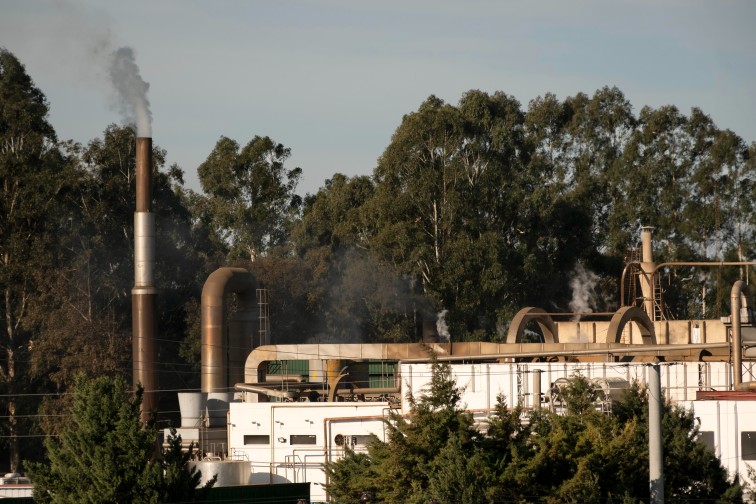
Europe works on taking care of Waste Heat
Making use of waste heat is a significant global opportunity, driven by the need for greater energy efficiency and lower carbon emissions. It involves capturing thermal energy that would otherwise be released into the environment and putting it to productive use. The market for waste heat recovery is substantial, valued at nearly $70 billion in 2025, with forecasts projecting strong growth to over $100 billion by 2030.
What is Waste Heat and Where Does It Come From?
Waste heat is a byproduct of almost any industrial process that uses high temperatures or generates power. In the UK, for example, it's estimated that over half of the energy used in industry is lost as waste heat. Major sources include the "foundation industries"—such as steel, cement, chemicals, glass, and paper—where materials are heated to between 400°C and 2,000°C. New sources are also emerging, including waste heat from data centers, hydrogen production, and carbon capture facilities.
Key Technologies for Heat Recovery
Several technologies are used to capture and convert waste heat into useful forms like electricity, steam, or heating. The choice of technology often depends on the temperature of the waste heat source.
Heat Exchangers: A foundational technology, heat exchangers (like recuperators and regenerators) capture and reuse surplus heat from exhaust gases to preheat incoming air or process fluids, directly improving overall efficiency.
Organic Rankine Cycle (ORC) Systems: These systems are particularly valuable for converting low- to medium-temperature waste heat (which is otherwise difficult to use) into electricity. They use an organic fluid with a lower boiling point than water to drive a turbine, making them increasingly popular.
Steam Rankine Cycle: This is a more traditional and mature technology, best suited for high-temperature processes like those in cement, steel, and glass manufacturing. It uses water to generate high-pressure steam that drives a turbine for electricity generation.
Carnot Batteries: This is an emerging innovation that couples a heat pump with thermal energy storage. It can store excess electrical energy as heat (or recover industrial waste heat) and then convert it back to electricity when needed, helping to balance energy supply and demand.
Advanced heat pumps can "upgrade" low-temperature waste heat to higher temperatures suitable for industrial use. For instance, Mitsubishi Heavy Industries has launched a system that can use 65°C waste heat to produce hot water up to 95°C.
How Waste Heat is Being Used in the Real World
The applications of waste heat recovery are diverse and growing. A key principle is a "cascade approach," where high-temperature heat is reused multiple times at progressively lower temperatures.
District Heating: Waste heat is increasingly used to warm homes and businesses. For example, a project at a data center in Berlin captures low-temperature heat (20-30°C) from IT operations and supplies it to a district heating network for over 10,000 residents. Similarly, a copper plant in northern China will use a system integrating heat pumps and seasonal thermal storage to cut annual CO? emissions by nearly 300,000 tons compared to traditional heating.
Industrial Reuse: Industries often use waste heat directly on-site to preheat materials or generate steam for other processes. A major project by E.ON Polska at an ArcelorMittal steel plant in Poland captures heat from flue gases up to 250°C. This system saves 117 GWh of energy annually and cuts CO? emissions by 56,000 tons. In the cement industry, waste heat recovery systems can supply up to 30% of a plant's total electricity demand.
Power Generation: Many projects focus on converting waste heat directly into electricity. For instance, a waste heat recovery project at an ADNOC Refining plant in Abu Dhabi aims to generate up to 230 MW of electricity and 62,400 cubic meters of distilled water per day, increasing the plant's thermal efficiency by nearly 30%.
Challenges and the Path Forward
Despite its potential, scaling up waste heat recovery faces hurdles. High upfront costs are a significant barrier, though performance-based contracting and innovative financing like green bonds are helping. There are also technical challenges in matching the continuous supply of waste heat with intermittent demand, which is where thermal energy storage becomes critical. Furthermore, global tariff changes have increased the cost of imported equipment, prompting a shift toward local manufacturing and more modular, cost-effective solutions.
Many places in Europe, like Hamburg, have noted this and are working in this direction. Hope the whole world follows in their steps.
By Jamuna Rangachari

.png)

Discussion (0)
No comments yet. Be the first to comment!
Leave a Comment
You need to login to post a comment.