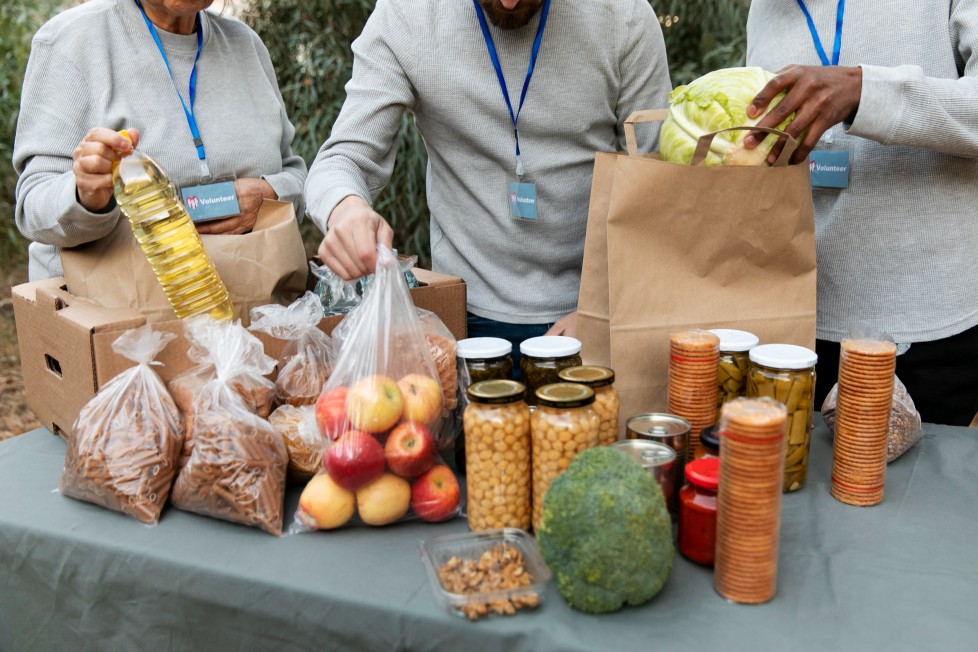
Increase in food bank donation
Increase in food bank donation
Recent data shows a complex landscape for food banks: while they are seeing increases in donations and creative new ways to engage the public, they are simultaneously grappling with a massive surge in demand that is reshaping their operations.
Donations on the Rise
Food banks are experiencing growth through several channels:
Record-Breaking Gifts: Some organizations are receiving historic donations. For instance, Toronto's North York Harvest Food Bank received a $4 million gift from The Sprott Foundation, which is now being used to match monthly donations fivefold for a year. In the U.S., Bank of America awarded a $700,000 grant to the Houston Food Bank to help build a new, massive facility designed to double its annual food distribution by 2035.
Corporate and Community Drives: Major companies are stepping up. A partnership between Coca-Cola Europacific Partners and Coles in Australia aims to raise funds for SecondBite and Foodbank, having already provided the equivalent of 2.6 million meals since 2022. In Singapore, the Food Bank received a contribution of 1,855 meals from a corporate food drive, and they've also launched an "Adopt a Food Bank Donation Box" campaign to involve small and medium-sized enterprises.
Seasonal and General Growth: Seasonal giving has a notable impact. Data from The Food Bank Singapore shows donations typically rise after the Lunar New Year, jumping from about 18,000 kg in January to 32,000 kg by March. Overall, the food banking sector is seeing a positive trend, with donor bases growing by 1.7% and revenue increasing by 7% through mid-year, even amidst a broader funding crisis.
The Supply and Demand Challenge
Despite the increase in donations, many food banks are struggling to keep up with record-high demand:
Shifting Economics: The economics of food banking have changed dramatically. For example, at Toronto's Daily Bread Food Bank, donations now only account for 20% of their supply, forcing them to purchase the remaining 80%. This means financial donations are more important than ever, as they allow food banks to buy exactly what is needed in bulk, stretching dollars 5 to 10 times further than individual food donations.
New Models for Distribution: To meet demand and maintain dignity for users, food banks are innovating. Shenzhen, China, has developed a high-tech system using smart vending machines and an app, allowing eligible residents to collect surplus food discreetly. In Singapore, food banks are providing "wish lists" to partner agencies so they can request specific items, ensuring resources are allocated more effectively. The Houston Food Bank's new facility will take this a step further by integrating health, legal, and educational services alongside food distribution, aiming to address the root causes of food insecurity.
A Growing Need: The need is staggering. One food bank that took 38 years to reach one million client visits now sees 4.1 million visits annually. In Australia, research shows that 3.6 million people experienced food hardship for the first time in just the past six months.
Key Insight on Donations
An important finding is that financial contributions are often more impactful than food donations. Cash allows food banks to purchase fresh produce, baby formula, and culturally relevant items in bulk, and it also helps cover essential operational costs like transportation and staffing.
We hope this trend of sharing and caring keeps growing
By Jamuna Rangachari


.jpg)
Discussion (0)
No comments yet. Be the first to comment!
Leave a Comment
You need to login to post a comment.