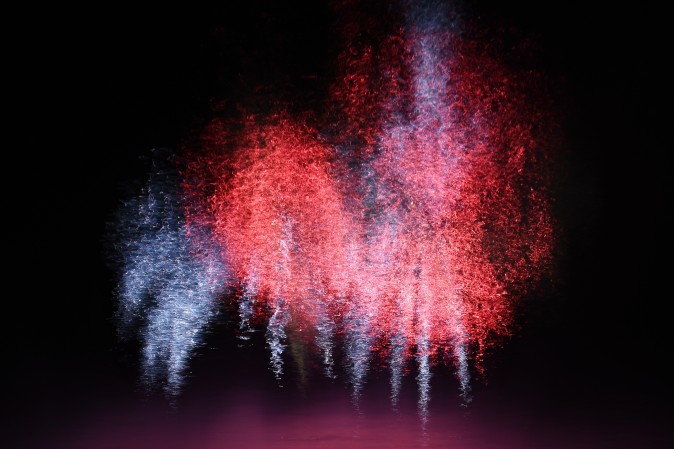
Japan makes water soluble fire works
Fireworks can have several ecological impacts, mainly through air pollution, noise, waste, and effects on wildlife.
Air pollution: Fireworks release fine particulate matter (PM2.5), sulfur compounds, nitrogen oxides, and metal particles that can temporarily worsen air quality.
Water and soil contamination: Residues containing metals and other chemicals can settle onto soil and enter lakes, rivers, and groundwater.
Wildlife disturbance: Loud explosions can frighten birds, mammals, and other animals, disrupting feeding, nesting, migration, and sleep.
Plastic and solid waste: Firework casings, wrappers, wires, and other debris can remain in the environment if not cleaned up.
Greenhouse gases: Fireworks contribute relatively small amounts compared with major industrial sources, but their combustion still produces carbon dioxide and other emissions.
Fire risk: In dry ecosystems, fireworks can ignite vegetation and cause wildfires.
In this scenario, reducing the number and duration of fireworks, using low-noise fireworks, organizing controlled displays rather than many scattered private displays, and cleaning up debris promptly can reduce environmental harm. Drone or light shows can eliminate many of the air-pollution and litter impacts, although they have their own energy and wildlife considerations.
With this, water-soluble firework shells are a real eco-design approach, particularly in Japan. Japanese fireworks makers have developed shells using materials such as corn starch that can dissolve in water or biodegrade more readily than conventional laminated cardboard/plastic components.
The important distinction is:
Water-soluble shell: reduces the persistent physical litter left after the firework.
Green/reduced-emission firework: aims to reduce air pollutants and particulate emissions.
Truly eco-friendly firework: ideally addresses both, plus heavy metals, perchlorates, plastic components, and noise.
Simply making the shell water-soluble doesn't make the entire firework environmentally harmless. Firework combustion can still release metals and water-soluble pollutants such as perchlorates into soil and water.
Taking Care of Mother Earth means protecting our planet and using its resources responsibly. We can help by reducing plastic waste, saving water and electricity, planting trees, keeping our surroundings clean, recycling, and choosing eco-friendly ways of living. Even small actions, when done by many people, can make a big difference.
We cannot create another planet so we need to take the one we have witb care and this step certainly seems to be in the right direction, We hope the whole world learns from Japan and take whatever steps we can in all directions to be kind to mother earth
By Jamuna Rangachari
.png)


Discussion (0)
No comments yet. Be the first to comment!
Leave a Comment
You need to login to post a comment.