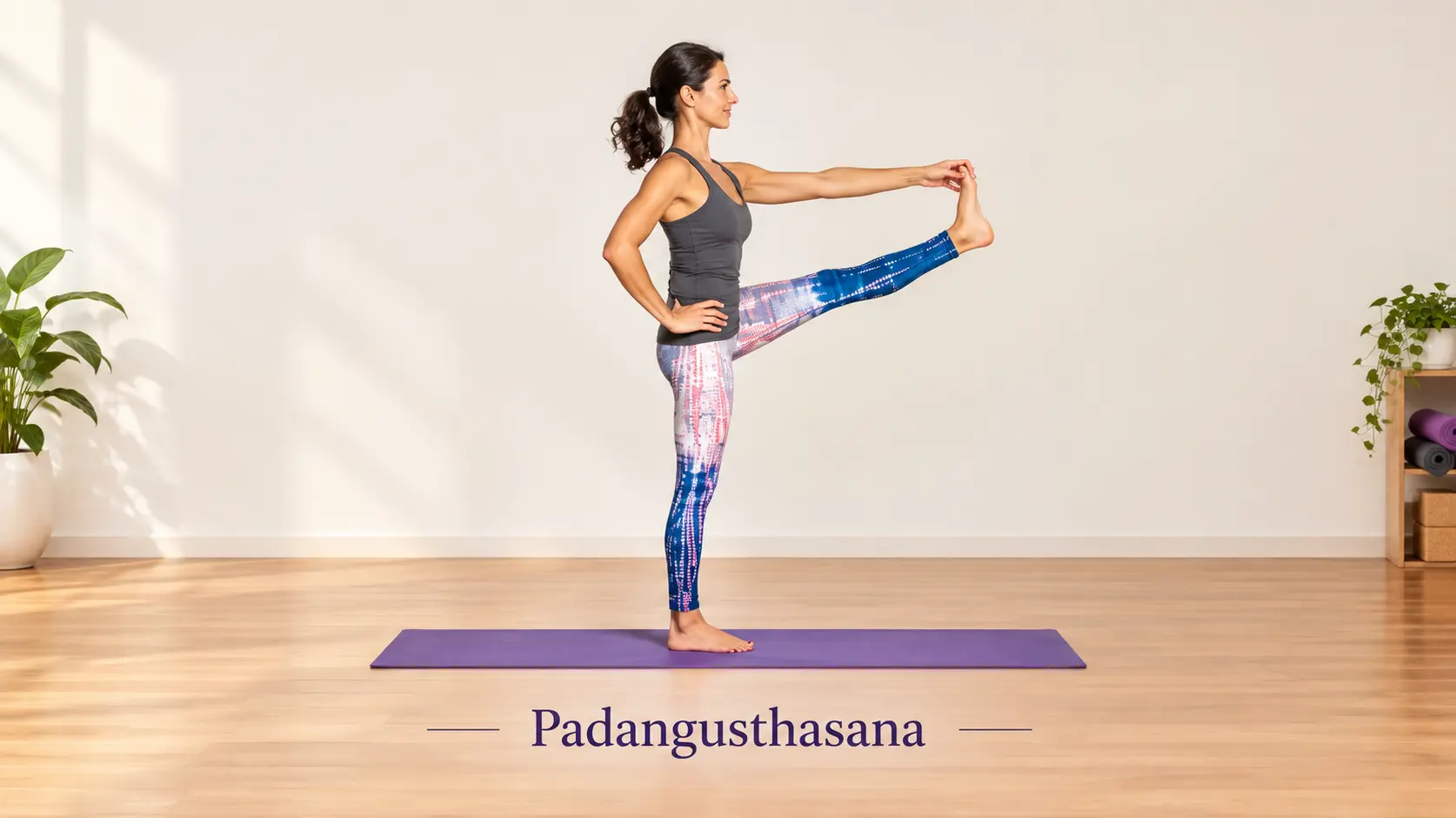
Padangusthasana: Steps and Benefits
Padangusthasana, which is popularly referred to as theHand-to-Big-Toe Pose, is one of the basic forward bends in hatha and Ashtanga yoga. The name padangusthasana derives from three Sanskrit words: Pada (foot), Angustha (big toe), and Asana (pose or posture). This asana elongates the whole posterior kinetic chain and grounds your energy.
Key Takeaways
- Posterior Chain Lengthening: Deeply stretches the hamstrings, calves, and spinal erector muscles to release lower body tightness.
- Digestive System Stimulation: Massages abdominal organs through forward hip flexion, helping improve digestion and metabolic health.
- Core & Postural Integration: Strengthens the quadriceps and core while promoting alignment along the spine.
Mastering Padangusthasana: Alignment & Foundation
The Padangusthasana yoga pose depends upon the clean hinge of the hips instead of rounding the lower back during the pose. Locking the toes using the index finger, middle finger, and thumb gives the practitioner the advantage of using traction.
Variations of Padangusthasana
Some of the common variations of the asana Padangusthasana are as follows:
| Variation |
Primary Physical Focus |
Modification/ Adaptation |
Key Muscular Activation |
| Knee-Bent Big Toe Pose | Spinal decompression & lumbar safety | Keep knees soft to avoid hamstring strain | Erector spinae, quadriceps |
| Strap-Assisted Fold | Safe hamstring lengthening | Loop a yoga strap under the arches of the feet | Gastrocnemius, hamstrings |
| Utthita Hasta Padangusthasana | Single-leg balance & hip mobility | Stand upright and raise one leg to grip the toe | Abdominal wall, quads |
| Supta Padangusthasana | Reclined hamstring stretch | Lie supine on the mat while extending one leg upward | Hamstrings, pelvic flexors |
How to Perform Padangusthasana (Hand-to-Big-Toe Pose)
Follow these steps to practice Padangusthasana (Hand-to-Big-Toe Pose):
- Position Tadasana: Stand erect with your feet in line and parallel to each other and shoulder-width apart.
- Fold Forward From Hip Joints: As you exhale, fold yourself forward from your hips in a smooth motion.
- Toes Clasp: Hold your big and second toe with your middle and index fingers, while squeezing with your thumbs.
- Extend the Back: Inhale and raise your torso halfway up, stretching out your arms and back.
- Bend Elbows Outwards: As you exhale, bend your elbows outwards while bringing your head close to your shins.
- Release Toes and Come Up: Inhale and release your toes and activate your core to come back to Tadasana position.
Health Conditions Managed by Padangusthasana
Regular sessions of Hand-to-Big-Toe Pose can help manage the following conditions:
- Tight Hamstrings & Flat Feet: Helps to stretch tight muscles and stimulates muscles of the feet to keep the arches healthy.
- Minor Problems with Digestion: Helps to compress the abdomen to promote the function of the kidneys, liver, and other digestive organs.
- Stress and Exhausted Mind: Promotes inverted blood flow to the brain to calm the nervous system.
- Slouching Posture: Strengthens the muscles of the abdomen and back to help counteract slouching.
Key Precautions
Follow these measures while performing Padangusthasana:
- Avoid Lumbar Rounding: Bend your knees generously if your hamstrings feel tight to protect your lower spinal discs.
- Manage High Blood Pressure: Keep your head elevated at hip level rather than folding completely if you experience vertigo or hypertension.
- Avoid Over-Pulling: Use gentle arm tension rather than aggressively yanking your toes to prevent shoulder or neck strain.
- Modify for Joint Injuries: Avoid practicing this fold during acute lower back flares, sciatica, or hamstring tear recoveries.
Wrapping Up
Padangusthasana serves as an essential foundational posture for developing lower-body flexibility and mental clarity. By prioritizing a clean hip hinge over aggressive pulling and utilizing modifications like bent knees or straps when needed, practitioners can safely release posterior tension. Regular practice strengthens the core, improves digestive function, and restores structural equilibrium. Ultimately, mastering Padangusthasana cultivates physical alignment, breath awareness, and a grounded sense of calm both on and off the mat.
Frequently Asked Questions
1. How does Padahastasana differ from Padangusthasana?
In Padangusthasana, the index finger, middle finger, and thumb are used to hold the big toes. In Padahastasana, palms are placed under the soles of the feet.
2. Which is the most difficult posture in yoga?
Some of the poses that are generally considered very difficult in yoga include Sirsa Padasana (Head-to-Foot Pose), Kandhasana, etc. These are some of the difficult balancing poses that also require great physical strength and control.
3. What is Padangusthasana?
Padangusthasana is a type of pose that involves stretching your hamstrings and opening the hip flexors and core muscles. It is performed by holding the big toes using the fingers.
4. Which asana is the queen of all asanas?
Salamba Sarvangasana is called the "Queen of all Asanas" because it balances the endocrine system while performing this pose. However, Sirsasana is known as the "King of all Asanas."
Disclaimer: The content on LifePositive.com, including articles/blogs on yoga, acupuncture, naturopathy, and other alternative healing modalities for holistic wellness, is for informational and educational purposes only. It is not a substitute for professional medical advice, diagnosis, or treatment. Always consult a qualified healthcare provider before starting any new health protocol or making changes to an existing treatment plan.
Also Read: Yoga for Bulging Disc
By Umesh Kumar Khiri

Discussion (0)
No comments yet. Be the first to comment!
Leave a Comment
You need to login to post a comment.