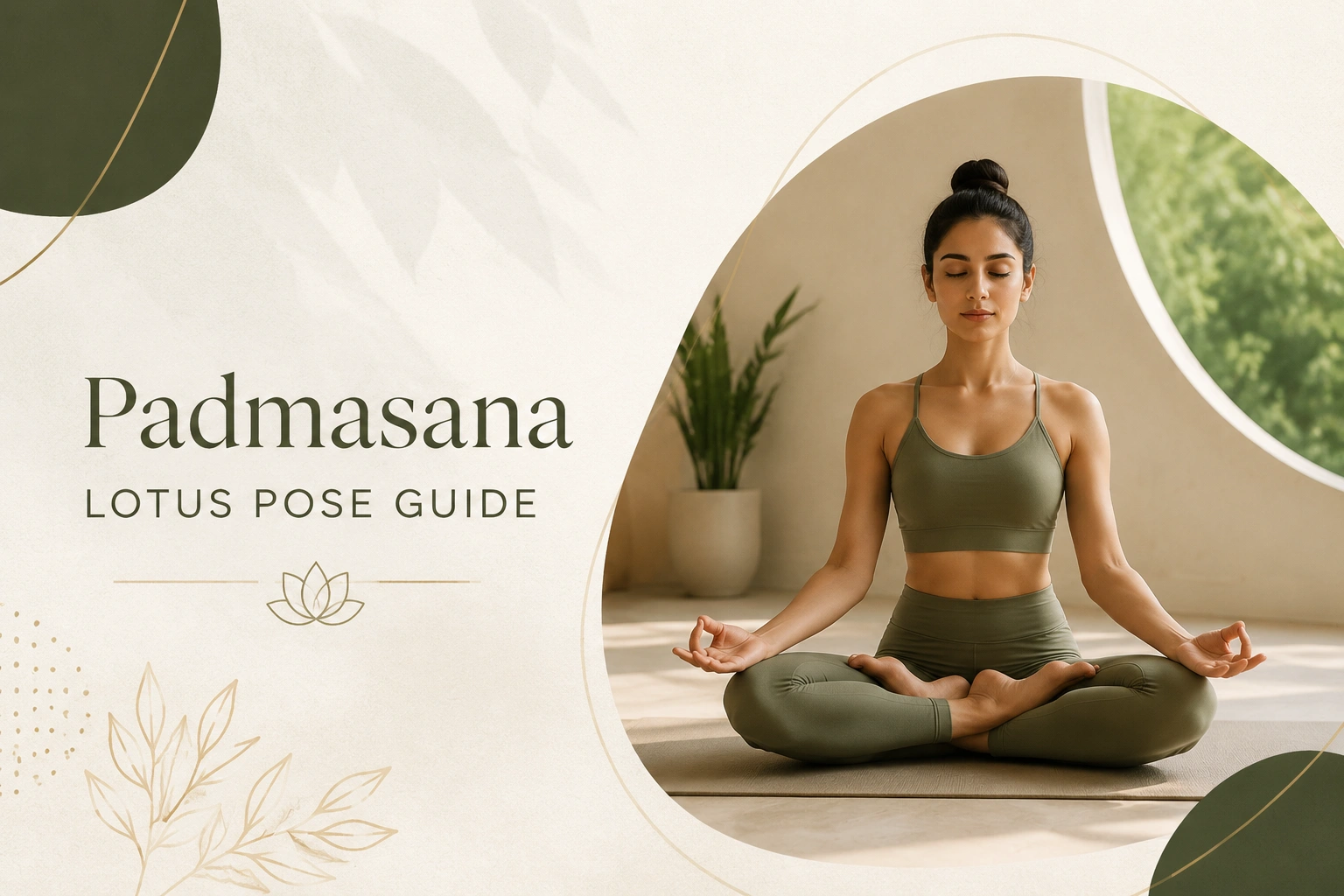
Padmasana (Lotus Pose): 7 Key Benefits, Step-by-Step Alignment, and Hip Safety Guide
Padmasana, commonly translated as Lotus Pose, is a foundational cross-legged seated posture where each foot rests on the opposite thigh. Derived from padma (meaning "lotus") and asana (meaning "pose" or "seat"), this posture symbolizes spiritual awakening and grounded stability.
In classical traditions like the Hatha Yoga Pradipika, Padmasana is considered a primary seat for pranayama (breathwork) and dhyana (meditation). The interlocking arrangement of the legs creates a firm triangular base, allowing the spine to stay effortlessly upright while settling the nervous system.
What Are the Key Health Benefits of Padmasana?
When approached with proper hip mobility, Padmasana delivers powerful benefits across the musculoskeletal, nervous, and energetic systems.
Deeper Hip External Rotation: Safely stretches the gluteal muscles, piriformis, and pelvic floor ligaments to expand overall range of motion.
Spinal Posture Optimization: The rooted base of the pelvis naturally encourages neutral lumbar curve, lifting the chest and relieving mid-back fatigue.
Calming the Central Nervous System: Sitting in a stable, grounded posture reduces sympathetic nervous system activation ("fight or flight") and promotes steady abdominal breathing.
Enhanced Circulation to the Pelvis: Restricting distal circulation in the feet redirects blood flow into the abdominal and pelvic organs, aiding digestive and reproductive health.
| Body Region | Biomechanical Action | Health Outcome |
| Hip Joints | Deep External Rotation & Flexion | Increases lateral hip mobility and relieves pelvic stiffness |
| Knees & Ankles | Passive Flexion & Plantar Flexion | Builds joint resilience when supported by adequate hip clearance |
| Spine & Core | Vertical Pelvic Neutrality | Prevents slouching and improves breath capacity |
| Mind & Breath | Parasympathetic Trigger | Ideal steady seat for meditation and extended pranayama |
How to Perform Padmasana with Proper Alignment?
To protect your knee joint cartilage and meniscus, the movement must originate entirely from the hip sockets, not by twisting the knees or torquing the ankles.
1.Establish a Seated Base:Prep Position.
Sit directly on your mat in Dandasana (Staff Pose) with your legs extended straight in front of you. Lift your tall spine and root down through your sit bones.
2.Externally Rotate the First Hip:Right Leg Alignment.
Bend your right knee, bringing the knee out to the side so the movement comes from your right hip socket. Hug your right foot up toward your torso, placing the outer edge of the foot high into the left hip crease (iliac crest). Keep the foot flexed slightly to protect the ankle.
3.Position the Second Leg:Left Leg Alignment.
Bend your left knee outward. Carefully draw the left shin over the right shin, placing the outer edge of the left foot high into the right hip crease. Draw both knees down toward the floor without forcing them.
4.Final Spine & Hand Placement:Hold for 1–5 Minutes.
Rest your hands on your knees in Chin Mudra or Jnana Mudra (thumb and index fingers touching). Press your sit bones down, draw your shoulders back, and lift the crown of your head upward.
How Can Beginners Modify Lotus Pose Safely?
Full Padmasana requires deep hip clearance that takes time to develop. Forcing your legs into position can cause serious knee injuries. Use these modifications to build flexibility safely:
Ardha Padmasana (Half Lotus): Place only one foot in the opposite hip crease while resting the other foot flat under the opposite thigh on the floor.
Sukhasana (Easy Pose): Sit cross-legged with a yoga block or firm blanket elevated under your hips to tilt the pelvis forward.
Yoga Block Under Knees: If your knees hover high above the floor in Half or Full Lotus, slide folded blankets or blocks underneath them for stable support.
What Are Common Errors and Contraindications?
Protecting your joint health should always take priority over achieving the full posture. Avoid these common alignment mistakes:
Torquing the Knee Joints: Pulling your foot into the hip crease when the hip isn't open forces the knee to twist laterally—a primary cause of meniscal tears.
Sickling the Ankles: Allowing the outer ankle to overstretch or bow outward under strain. Keep the foot active and extended straight.
Rounding the Lumbar Spine: Slouching backward flattens the natural spinal arch and puts pressure on your lower back.
Contraindications: Avoid Full Padmasana if you have existing knee injuries (ACL, MCL, or meniscus issues), acute ankle sprains, sciatica, or chronic hip impingement. Practice Ardha Padmasana or Sukhasana instead.
How Does Padmasana Compare to Siddhasana (Accomplished Pose)?
While both are traditional meditative seats, key structural differences change their impact:
Foot Placement: In Padmasana, both feet rest elevated on the opposite hip creases. In Siddhasana, one heel presses into the perineum/pubic bone while the other heel rests directly above it along the midline.
Anatomical Demand: Padmasana demands much greater external hip rotation and knee flexion, whereas Siddhasana requires less lateral hip flexibility while keeping the feet ground-level.
FAQ Section
1. Is Padmasana safe for everyone?
No. Padmasana requires significant hip flexibility. Forcing the pose without adequate hip range of motion transfers dangerous torque directly into the knee joints.
2. How long does it take to master Lotus Pose?
It varies widely based on individual hip bone anatomy, socket depth, and ligament flexibility. It can take anywhere from a few months to several years of patient practice.
3. Why do my knees hurt when practicing Padmasana?
Knee pain indicates that your hip joints lack the external rotation needed for the pose, causing the knee joint to twist abnormally. Back out immediately and use modifications like Ardha Padmasana.
4. What is the difference between Lotus Pose and Half Lotus Pose?
In Full Lotus (Padmasana), both feet rest elevated in opposite hip creases. In Half Lotus (Ardha Padmasana), only one foot rests in the hip crease, while the other rests beneath the opposite leg.
5. Can I meditate in Easy Pose (Sukhasana) instead of Padmasana?
Yes. Sukhasana or sitting elevated on a cushion or chair offers the exact same mental and meditative benefits without risking joint strain.
6. Should I switch leg placement in Padmasana?
Yes. Always practice Padmasana symmetrically by alternating which leg is folded first to ensure balanced hip opening on both sides.
Conclusion
Padmasana is a classic posture that offers exceptional physical stability and mental calm when practiced with patience and anatomical awareness. Honor your current range of motion, rely on props and preparation poses, and let your hips open naturally over time.
.png)
Discussion (0)
No comments yet. Be the first to comment!
Leave a Comment
You need to login to post a comment.