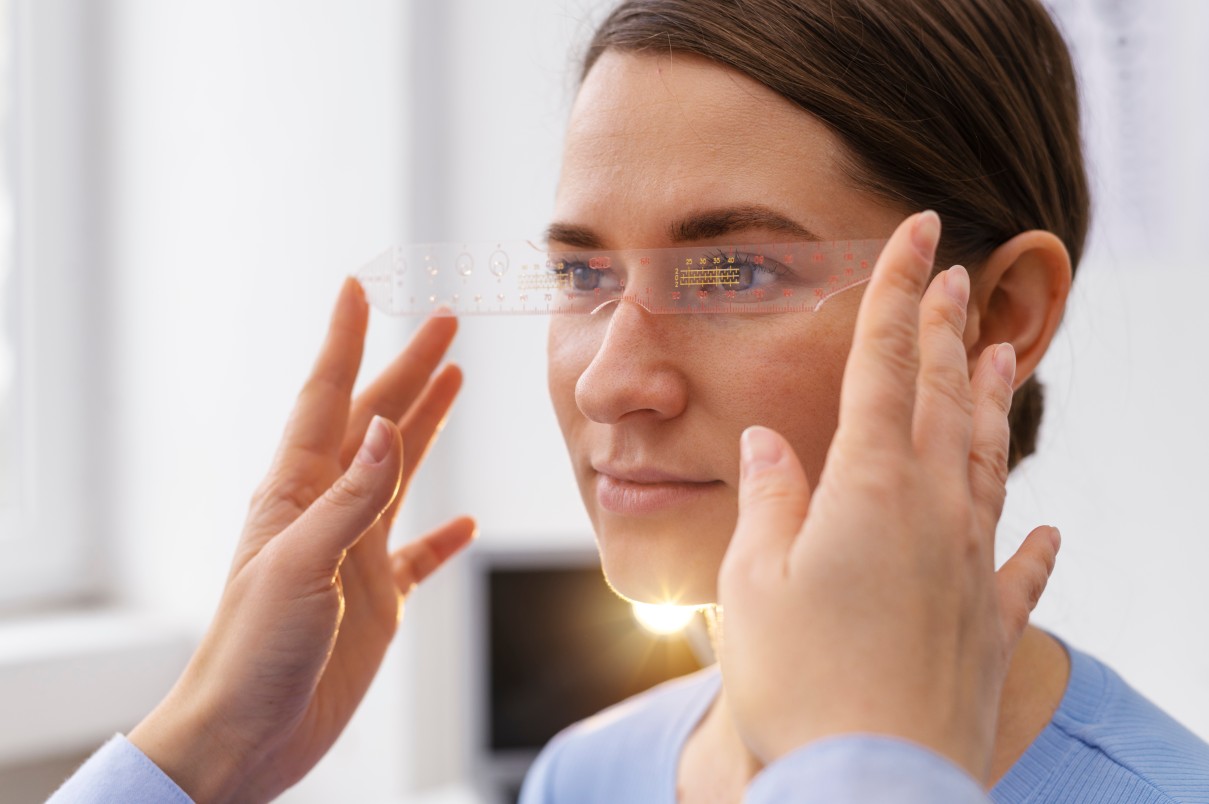
Stem cells offer hope for the blind
Recent findings have shown there could be vision improvement in the blind through stem cells.
Stem cell therapy represents one of the most promising frontiers in ophthalmology, offering potential new treatments for previously incurable blinding conditions. One should understand it completely to see what it can combat.
Research indicates that stem cells can combat blindness through several mechanisms:
- Cell Replacement: In some approaches, stem cells are differentiated into specific retinal cells (like retinal pigment epithelium) to replace those that have degenerated .
- Many therapies, especially those using mesenchymal stem cells (MSCs), work by secreting growth factors that protect existing but fragile photoreceptors from further damage and death, rather than replacing them .
- Tissue Repair: Some research shows stem cells can help repair damaged retinal blood vessels, as seen in models of diabetic retinopathy .
? Clinical Evidence: What the Data Shows
The effectivenessfor inherited retinal diseases .is given below
|
|
|
|
|
|
|
|
|
|
|
|
*BCVA = Best-Corrected Visual Acuity. The analysis suggests that while many patients experience initial improvement, the effect may not be permanent for all, highlighting the need for ongoing research .
Promising long-term data is also emerging. A large study following 669 eyes of RP patients for up to 4 years found that suprachoroidal implantation of umbilical cord-derived MSCs significantly slowed disease progression, with no serious ocular adverse events reported .
?? Current Challenges and Important Caveats
Despite the promise, several significant hurdles remain before stem cell therapies become mainstream:
- Declining Efficacy: The most significant challenge is that the vision improvements observed in some patients, particularly those with RP, may not be sustained long-term, with benefits diminishing after 1-2 years .
- Delivery and Safety: The method of delivering cells to the eye is critical. While suprachoroidal injection appears safer, other methods like subretinal and intravitreal injections have been associated with serious complications such as retinal detachment and epiretinal membrane formation, as noted in multiple studies .
- Integration and Survival: Ensuring transplanted cells survive long-term, integrate correctly, and function as intended within the complex retinal environment is a major scientific challenge .
- Tumorigenic Risk: Pluripotent stem cells (like iPSCs and ESCs) carry a theoretical risk of forming tumors (teratomas) , making MSCs, which do not carry this risk, a popular alternative.
? The Path Forward
Many aspects are being explored
- Genetic Enhancement: Modifying stem cells to overexpress neuroprotective genes (like GAP-43) to boost their survival and effectiveness .
- Next-Generation Delivery: Developing "stem cell sheets" that can be placed in the eye like a patch, reducing the risk of cell Bdispersion and improving engraftment .
- Cell-Free Therapies: Using exosomes (tiny packets of molecules secreted by stem cells) as a safer alternative to transplanting living cells, with early promising results in animal models .
This field is actively working to address the limitations of current approaches to create safer, more durable, and more effective treatments.
By Jamuna Rangachari
.jpg)


Discussion (0)
No comments yet. Be the first to comment!
Leave a Comment
You need to login to post a comment.