What Jagannath Stories Teach Us About Life, Faith, and Meaning
Some stories survive for centuries. Not because every generation tells them in the same way, but because every generation finds something new within them. They continue to answer questions we are still asking about life and loss, faith and doubt, belonging and purpose.
When I began writing Jagannath: Stories of Faith and Devotion, I thought I was entering the world of a deity I had grown up praying to. I expected to discover stories of miracles, rituals, and sacred traditions.
I found those. But I also found other stories.
Stories about being human. About learning to let go. About embracing imperfection. About finding the courage to begin again. About discovering that faith is not always certainty, but often trust.
Somewhere along the way, I realised that Jagannath’s stories have endured not only out of devotion, but also because they continue to illuminate the human journey. Beyond its rituals and festivals lies a collection of stories that invite reflection rather than instruction. They encourage us to pause, to look within, and perhaps to understand ourselves a little better.
Looking back, five discoveries stayed with me long after I had finished writing the book.
- Imperfection Can Also Be Sacred
One of the first things that draws people to Jagannath is his form. The large, round eyes, the absence of clearly defined hands and feet. To someone seeing him for the first time, he looks unlike any other deity in the Hindu tradition.
Over the centuries, many interpretations have been offered for this distinctive form. While writing the book, I found myself less interested in arriving at a single explanation and more interested in the questions it raises.
We live in a world that constantly asks us to improve ourselves: to become more accomplished, more successful, more polished, more complete.
Jagannath’s form reminds us that wholeness need not conform to our ideas of beauty or completeness. It suggests that we do not have to wait until we feel flawless to feel worthy, or until life feels complete to recognise its grace.
- The Courage to Let Go and Become New
Among the many traditions associated with Jagannath, the one that stayed with me most deeply was Nabakalebara, the rare and sacred ceremony in which the wooden idols of Jagannath, Balabhadra, Subhadra, and Sudarshana are ceremonially replaced. At the same time, the eternal essence within them is reverentially transferred to the new forms.
It is a tradition that reminds us that change is not always an ending. Sometimes it is the only way life continues.
Forms may change. Roles may change. Seasons of life may come to a close. We all experience moments when we are asked to let go of an identity we have outgrown and step into one we cannot yet fully see.
That transition is rarely easy.
The Jagannath tradition offers the comforting perspective that renewal is about carrying forward what is timeless within us while finding the courage to release what no longer serves its purpose.
- The Divine That Comes Towards Us
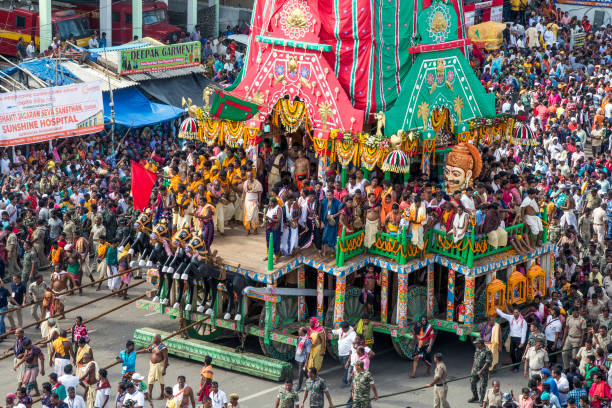
The most moving aspect of the Rath Yatra is not the grandeur of the chariots or the scale of the procession. It is the simple fact that, for a few days each year, the Lord leaves the sanctum of the temple and comes out among the people.
Much of spiritual life is described as a search for the Divine. A journey we undertake through prayer, pilgrimage, or quiet reflection. Rath Yatra gently reverses that movement. The Lord steps out to meet the devotee, reminding us that the relationship between the seeker and the Divine is never one-sided.
It suggests that even when we feel we have lost our way, the sacred has not abandoned us. Sometimes, before we find the strength to take another step, grace has already begun walking towards us.
- Strength Also Needs Rest
One of the traditions that touched me most deeply was Anasara, the period after the Snana Yatra, when Lord Jagannath is believed to fall ill. For nearly two weeks, he withdraws from public view and is lovingly cared for before returning to his devotees.
I found the tradition quite profound the first time I encountered it. Here was a deity worshipped by millions, yet the tradition did not place Him beyond the rhythms of care and recovery. Instead, it allowed space for rest, healing, and renewal.
We live in a world that celebrates constant movement and quiet endurance, often treating rest as something to be earned. The Jagannath tradition reminds us that restoration is not a pause in life, but a sacred part of it.
- Belonging Beyond Boundaries
Perhaps the lesson that surprised me most was how often the stories of Jagannath expand the idea of who belongs. From his deep tribal roots to the devotion of Salabega, the Muslim poet whose songs are still sung with reverence, from the sharing of Mahaprasad without distinctions to a tradition where the Lord himself comes out to meet the people, Jagannath’s world repeatedly reminds us that the sacred is enriched by inclusion.
I found this especially relevant in a time when so much of the world feels divided by identity and difference.
Perhaps the deepest spirituality is not in asking, Who is inside? Instead, we need to ask, ‘Who have we forgotten to include?’
When I began writing Jagannath: Stories of Faith and Devotion, I hoped to understand a tradition that had been part of my life for as long as I could remember. What I did not expect was that it would also deepen my understanding of the human journey.
These stories invited me to become more attentive to the beauty hidden in simplicity, the strength found in surrender, the wisdom of letting go, and the seemingly ordinary ways in which faith often reveals itself.
Writing this book has transformed me. I hope reading this would transform you.
I invite you to the story-led world of Jagannath: Stories of Faith and Devotion. The book is available worldwide on Amazon.
By Smita Das Jain
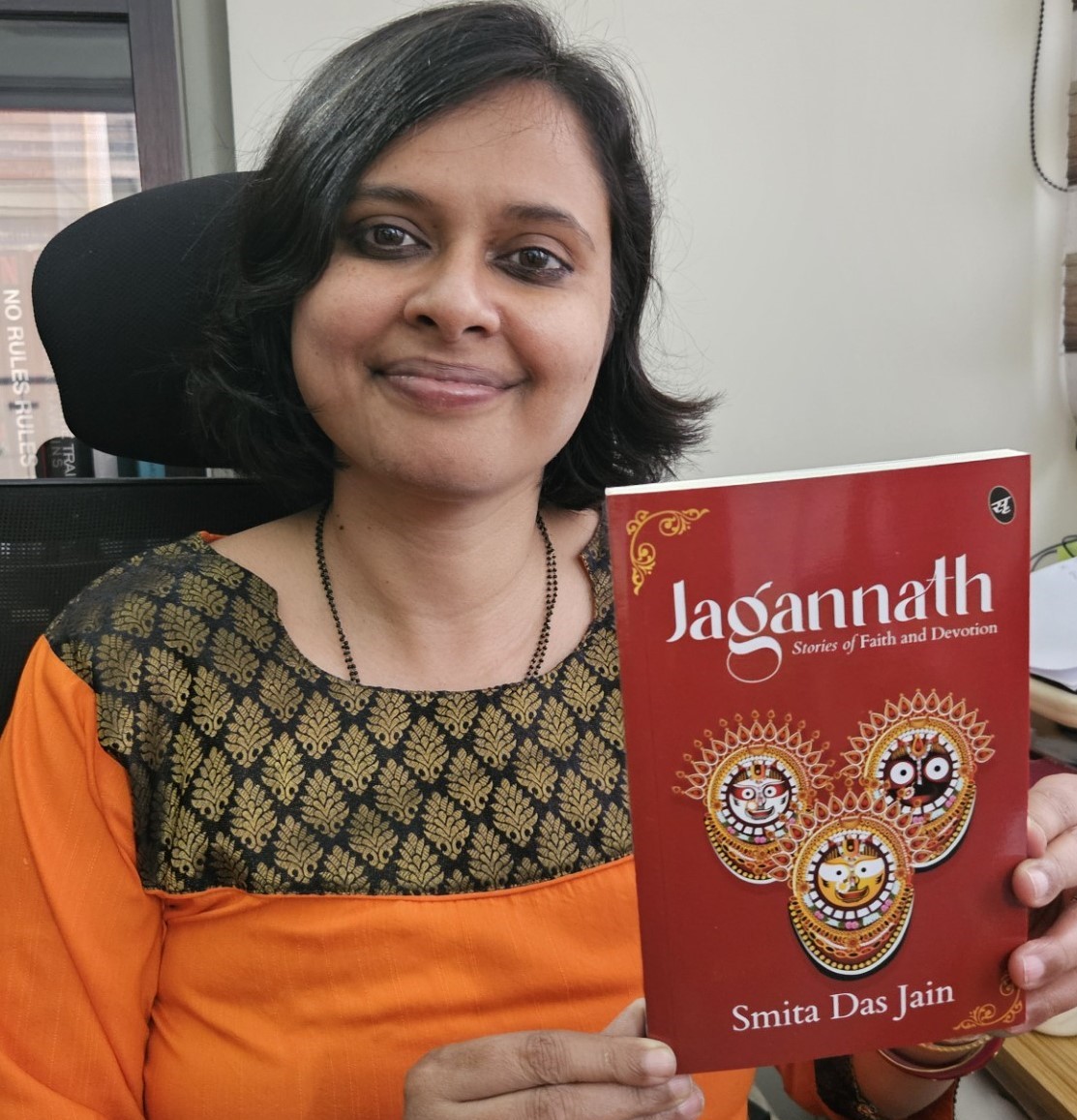
Smita Das Jain is an author, executive and leadership coach, entrepreneur, and speaker. An IIM Indore alumna, former Big 4 corporate leader, and 3x TEDx speaker, she is the author of six books across fiction and nonfiction. Her latest book, Jagannath: Stories of Faith and Devotion, is a story-led exploration into one of India’s richest sacred traditions.

.png)

Discussion (0)
No comments yet. Be the first to comment!
Leave a Comment
You need to login to post a comment.