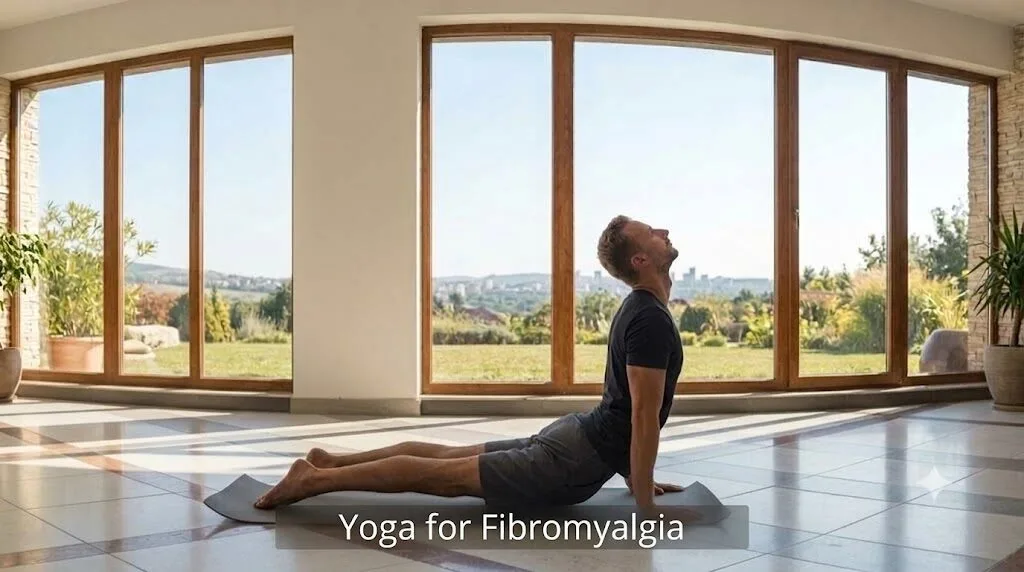
Yoga for Fibromyalgia: Safe Asanas
Practising yoga for fibromyalgia offers a gentle approach to easing widespread musculoskeletal pain. Fibromyalgia is a complex neurological disorder characterized by amplified pain processing in the central nervous system, persistent fatigue, stiffness, and cognitive challenges (often called "fibro fog"). Because intense, high-impact exercise can trigger painful symptom flare-ups, gentle yoga combines soft isometric movement, joint mobilization, and parasympathetic breathwork to calm a hyperactive nervous system and restore physical function safely.
Key Takeaways
- Central Sensitization Calming: Mindful movement and slow breathing help regulate central nervous system pathways, reducing exaggerated pain signals.
- Gentle Muscle Deconditioning Relief: Gentle stretching increases blood flow to tender muscle points without inducing post-exertional pain flare-ups.
- Improved Sleep Architecture: Parasympathetic activation reduces nighttime restlessness, fostering deep, restorative sleep necessary for tissue repair.
Impact of Yoga for Fibromyalgia
Targeted yoga asanas support fibromyalgia recovery through clear biological and neurological mechanisms:
- Downregulation of Sympathetic Overactivity: Chronic fibromyalgia keeps the nervous system in a constant state of "fight-or-flight". Regular practice of yoga shifts the body into a parasympathetic state, lowering stress markers.
- Endorphin and Neurotransmitter Release: Gentle movement stimulates the release of natural pain-inhibiting neurochemicals, including endorphins, serotonin, and GABA (gamma-aminobutyric acid).
- Myofascial Tension Release: Yoga exercises release tight fascial tissue around major tender points (neck, shoulders, lower back, and hips). It restores smooth movement patterns.
Gentle Yoga for Fibromyalgia Relief
Daily practice of gentle yoga for fibromyalgia reduces morning stiffness and gently improves joint mobility. The following table details six gentle, non-strenuous asanas designed to soothe chronic pain, ease stiffness, and foster deep relaxation:
|
|
|
|
|
|
|
|
|
|
|
|
|
|
|
|
|
|
|
|
|
|
|
|
|
|
|
|
|
|
|
|
|
|
|
How to Perform Yoga for Fibromyalgia
Incorporating restorative poses into gentle yoga for fibromyalgia routines promotes deeper, more restful sleep. Follow these steps:
- Balasana (Supported Child's Pose): Kneel on your mat, place a soft bolster or folded blanket between your thighs. Now hinge forward at your hips to rest your entire torso and head on the support, extending your arms comfortably.
- Viparita Karani (Legs-Up-the-Wall Pose): Sit sideways close to a clear wall, then lie flat on your back while swinging your legs straight up against the wall with your hips resting against or near the baseboard. Keep your arms relaxed by your sides with palms facing upward, close your eyes, and breathe deeply in this restorative position for 5 to 15 minutes.
- Marjaryasana-Bitilasana (Gentle Cat-Cow Pose): Start in a quadruped position with gentle cushioning beneath your knees; take a deep breath to round up into a slight Cow pose and breathe out while rounding your spine into a gentle Cat Pose.
- Supta Baddha Konasana (Reclining Bound Angle Pose): Lay down over a firm bolster, put your feet soles together, let your knees fall open and support them with blocks on the outsides of your thighs so as not to put any stress on your groin.
- Bhujangasana (Gentle Sphinx Pose): Lay in prone position, rest on your forearms with elbows directly underneath shoulders, press hands flat against the floor, and gently lift your chest from the mat without putting any effort in your buttocks and lower back.
- Savasana (Supported Corpse Pose): Lie down on your back with a bolster supporting your knees so that no pressure is exerted on your lower back, put a folded blanket underneath your head and relax completely.
How Yoga for Fibromyalgia Helps
Combining deep breathing with gentle yoga for fibromyalgia eases emotional stress and helps clear mental fatigue. Some of the conditions prevented by yoga are as follows:
- Post-Exertional Pain Flare-Ups
- Chronic Sleep Disruption
- Joint and Muscle Stiffness
- Stress-Induced Cognitive Fatigue
Precautions
Follow these measures:
- Pace yourself and avoid overexertion
- Utilize ample prop support
- Avoid aggressive or deep stretches
- Listen to your body's signals
Reclaiming Comfort and Poise
Integrating yoga for fibromyalgia into your daily self-care routine offers a safe, empowering path to managing chronic pain and restoring daily vitality. By focusing on gentle spinal mobilization, deeply supported restorative poses, and calming breath control, you teach your nervous system to step out of high-alert status.
Practised with patience and self-compassion, yoga for fibromyalgia helps you rebuild physical confidence and enjoy a higher quality of life.
Frequently Asked Questions (FAQs)
1. Which type of yoga is best for fibromyalgia?
Restorative, Gentle Hatha, and Yin Yoga are best as they prioritize slow, supported movements that calm the nervous system without triggering pain flares.
2. What is the best type of exercise for people with fibromyalgia?
Low-impact aerobic activities such as walking, water aerobics, gentle cycling, and restorative yoga are ideal for improving stamina and mobility safely.
3. Does fibromyalgia pain ever go away?
While fibromyalgia is a chronic condition without a direct cure, symptoms can be significantly managed and minimized through lifestyle adjustments, movement, and stress management.
4. Can stress trigger fibromyalgia?
Yes, high physical or emotional stress is a major trigger that can initiate fibromyalgia onset or cause severe symptom flare-ups by overactivating the nervous system.
Disclaimer: The content on LifePositive.com, including articles/blogs on yoga, acupuncture, naturopathy, and other alternative healing modalities for holistic wellness, is for informational and educational purposes only. It is not a substitute for professional medical advice, diagnosis, or treatment. Always consult a qualified healthcare provider before starting any new health protocol or making changes to an existing treatment plan.
Also Read: Ardha Chandrasana
By Umesh Kumar Khiri



Discussion (0)
No comments yet. Be the first to comment!
Leave a Comment
You need to login to post a comment.