
Boost your brainpower
June 2023
People from all walks of life, young and old, can benefit immensely by using a technoJilogy hat does wonders for the brain and their life, says Rishi Rathod
Many parents find that their children struggle to learn multiple subjects and memorise information, as Android phones, online games, and insta reels have shortened their attention spans. These skills are not only essential for academic success but also for success in life. A worthwhile
solution for overcoming this problem is brain wave education, a unique approach that utilises cutting-edge technology to stimulate brain activity and help
children retain information more effectively.
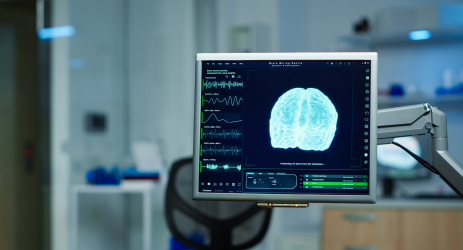
\A brainwave analysis in progress
Mumbai-based Dr Sushant Mysorekar, an expert on cognitive processes and the creator of Brain Rhyme, employs tools, tactics, and copyright systems to improve performance and memory in the elderly, students, and professionals. He says, “Our brain cells alter as we age. In reality, the saying ‘use it or lose it’ holds true for the health of our brains.” He claims that engaging in new or demanding tasks that involve mental stimulation and activity enhances the nerve cell connections that keep our minds sharp at all ages.
“Alpha and beta waves are advantageous for growth, learning, and positivity. For optimum human performance, it is essential to understand how the mind and brain interact with one another,” adds Dr Mysorekar.
Rutva Pore, daughter of Minal Deshpande Pore, a resident of the UAE, took a keen interest in space science from a very early age. The information and knowledge available about space are as vast as space itself. Minal wanted to
give some direction to her daughter’s curiosity. During this time, she happened to discover Dr Mysorekar on LinkedIn. He advised Minal to use memory exercises taught by him to increase her daughter’s retention and brainpower to absorb a vast amount of information about space. They decided that Rutva should participate in a world record competition on knowledge about the solar system.
“There were so many facts and figures that required to be recalled, such as the distance between the planets, their rotation periods, and other relevant information about our solar system,” Minal recalls.
Dr Mysorekar created stories based on numbers, and a flow to help her remember them. Rutva learned the skill, practised it meticulously, and put it dexterously into action. She was able to create a world record of reciting 91 facts about the solar system in English in 2.46 minutes. Furthermore, she also created the same record in the Arabic language. All this was accomplished with the help of the brain wave test conducted by Dr Sushant.
“Today, looking back, those memory retention techniques to boost brain capacity were only a method to uncover Rutva’s confidence and focus,” Minal says. “It is a significant gain, in my opinion. She is not just confident in her studies but also in communicating and performing other tasks.”
Science has made incredible strides in the 20th century in its study of brain waves, which are nothing but electrical impulses produced by the neurons in our brains. The waves help us monitor brain activity and determine if it is aligned with the genesis of health or disorder. The field of using brain wave knowledge to improve human performance is constantly expanding in the modern era.
As explained by Jennifer Larson on www.healthline.com, brain waves are, essentially, evidence of electrical activity produced by your brain. When a group of neurons send a burst of electrical pulses to another group of neurons, it creates a wave-like pattern. These waves are measured in speed cycles per second, which is described as Hertz (Hz). Depending on how awake and alert one is, the waves might be very fast or very slow. They can and do change, based on what one is doing or feeling.
Based on one’s mental engagement, brain waves are classified into different categories. When one is awake, alert, and engaged, beta waves are active, which measure in the range of 12 to 38 Hz. Alpha waves tend to measure between 8 and 12 Hz when one is awake but feeling quiet and contemplative. Theta brain waves occur in the 3 to 8 Hz range when one is sleeping. Deep dreamless sleep produces a type of brain wave known as the delta wave. These waves are low and slow, and measure in the 0.5 to 4 Hz range.
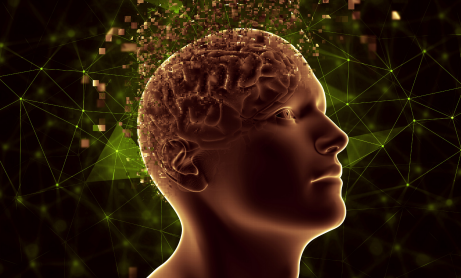
The brain produces electrical activity creating a wave like pattern which are called brainwaves Brain waves have been used in recent years for a variety of therapeutic purposes apart from their diagnostic and research applications. With the help of meditation, breathing, and other mental exercises, brain wave patterns can be altered. Researchers are exploring the possibility of using brain waves to see if symptoms related to stroke, dementia, migraine, Parkinson’s, and sleep disorders can be dealt with and reduced substantially.
Mental fatigue, focus, and brain wave The fastest brain waves are waves known as gamma waves. These brain waves are proof that your brain is hard at work, processing information and looking for solutions to problems. Gamma waves tend to measure above 35 Hz and can oscillate up to 100 Hz. When brain activity is extended for longer hours in the gamma state, it causes mental fatigue, leaving one feeling weary. At times, it impairs one’s performance as well as productivity. The good news is that some companies as well as individuals have begun utilising brain wave monitoring equipment to enhance concentration, productivity, and general well being.
Ankit Gupta, 33, from Bhopal, who manages an NGO, says, “We live in our minds with our goals, ambitions, and dreams. They are mostly imaginary and sap our mental energy. As a result, we stay unsure of our own potential. But when I took the brain wave test, I realised where my strengths lay and how I can use them to grow in life. Furthermore, I learned how to properly align my feelings and emotions with the situation at hand.”
Ankit reveals that once this was evident to him, he began practising the exercises prescribed by Dr Mysorekar to improve his brain function. A healthy memory is closely related to brain activity. Those who multitask excessively or are older have a tendency to forget things. These factors make it challenging for the brain to remember new information. A new thought comes to us every 1.2 seconds since the average human mind thinks at least 50,000 thoughts every day. The mind can easily stray and become confused by a multitude of thoughts.
According to the report, Ankit’s brain wave spectrum was at a particular level. Dr Mysorekar analysed that pattern and provided a feedback mechanism composed of activities and exercises. This helped in making the correct shift in the pattern, to achieve the particular goal for Ankit and in getting him into firefighting mode on his work front. He was exerting too much mental energy on less important tasks. He was spending more energy thinking rather than using it for productive purposes. Now he says, “After undergoing the brain wave test, doing regular brain exercises, and applying tools to enhance memory, my focus has improved tenfold.”
The brain, if taken care of, not only helps run your physical body but your whole life smoothly.
Ankit says, “I am now more organised, system driven, and professional in my attitude, which even the clients have started noticing and appreciating. Now I don’t get bogged down by multiple client feedback, communication, and delivery schedules. Dr Mysorekar even made me realise my creative side through the brain wave test which, otherwise, I was not aware of. The clarity has come to a point where now I can see my entire week before my eyes and know who is doing what.”
He concludes, “I truly feel that we should undergo this test to improve our overall personality, family, and work life.”
The process for the brain wave test
1. Off-line test: An electronic device with electrodes is attached to the head, and the individual is asked to sit quietly for two minutes while the brain wave patterns are recorded on different parameters and then later analysed. Sometimes, a specific kind of music is also played to see how and what impacts the pattern.
2. On-line test: Here the subconscious mind pattern is tested. An individual is given to draw and colour six to eight figures, such as a person, a mountain, or an object. These specific figures are analysed. Based on the submission, the expert analyst asks what the person is looking for. It could be a job, a career, or good health. Accordingly, the doctor or analyst suggests brain activities and exercises.
3. Graphology: This is also used to understand brain wave patterns. For an online test, many analysts give a blank white paper and ask the person to write 10–12 sentences on it. Like the subconscious mind test, here too, remedies are suggested to achieve specific results.
Brain wave, healing, and stress
We react differently to situations internally and externally. We experience difficulties in our inner world, such as loneliness, despair, anxiety, and stress, and are unable to pinpoint the exact cause. We may believe that feeling unhappy is a result of being alone, but a brain wave analysis and assessment of a lonely person can reveal the real cause to be different than expected. Dr Mysorekar explains that recovery is not based on time but rather on challenges and acceptance of the situation. If an individual opens up and is receptive to the ideas and cognitive processes, and employs the skills learned during the session, the effects can be seen within two to three sessions. Arvind Gawade, 38, who manages an IT firm in Mumbai, was dealing with similar problems. He tried everything but was unable to deal with the stress caused by his job. He began consulting Dr Mysorekar five years ago. Arvind testifies, “While consulting Dr Mysorekar, I realised that I was not making the best use of my brainpower. There were numerous loose ends. I couldn’t connect the dots between my thoughts and my actions. After doing the memory retention exercises, I feel more in ontrol of myself. There is a proper record system in place. I am more organised, and I have a more focussed approach to work and life. Initially, I thought that it was a memory improvement programme. Now I see that, similar to how physical exercise helps us develop our muscles and keeps us fit, this regimen empowers us to use our brains in a way that serves us. This is nothing short of a superpower.” According to Dr Mysorekar, stress is healthy for us in moderation. It can help us improve our memory cells progressively. The human brain thrives on routine. This is because when we find predictable patterns in our everyday routine, our brain filters out distractions and runs on autopilot, saving energy. Another advantage is that stress and anxiety can potentially improve our brain’s performance. Moderate stress builds the connections between the neurons in the brain. It improves memory and attention span while also assisting in being more productive. What’s fascinating about low amounts of the stress hormone is that it also helps guard against infections.So without any further ado, get your brain wave analysis and take control of your life in your hands.
Myths about the brain and brain waves
As the research in cognitive science is growing with new information, many myths associated with brain waves are getting debunked, according to Dr Mysorekar. They are as follows:
• The size of the brain influences the intellect
Intelligence is determined by the number of synapses, or connections between brain cells, and not the size of the brain. When you engage in any action, your brain cells get active or charged. Working on your intelligence is simply working on yourself.
• Alcohol destroys brain cells
Modest alcohol consumption does not destroy brain cells. However, binge drinking or frequent, continuous drinking might harm the dendrites, which are the terminals of neurons. This injury can impair the neurons’ capacity to communicate with one another. Furthermore, people who are addicted to alcohol can develop Wernicke-Korsakoff syndrome, which causes visual abnormalities, loss of motor control, and memory impairment.
• The brain deteriorates with age
Though some cognitive capabilities deteriorate with age, many of your mental abilities develop. Vocabulary, understanding, conflict resolution, and emotional regulation are just a few areas where older brains might outperform younger equivalents if kept active and healthy through exercises, mental workouts, and so on.
• Your IQ remains constant throughout your life
Although research has revealed that your IQ might fluctuate as you age, it is crucial to recognise that assessing someone’s intelligence is an imperfect science. Fluid intelligence, or the capacity to think quickly and recall information, peaks at the age of 18 and subsequently declines as you get older if regular activities are reduced or halted entirely. In contrast, someone’s emotional intelligence can continue to increase until the age of 30, and in some circumstances, even beyond.
• Under pressure, your brain performs better
The stress of a deadline may encourage you to work more, but it does not result in improved brain performance. Stress has been shown to affect brain function. Multitasking has been shown to reduce brain efficiency by 30–40 per cent.
Finally, brain waves are an important part of knowing how the brain works and can be utilised to diagnose and treat a wide range of mental health conditions. The necessity of the hour is to spread and encourage understanding and awareness of brain waves so that students, professionals, and the elderly can enrich their overall lives.


Discussion (0)
No comments yet. Be the first to comment!
Leave a Comment
You need to login to post a comment.