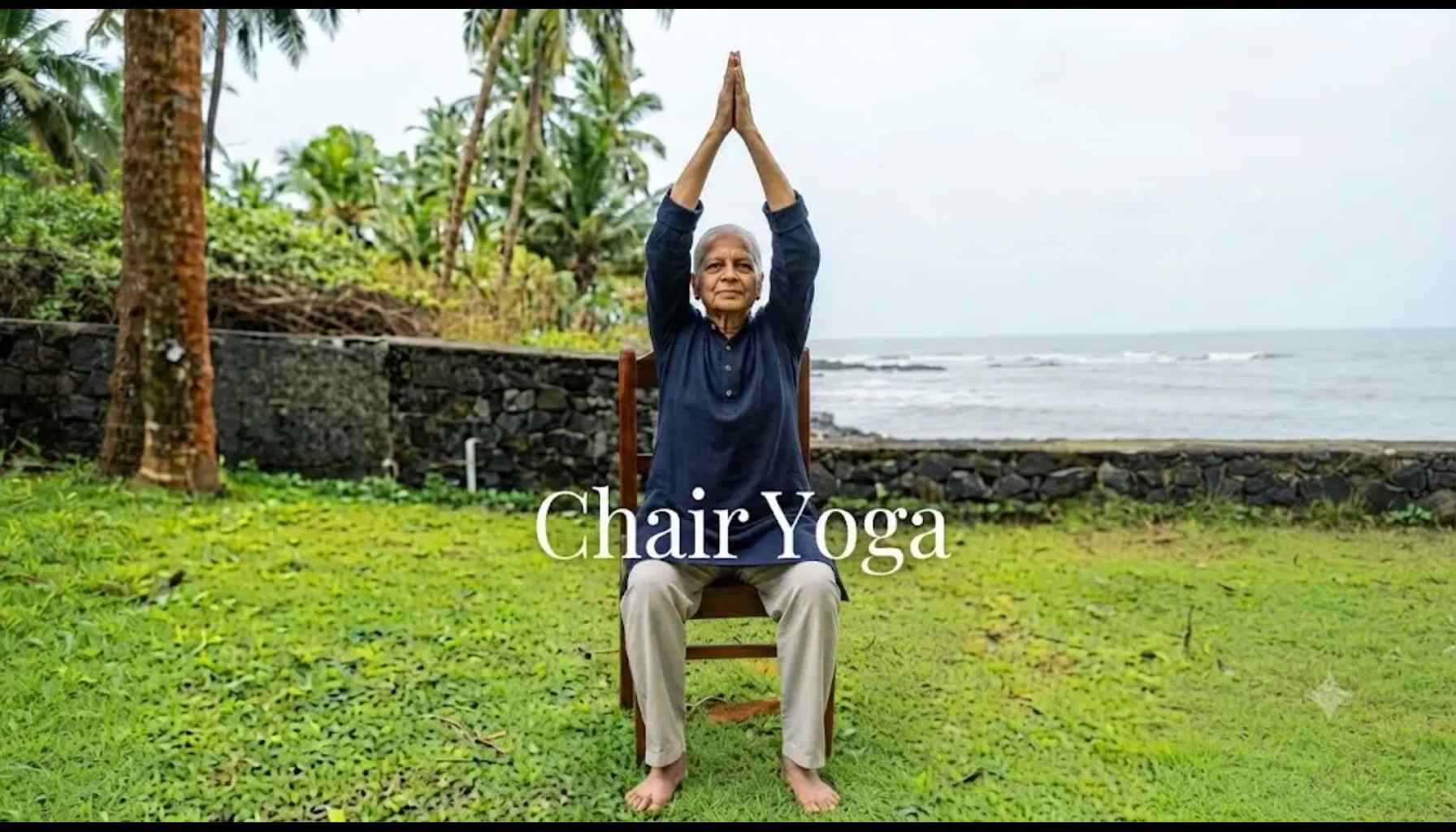
Chair Yoga: Benefits and Safety
Chair yoga is a gentle form of yoga performed while sitting on a sturdy chair. Some movements can also use the chair for support while standing. It can make yoga more accessible for people with limited mobility, balance concerns, or those who prefer starting slowly. It is also called ‘Accessible Yoga’.
Unlike floor-based yoga, chair yoga reduces the need to get down onto the floor. It can include stretching, breathing, mobility exercises, and modified yoga postures. Regular practice may support flexibility, strength, balance, and relaxation.
Key Takeaways
- Chair yoga supports gentle movement and flexibility.
- Regular practice may improve balance and strength.
- Seniors should prioritize safety and comfort.
What Is Chair Yoga?
Chair yoga adapts traditional yoga movements to a seated or chair-supported position. The practice was developed in 1982 by Lakshmi Voelker-Binder, who created chair yoga to make yoga more accessible to people with limited mobility. It can be useful for older adults and beginners who may find standing or floor exercises difficult.
A stable chair provides support during movements. Correct posture and controlled movements remain important. Chair yoga should feel controlled rather than competitive. Older adults should be particularly careful because yoga-related injury rates are higher among people aged 65 and above.
Chair Yoga Poses
1. Seated Mountain Pose – Tadasana
Sit with your feet planted on the floor, elongate your spine, roll your shoulders open, and breathe deeply. Seated Mountain is an excellent way to improve your body posture and awareness. It can be used as the starting point for several other chair yoga poses.
2. Seated Warrior I – Virabhadrasana I
Move toward the edge of your chair, stretch one leg back, square your hips, and lift your arms. This variation of Warrior pose will work your legs and improve balance. Make sure that you bend your back leg if stretching it causes discomfort.
3. Seated Forward Bend – Paschimottanasana
Stretch out your legs and elongate your spine. From there, gently bend forward at the hips. This pose will stretch the back side of your body.
4. Eagle Arms – Garudasana Arms
Cross your arms from the elbow joint, place the palms or back of the hands together and lift the elbows. Eagle Arms targets the shoulder joint and upper back joint. Individuals unable to cross their arms can clasp opposite shoulders.
5. Namaskarasana – Seated Variation
Sit straight with your feet firmly placed, place your palms together near your chest, keep your shoulders relaxed and breathe slowly. This modification helps in maintaining a good sitting posture, shoulder flexibility, body awareness and slow breathing.
6. Seated Twist – Parivrtta Sukhasana
Sit straight, place your one hand near your opposite knee and twist your upper body to one side. Seated twists help increase spine mobility.
Chair Yoga (Accessible Yoga) Benefits
Chair yoga can provide physical and mental benefits while making yoga easier to access.
|
|
|
|
|
|
|
|
|
|
|
|
|
|
|
|
|
|
|
|
|
|
|
|
Weight Management: Chair yoga can contribute to physical activity, but it is not a standalone method for reducing abdominal fat. Weight management generally depends on overall activity, nutrition, sleep, and other lifestyle factors.
Diseases Managed: Accessible yoga may complement management of arthritis pain, stress, fatigue, and mobility difficulties
Chair Yoga for Seniors
Chair yoga is helpful for senior citizens because it helps them stay active without struggling with the floor transition. This type of yoga might be helpful for older people with some movement difficulties.
Senior citizens need to select the movements depending on their capabilities and not compete with others when it comes to flexibility.
Duration & Frequency: Chair yoga should be performed for 15 to 30 minutes, three to five times a week, starting with short periods and increasing the time gradually.
Precautions
- Use a firm chair that does not tip over or move about.
- Use a chair that does not have wheels or an unstable base.
- Both feet should remain on the ground while sitting and moving.
- Do not make sudden or violent moves.
- Stretching into areas where there is pain should be avoided.
- Adjust exercises for issues with knees, hips, backs, necks, or shoulders.
- Individuals with any sort of medical problem should get professional advice first.
- Elderly people would benefit from proper instructions.
Common Chair Yoga Mistakes
|
|
|
|
|
|
|
|
|
|
|
|
|
|
|
|
|
|
|
|
|
|
|
|
The Bottom Line
Chair yoga provides an adaptable way to practise yoga without relying heavily on floor-based movements. The soft techniques in the exercises can help increase flexibility, mobility, stability, strength, and relaxation. Six easy poses will be enough to make an effective routine at home for beginners and seniors. Just start the accessible yoga gently, have a solid chair, and modify each exercise as you wish. It’s time to improve your wellbeing.
Frequently Asked Questions
1. Do chair yoga really work?
Yes, chair yoga may improve strength, balance, flexibility, mobility, and wellbeing, although research remains limited.
2. Is there a free chair yoga plan?
Yes, free chair yoga routines are available online, including beginner-friendly routines and instructional resources.
3. Does chair yoga help lose belly fat?
Chair yoga can increase physical activity, but reducing belly fat requires overall lifestyle and energy-balance changes.
4. What are the 5 best chair yoga exercises for seniors?
Seated Mountain, Seated Warrior I, Forward Bend, Eagle Arms, and Seated Twist are accessible options for many seniors.
Also Read: Facial Yoga
By Umesh Kumar Khiri



Discussion (0)
No comments yet. Be the first to comment!
Leave a Comment
You need to login to post a comment.