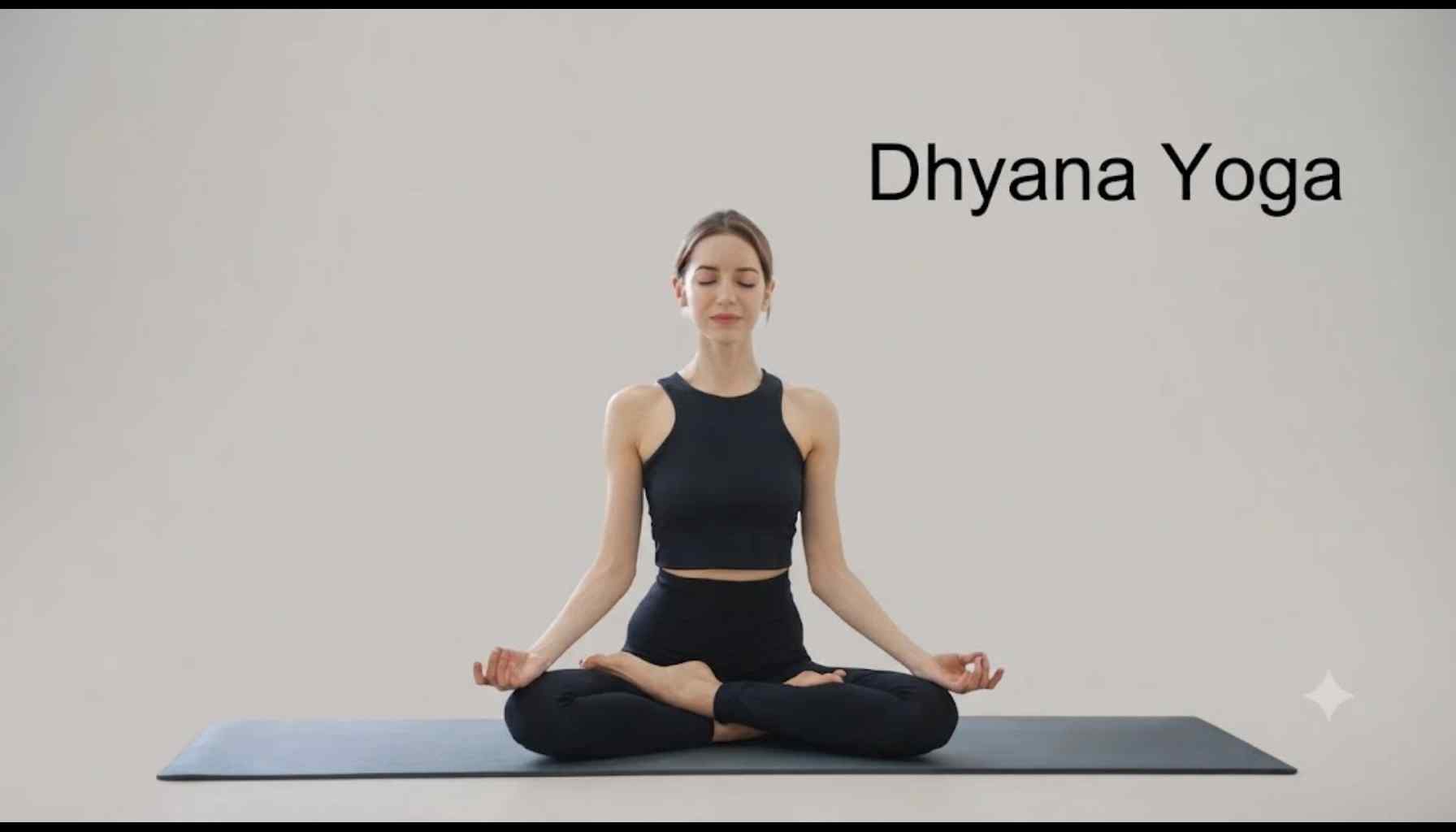
Dhyana Yoga: Benefits and Practice Guide
Dhyana Yoga is a contemplative branch of yoga centered on sustained attention, inner awareness, and meditation. The Sanskrit term Dhyana is associated with meditation and is traditionally described as the seventh limb of Patanjali's eight-limbed yoga system.
While other forms of yoga concentrate on the movement of the body, in Dhyana Yoga, the practitioner is advised to remain calm, watch the breath and keep continuous focus on a particular object, feeling, sound or point of concentration.
This can be done while assuming comfortable sitting poses, breathing exercises, use of mudras and mantras.
Key Takeaways:
- Builds concentration through sustained mindful awareness.
- Encourages stillness, calmness, and inner observation.
- Connects breath, posture, attention, and meditation.
Roots and Philosophy of Dhyana Yoga
Dhyana is part of the three internal limbs known as Antaranga Yoga, which include Dharana, Dhyana, and Samadhi. Dharana involves directing attention toward one point, while Dhyana represents a continuous and uninterrupted flow of that attention.
According to the traditional eight-limbed framework, Dhyana follows Yama, Niyama, Asana, Pranayama, Pratyahara, and Dharana, and precedes Samadhi.
What Does Dhyana Mean?
Dhyana is a Sanskrit term primarily associated with meditation, representing a continuous, uninterrupted flow of concentrated attention and deep contemplation.
Dhyana vs. Dharana
- Dharana: Consists of focusing one’s mind on one particular point.
- Dhyana: Symbolizes the next stage in which there is an uninterrupted flow of attention.
Meditative Poses for Dhyana Yoga
Dhyana Yoga includes comfortable seated positions, which are commonly used to support a steady spine and sustained meditation.
|
|
|
|
|
|
|
|
|
|
|
|
|
|
|
Choose the position that allows you to remain still without unnecessary discomfort.
Dhyana Yoga Mantras
Mantras: Chant “Om” slowly with relaxed breathing, or use “So Hum” silently with the natural rhythm of inhalation and exhalation. Mantra selection can differ according to individual tradition, teacher, and spiritual practice.
Duration and Frequency
Duration and frequency: Practice Dhyana Yoga for 10–30 minutes daily or at least 4–5 times weekly, gradually increasing the duration as comfortable.
Counter Poses
Counter poses can provide a gentle transition after prolonged seated meditation or help release stiffness from maintaining one position.
|
|
|
|
|
|
|
|
|
Four Stages of Dhyana
The term “four stages of Dhyana” can refer to different frameworks depending on the Buddhist or yogic tradition; in Patanjali's system, Dhyana itself is one of the three inner limbs alongside Dharana and Samadhi.
Guided Meditation (Breath Awareness Meditation)
Step 1: Adopt a suitable meditation posture (Sukhasana) with an erect spine and loose shoulders.
Step 2: Gently close your eyes and inhale some deep breaths to center yourself in the present moment.
Step 3: Focus all your concentration on the normal flow of your breath – paying attention to your inhalation and exhalation through your nose or your stomach movement.
Step 4: When you lose track of your concentration, simply note your thoughts and refocus on the breath.
Health Benefits of Dhyana Yoga
Regular meditation practice may contribute to improved concentration, relaxation, emotional balance, self-awareness, and stress management.
|
|
|
|
|
|
|
|
|
|
|
|
|
|
|
|
|
|
|
|
|
Diseases and Health Conditions
Meditation can be a complement to professional help for issues such as stress, anxiety, insomnia, and some cases of chronic pain, according to personal needs. People suffering from any medical or psychological condition should seek the advice of an appropriate healthcare professional prior to incorporating meditation into their therapy.
Precautions
- Maintain a comfortable sitting posture with the aid of a cushion or a folded blanket, or lean against a wall if you find it hard to keep your spine straight.
- People suffering from backache, hip or knee problems should adopt a modified posture in consultation with a competent professional.
- Do not meditate if you experience physical discomfort, dizziness, unusual breathlessness, or any other problem.
Common Mistakes
- Force the mind: Let the mind think; do not fight with it.
- Slouching too much: Keep your posture straight and comfortable.
- Holding the breath: Keep breathing steadily during the process.
- Picking tough postures: Pick stability and comfort over advanced postures.
- Expecting quick results: Learn meditation through steady practice.
Final Thoughts
Dhyana Yoga places attention and inner awareness at the heart of practice, using stillness, breath, comfortable postures, and sometimes mantra to cultivate concentration.
Beginners can start with Sukhasana or Vajrasana and gradually increase meditation time as sitting comfortably becomes easier. Consistent practice can make Dhyana a practical part of a broader yoga routine focused on calmness, awareness, and mindful living.
Frequently Asked Questions
1. What is Dhyana Yoga?
Dhyana Yoga is a meditative yoga practice that develops sustained attention, inner awareness, and mental steadiness.
2. What are the four stages of Dhyana?
There is no single universally accepted four-stage model; classical Patanjali Yoga describes Dharana, Dhyana, and Samadhi as three inner limbs.
3. What is the difference between Dhyana and meditation?
Meditation is a broad term, while Dhyana specifically refers to sustained, uninterrupted contemplative attention within yogic philosophy.
4. What is the Dhyana mantra?
Om is a traditional mantra commonly used during meditation, while other mantras may be selected according to different yoga traditions.
Also Read: Skandasana
By Umesh Kumar Khiri

Discussion (0)
No comments yet. Be the first to comment!
Leave a Comment
You need to login to post a comment.