
Express your true self

September 2023
Express Your True Self
Speaking your truth and being true to your inner calling can be challenging and can dislodge you from your comfort zone, but it pays handsomely in
the long run, says Punya Srivastava

“Go placidly amid the noise and haste, and remember what peace there may be in silence. As far as possible without surrender
be on good terms with all persons. Speak your truth quietly and clearly; and listen to others, even the dull and the ignorant; they too have their story.
Be yourself.
Especially, do not feign affection.
Neither be cynical about love;
for in the face of all aridity and disenchantment it is as perennial as the grass.”
—From Desiderata by Max Ehrmann
“Be yourself. Especially, do not feign affection.” And yet, so many of us are guilty of doing just that, day after day. Holding on to a relationship way past its expiry date, being part of friendships that are hanging by a thread, keeping our mouths shut while resentment bubbles under the surface, being docile to please others, permitting others to crush our self-respect so as not to be perceived as rude . . . Well, the list is endless!
Yet, we keep on feigning. No, we don’t do it out of ill intentions. In fact, most of the time, our intentions are good—we simply don’t want to hurt the other. So, we feign love, care, affection, and attention. We push our true feelings deep into the hollow of our heart and continue to put on an act. We ‘lather, rinse, repeat’ in an endless loop till the cows come home!
Gradually, this charade spills into other parts of our lives. We cling to a job we are miserable in because we fear financial insecurity or never put a toe out of line, petrified of consequences. We get so used to behaving in this manner that it becomes our default behaviour. But the question is, Why? Because we are operating from our inauthentic self, fearing a backlash for not conforming to societal expectations.
Conformity Demands Inauthenticity Social conditioning and the pressure to conform wield a powerful influence on our identities, often diverting us from our authentic true selves. From a young age, society bombards us with norms, expectations, and stereotypes, dictating how we should behave, think, and even feel.
‘Children should be seen, not heard,’ ‘parents are always right,’ ‘men must bear everything stoically,’ and ‘women must place everyone else before themselves in the family’—these norms are still much too prevalent in society. We all have grown up hearing and internalising these stereotyped notions. As a result, we have suppressed our genuine desires and emotions in favour of learned behaviours that align with societal norms.

Often children are snubbed for speaking their truth
“I grew up believing that a man in the family is supposed to make all the decisions and also ensure the financial well-being of the family,” says Ayush Srivastava, a Delhi-based coach and healer. He further shares, “It became my obvious aspiration to be good at these two aspects: earn well to provide for the family and make decisions that make others happy, even at the cost of my own happiness. Unintentionally, it also brought along a few other beliefs: that a man’s anger and insecurity would be excused if he was earning well and that the man has the right to single-handedly take decisions in matters impacting others.”
Ayush shares how, acting from a space of insecurity, everything he did, he did to impress others. Whether it was pretending to like or dislike something at the workplace or saying yes to all the responsibilities he wasn’t comfortable with, the intention was to ensure that people liked and accepted him. “Most often, I ended up feeling like a loser and lonely despite giving it my all.”
This pursuit of acceptance and belonging makes us sacrifice our true essence and adopt a persona that is at odds with our innermost being, leading to frustration and constant unhappiness. With time, the fear of rejection looms large, compelling us to prioritise external validation over self-discovery.
When we solely make material gains our only goal in life, we leave ourselves with no choice but to tread the path of conforming to all the pre-set rules in the playfield, especially the corporate field. This is exactly what happened to Ankur Mehta, founder of ‘Pause n Learn,’ a life skills training and wellness initiative.
Before starting his spiritual journey, Ankur was an extremely ambitious professional with no aversion to office politics or game-playing.

Conformity makes us lose ourself
But the continuous pressure of putting on a mask and complying with every unethical expectation soon wore him down. It was a very short but soul-sucking stint for him as he found himself getting drained of the energy required to keep putting on the act day after day.
In the process, just like Ankur, we become strangers to ourselves, disconnected from our passions, dreams, and unique perspectives. This dissonance can lead to a sense of emptiness and dissatisfaction as we yearn for authenticity and a deeper connection with our true selves.
Moving Towards Authenticity
Ankur borrows his guru’s words to explain what being authentic really means. “Guruji Sri Ram used to say that when your inner self validates your thoughts, words, and actions, then know that you are being your authentic self.” He further explains how, when we operate from authenticity, we conduct ourselves with freedom and consequently experience deep peace.
A Delhi-based life coach and healer, Saloni Durgapal, concurs with this thought. “Authenticity to me is being true to yourself and expressing who you are without worrying about what others will think of you. It’s about having the freedom to be yourself and embracing your uniqueness without feeling pressured to conform to societal expectations.”
When you are authentic, you don’t hold back or pretend to be someone you’re not in order to please others. You feel comfortable and confident in expressing your thoughts, feelings, and ideas openly and honestly. You don’t let the fear of judgement, criticism, embarrassment, rejection, or hurt hold you back from being genuine.
Sugandh Gupta, a PhD candidate in the Department of Anthropology at the University of North Carolina, Chapel Hill, USA, goes a step further and says, “Authenticity is the acceptance of one’s self and the ability to express that self not only to others but to one’s own self too.” She explains how true authenticity is achieved when we cease to build ourselves into a brand which may be far away from who we are.
But authenticity, or integrity towards oneself, requires enormous courage because the consequences can be costly. “Throughout centuries, medicine women have been burnt at the stake and honour killings have been justified by patriarchy when women have expressed their needs and creative urges. To be perceived as good, particularly in the case of women, one must become a voiceless puppet,” says Suzy Singh, a Delhi-based therapist, who accesses the subconscious mind as part of the therapy process.
Experiencing Personal Growth
“Through Vedic literature and personal exploration, I have come to realise that the most effective way of becoming who we are is that of shedding all that we are not. When I go beyond my pretentious role-playing, ego, feelings, emotions, cravings, and aversions, I am simply left with who I am. My true nature, my authentic self,” shares Ayush.
But why is it so important for each individual to lead their life from a space of authenticity? “I have found authenticity to be important because

The Vedas tell us to shed what we are not the world wears you down, and the only thing you can truly hold to truth and accountability is you, your own self. By embracing my individuality, I have learned to be comfortable the way I am—different from others but still acceptable,” shares Sugandh.
Embracing authenticity leads to personal growth and self-acceptance. “It gives you the freedom to explore your interests, express your creativity, and pursue your passions without inhibition. It encourages you to take risks, learn from your mistakes, and continuously evolve as an individual,” says Saloni. The Delhi-based healer made the bold decision to leave her job, even though she didn’t have another source of income or a concrete plan in place. “It was a leap of faith driven by my unwavering belief in my abilities and the conviction that I deserved to pursue a career that aligned with my true passions.”
For Ankur, his decision to choose a slower paced life based on integrity, ethics, and spiritual principles over a life fraught with materialistic pursuits gave him immense peace
of mind, enormous self-assurance, and implicit trust in the governing principles of life. This faith enabled him to pursue his true calling in life—teaching and helping people lead a genuine, quality life.
Suzy looks at the process of ‘being your true self ’ as a three-pronged approach: a deep understanding of one’s longings and aspirations, courage to overcome subjugation to be in integrity with one’s personal mission, and the tenacity to manifest these callings. “In doing so, people can align with their creative purpose for incarnating. Through their self expression, talents, and gifts, they add value to both themselves and the world. This helps in accelerating their personal evolution and virtue development, besides making the world a better place,” she adds.
This is exactly what happened in Ayush’s case. The deeper he dug within and worked on himself, the more authentic he became. “When I started respecting my priorities, boundaries, and decisions, I realised there was never a need
to impress anyone. People were never expecting me to please them. In fact, when I brought my true opinions and beliefs to the table, people started trusting me more, even when there were disagreements. For the first time in my life, I felt like I was adding value and not just occupying a seat,” he shares.
Breaking Societal Norms
Psychologist Carl Rogers once aptly remarked, “The curious paradox is that when I accept myself just as I am, then I can change.” Embracing our authentic selves requires the courage to challenge the confines of social conditioning, allowing us to rediscover our inherent strengths and vulnerabilities.
“I was the first girl child in our family to ever go out to work. I had to drive the whole process entirely on my own,” shares Suzy, adding how this immensely satisfying experience paved the path for other daughters in the family to seek out careers. But what wasn’t as easy was walking the spiritual path. Suzy was often called crazy by extended family and friends.
Psychologist Carl Rogers once aptly remarked, “The curious paradox is that when I accept myself just as I am, then I can change.” Embracing our authentic selves requires the courage to challenge the confines of social conditioning, allowing us to rediscover our inherent strengths and vulnerabilities.
“Meditating regularly and attending satsangs was at that time seen as a pretty crazy thing for a 20-year-old to be doing. Different labels were thrown at me. I was called Pragyawati from the serial Humlog, mocked, isolated, and written off because people thought I’d lost my marbles.” Consequently, Suzy spent most of her adult life as a social recluse. Did that hurt? “Of course it did, and sometimes the sting was terrible. But I was never willing to trade away my spiritual search,” she emphasises.
Sugandh’s journey finds resonance with Suzy’s, even considering a time lapse of 20 years between their experiences. “I went abroad to study at the age of 28 and chose higher studies over marriage. I supported my sister’s inter
faith marriage. Today, I am a mother to a toddler, and I breastfeed him in public and in front of male family members too. All of these behaviours came at the cost of being questioned by others, being told to behave myself, ignoring my need for comfort, and staying true to my value system of equality,” shares Sugandh.
In its need for stability, society demands conformity. It establishes norms, values, and expectations that shape behaviours, beliefs, and attitudes. While it is true that conformity fosters a sense of belonging and shared identity, facilitating cooperation and collaboration within communities, it is equally true that this pressure to conform can also stifle individuality and creativity.
For example, society has conditioned us to believe that a stable job is the only path to success and security. “But I knew that I had to trust myself and follow my intuition. During the initial phase of this transition, I faced moments of doubt and fear. However, I used those moments as fuel to work harder and prove
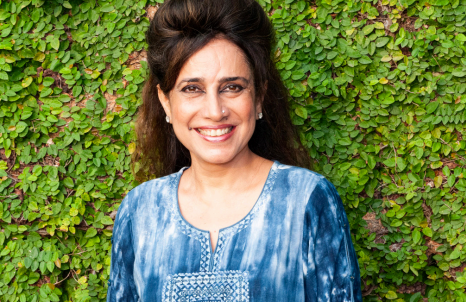
In its need for stability, society demands conformity. It establishes norms, values, and expectations that shape behaviours, beliefs, and attitudes. While it is true that
conformity fosters a sense of belonging and shared identity, facilitating cooperation and collaboration within communities, it is equally true that this pressure to conform can also stifle individuality and creativity.
to myself that I had made the right choice. Looking back, taking that leap of faith was one of the best decisions I ever made,” shares Saloni.
This leap of faith is what Ankur and his wife also chose 16 years ago when both MBA graduates decided to quit their corporate careers and embrace an ashram life, merely three months after their marriage. “We were questioned and sometimes chastised for our decision, but we followed our hearts’ calling and joined Dev Sanskriti University in Haridwar as volunteers,” shares Ankur.
Thus, it is absolutely necessary for society to strike a balance between collective compliance and the recognition of diverse perspectives. Creating this equilibrium allows society to maintain its essence while embracing the richness of individual expression.
Unlearning Acquired Behaviour
Embracing our true nature also calls for unlearning acquired behaviour. It requires cultivating self-awareness to distinguish our genuine desires from the expectations
imposed upon us. Through self-exploration and acceptance, we can break free from the suffocating grip of conformity and rediscover our unique identities.
“I have faced self-doubt and I still do. It doesn’t go away at once, but I have become adept at handling it,” shares Sugandh. Through introspection, she found a neat little trick to find out when she was operating from her true self and when not. “If I were to do something people found odd, I would question whether it is really odd or is it just that it’s out of the ordinary and, hence, I am being asked to be put in a box.”
For instance, just after the birth of her baby, Sugandh had several family members visiting to meet the new mom and kid. She would find it odd to leave the room frequently to feed the hungry baby. Exhausted with taking care of an infant, she wondered why she was allowing herself to be subjected to even more exhaustion. “We have all been nourished via breastfeeding. Breastfeeding is the most natural activity in a mother’s life, so why am I hiding away or facing a wall to feed my baby? If the people around are uncomfortable, they can choose to look away.”
Of course, most people don’t make it easy for an individual to express their true nature, being on a life-long diet of conformity themselves. An individual’s journey to get back to their true self is always hard and fraught with challenges. That’s what happened with Ayush. “The moment I started to treat women in my life as equals (i.e., I stopped acting as their provider) it shook me in more ways than I had expected. My insecurity surfaced, and I sensed my self worth decreasing. More than that, some dear ones felt threatened in their own space because I was now setting the wrong example,” he shares.
When old societal norms or expectations are broken, it disturbs everyone who had established and practised those norms for long. Thus, to bring a permanent and healthy change in oneself, one needs to be extremely self-aware and drop the need to please people. Once you have done that, the journey becomes so much more rewarding. “Every time I have expressed and embraced myself, my truth, my authenticity, I have felt more confident and unbeatable. I don’t feel the stress of trying to impress someone. I also feel more connected to others as I try to understand what makes them unique and how they are shaped by their own life experiences,” shares Sugandh.
Enhancing Emotional Well-Being
Embracing authenticity allows you to align actions and values, leading to greater self confidence and a more profound understanding of your emotions. Suzy reveals how her journey of embracing her authentic self helped her witness her flaws and allowed her to suffer

Meditation helps you find inner validation thus making you drop the need to please people
Expressing your true self unleashes untapped creativity, igniting a boundless wellspring of inspiration. By shedding inhibitions and embracing authenticity, you liberate your imagination, giving flight to your creative aspirations like a soaring bird set free in the vast sky of possibilities.
consciously so that she could dissolve her prarabdha karma. “This journey has helped me comprehend universal laws and live the practical wisdom of the sacred texts. It has made my speech kinder and my heart more generous. It has taught me the art of holding space for others and of community service, and has inspired me to share my learnings with the world. Everything I am today has been guided by my deeper aspiration to be true to my soul’s calling,” Suzy beams.
True expression allows the truth of your soul to shine through. This requires a lot of hard inner work, including overcoming your base tendencies and vasanas, dropping expectations and blindfolds, overcoming distortions of the mind and false beliefs, healing the inner child wounds, and embracing your shadows.
All this work helps you become more emotionally resilient. If you do get angry sometimes, you can learn to drop your anger quickly with much greater ease. You are calmer and more at peace with yourself and the world around you. Your relationships and sleep quality improve, fostering greater mental well-being. And lastly,
you can be in the creative flow more powerfully, more often.
Experiencing Creative Liberation
Expressing your true self unleashes untapped creativity, igniting a boundless wellspring of inspiration. By shedding inhibitions and embracing authenticity, you liberate your imagination, giving flight to your creative aspirations like a soaring bird set free in the vast sky of possibilities.
“Writing helps me declutter my mind and return to peace. Singing lets me release pent up emotions. Art allows me to access my subconscious blocks. Gardening and speaking with plants helps me feel a deep sense of connection with all. Walking mindfully de stresses me. Cleaning up my room is therapeutic. Arranging flowers brings me joy. Rearranging my interiors inspires me.” These are some beautiful benefits of allowing your true nature to shine forth that Suzy Singh experiences on a routine basis.
When we drop our people-pleasing tendencies or our image-based fears, we change direction from ‘impressing people’ to ‘expressing ourselves.’ Having grown up as a shy child with a tendency to downplay her strengths, I would be wary of opening my mouth in class or participating in debates and other school activities for the longest time. But in high school, upon my friend’s insistence, I finally mustered the courage to go on stage and deliver an extempore speech in English. I felt liberated and how! But soon, I got it in my head to make up for the lost time by not losing any more opportunities to impress people. All my creative endeavours, after that period, tended to be more about impressing people and garnering accolades than about finding my voice and expressing my creativity.
In fact, I would even flamboyantly affirm or write an extreme viewpoint which I didn’t necessarily agree with, solely in the hope of being validated and admired. And I did get that appreciation. I was considered charming and referred to as a sweet talker. But deep in my heart, I knew that I was just bluffing; it was always there at the back of my mind but I had learnt to push it back to the deepest crevices. It was only when my editor sat me down and gently pointed out the superficiality in one of the pieces I had written that I realised my folly. She told me that genuine writing came from a place of “authenticity” and “vulnerability.” The journey that started 10 years ago is still continuing.
Genuine, authentic self-expression alleviates the stress of hiding behind facades, reduces anxiety, and promotes emotional resilience.
Sharing about his journey as a social media speaker, Ayush recalls how he had always loved the limelight: being on stage or speaking to an audience. But for the longest time, he was reluctant to act on it because of his insecurity about his height, his voice, and even his pool of knowledge. “But upon self-work, I realised that I had no business thinking about what others would make of it. That changed my perspective from ‘impressing people’ to ‘expressing myself,’ ” he adds.
Ayush realised that his past mistakes or lack of knowledge in certain areas weren’t disadvantages but his biggest credentials. “Instead of being a speaker who ‘gave gyan’ on topics, I started talking about all the things that I was vulnerable about, the mistakes I had made, and my insecurities.” This small change not just helped him cultivate a strong digital community and establish himself as a coach and healer but also helped him realise his dream of being able to speak in front of large audiences.
Impact on Society
“As we let our own light shine, we unconsciously give other people permission to do the same. As we are liberated from our own fear, our presence automatically liberates others.”

True expression allows the truth of your soul to shine through. This requires a lot of hard inner work, including overcoming your base tendencies and vasanas, dropping expectations and blindfolds, overcoming distortions of the mind and false beliefs, healing the inner child wounds, and embracing your shadows.
How succinctly this dialogue from the movie Coach Carter expresses the significance of carrying the torch of authenticity within each heart. An individual’s effort to reclaim their true self almost always creates a ripple effect of genuine self-expression.
“I believe humans have an innate ability to catch authentic behaviour and that builds the strongest of relationships,” says Ayush. When you embrace your genuine self, it encourages others to do the same, fostering a culture of acceptance and self-expression. Authenticity inspires trust and openness in relationships, leading to deeper connections and more meaningful interactions.
A real-life example of this can be seen in the story of Malala Yousafzai, the Pakistani activist for female education and the youngest Nobel Prize laureate. Malala fearlessly stood up for her right to education in the face of adversity, even after surviving an assassination attempt by the Taliban. Her unyielding commitment to her beliefs inspired countless individuals worldwide to speak out against injustice and advocate for education and gender equality.
Malala’s authenticity and courage ignited a global movement, encouraging others to stand up for their rights and contribute to positive change in their communities.
True expression allows the truth of your soul to shine through. This requires a lot of hard inner work, including overcoming your base tendencies and vasanas, dropping expectations and blindfolds, overcoming distortions of the mind and false beliefs, healing the inner child wounds, and embracing your shadows.
“When I made the brave decision to start expressing my true self, I underwent a profound personal transformation. As I began opening up about my experiences and journey, I noticed a remarkable change in my surroundings. People started reaching out to me, sharing their own stories and struggles as I had created a safe space for them to do so. They found inspiration in my authenticity and saw that if I could overcome my vulnerabilities, they could too,” shares Saloni. Her willingness to talk about her insecurities gave them the courage to confront their own challenges. “People realised that it’s okay to be vulnerable and that it’s a sign of strength to embrace and share our true selves.”
But how can these ripple effects be made on a much larger, macroscopic scale to bring the entire world under their purview? “It has to start with conscious parenting. Children must be given the freedom to express themselves freely and exercise their choices without obstruction or hindrance from their parents in the form of ‘log kya kahenge’ and emotional manipulations like ‘hamari izzat tumhare haathon mein hain,’ avers Suzy.
Suzy explains how parents must learn to shield their children from the ever-looming impact of their own fears, unfilled desires, and the need to fit in. “It’s we who are the bricks and mortar of the societal construct. Unless we take the personal onus to parent courageously, we cannot hope to change society and give our children a socially permissive and inclusive environment.”
Another question to deliberate upon is how to create an environment that encourages and supports individuals in expressing themselves authentically? For me, creating safe spaces where individuals feel comfortable expressing
who they truly are—without the fear of judgment—is the utmost priority. When one allows the shackles of fear to drop, it creates a beautiful empty space for authenticity to blossom.
One of the ways to create a conducive environment, according to Sugandh, is to accept differences and encourage open communication. “As a family, sit together and question prevalent practices, rituals, and taboos. Find logic and rationales. And most importantly, create more openness,” she says. When we allow young voices to speak freely, we encourage them to speak their truth. When they speak their truth, they gather the courage to remain seated in their authenticity.
And when we allow a similar space for adults, we let them retrace their steps back to their vulnerable, honest, and courageous selves and reclaim their spot under the sun. So, in operating from our true authentic selves, and pursuing the power of true expression, we embark on a journey of empowerment, self discovery, and compassionate understanding, fostering a world where the power of self expression liberates not only ourselves but also those around us.
Punya Srivastava is a Delhi-based freelance content manager and editor, and the former deputy editor of Life Positive magazine, with more than 10 years of experience in the field of media.
Discussion (0)
No comments yet. Be the first to comment!
Leave a Comment
You need to login to post a comment.