
God lies within
February 2010
The Lost Symbol; Author: Dan Brown; Published by: Bantam Press; Pages: 509; Rs. 699
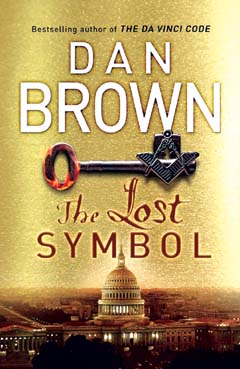 Expecting an indepth thriller based on secret societies and conspiracies after reading The Da Vinci Code and Angels and Demons, I picked up Dan Brown’s latest novel. Although written in the same fast-paced style and with the captivating details known to only a few, The Lost Symbol’s plot is deeply spiritual. The fact that the book is a best-seller ever since its launch goes to show that spirituality is no longer in the closet.
The plot revolves around Peter Solomon, a high ranking Freemason who has gone missing. Harvard symbologist and protagonist, Robert Langdon, is unknowingly brought in by Mal’akh, the perpetrator behind the event. What follows is a night-long dash across Washington DC to famous landmarks including the Smithsonian Museum, the Capitol building and the Washington Monument. Peter’s sister Katherine is researching on noetic sicence, a branch of metaphysical philosophy that is concerned with the study of the mind, intuition, and divinity. One experiment given in the book describes her trying to measure the weight of a soul. Mal’akh seeks apotheosis, or elevation to the state of the gods, and spares no effort in his quest, but is eventually stopped by the CIA and Langdon.
Portraying the Masonic brotherhood as the torchbearers of wisdom, the book explores the key issue of divinity being within each one of us. Also mentioned a number of times in the book is Lynne McTaggart and her book, The Intention Experiment, re-emphasising the issue of mind-over-matter. When a best-seller becomes an advocate of spirituality, one can assume that millions will be influenced. And if this trend continues, the day when spirituality becomes as common a topic for discussion as finance is not so far off.
Discussion (0)
No comments yet. Be the first to comment!
Leave a Comment
You need to login to post a comment.