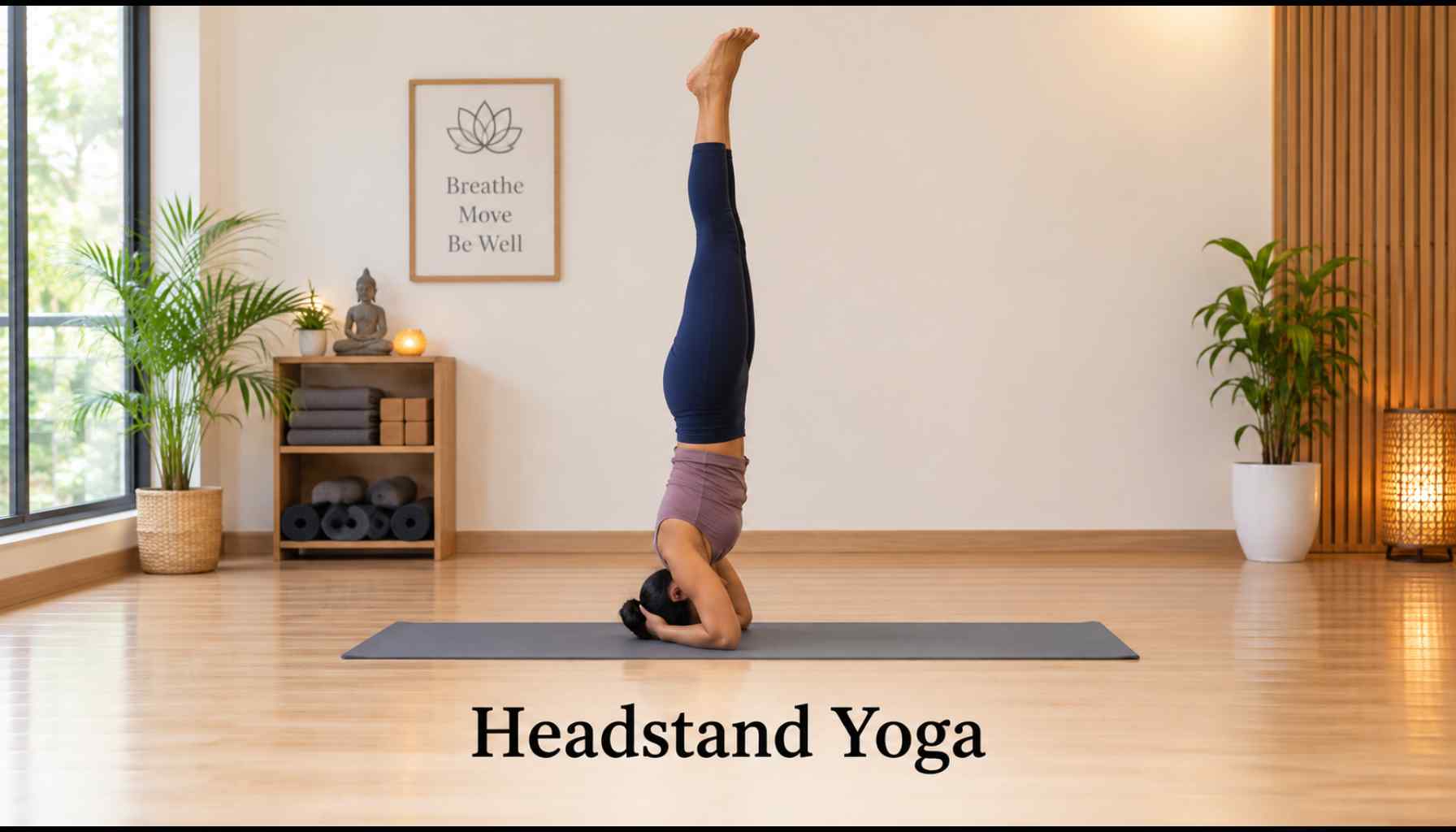
Headstand Yoga (Sirsasana): Benefits and Safe Technique
Headstand Yoga (Sirasana) is often called the "king of asanas." It looks dramatic, but it isn't magic, and it isn't for everyone. With patience and good alignment, it can build strength, sharpen balance and change how you see your own limits. Here is what's true, what's myth, and how to practise it sensibly.
Key Takeaways
- Headstand builds shoulder, core and balance skills, but claims about brain blood flow and anti-aging aren't supported by strong evidence.
- Think of it as a forearm balance where your head only touches lightly.
- Go slowly, skip it if you have neck, eye or blood pressure issues, and get guidance from a qualified teacher.
What is Headstand Yoga (Sirasana)?
The headstand, also known as sirsasana in Sanskrit, is one inversion where the body is in an upside-down position resting on forearms and the crown or forehead of the head. Most of the time the hands are interlocked to form the base while others have the tripod headstand where there is a triangle formation formed by the hands and head.
History of Headstand Yoga
The historical origins of Sirsasana remain debated, as the Hatha Yoga Pradipika and Yoga Mala differ in their descriptions and naming of the pose. Its present form became more widely established through modern yoga traditions.
Benefits of Headstand Yoga
Traditionally, Sirasana has been said to have several effects. Some of these are:
- Strengthening shoulders and arm muscles because the base works on the muscles responsible for stabilizing the shoulder blades.
- Increased engagement of the core muscles since you need to control the hip when in the inverted position.
- Good balance and body awareness as you increase your ability to know where the body is positioned.
- Body and leg strength as you try to maintain the alignment of the body.
- Increased confidence and focus as you overcome the fear of falling.
How to Prepare for Headstand Yoga?
Before and after your practice, drink water without gulping too much when inverted, and have a sweat towel ready. Use props such as a non-slip mat, wall assistance, or folded blankets underneath your forearms for proper alignment.
Getting the Anatomy Right
Headstand requires that you use your foundation and not your neck to remain safe. Your forearms and shoulders should bear the main weight. Press down on your forearms and push your shoulders up from the ground, allowing little or no weight on your head or neck. The hairline is where the head usually rests in this pose since it supports the natural arch of your neck.
How to Practise Headstand (Sirasana): Step by Step
- Warm-up. Open your shoulders, hamstrings and wrists using the Downward Dog, forward bends and cat-cow poses.
- Create your foundation. Begin by kneeling on the floor, joining your hands and placing them on the floor with elbows roughly hip-width distance apart.
- Relax your head. Place your head on your hands and press your arms down.
- Raise your hips. Hook your feet and lift your legs to form a dolphin position.
- Step your feet forward. Step as far forward to your elbows as you can manage.
- Bend your knees and lift. Bend your knees towards your chest and raise your legs without momentum but with control.
- Straighten your legs if you want to. If you feel balanced enough, straighten your legs.
- Hold for some time. Initially hold it for a few breaths.
- Come out carefully. Come out in reverse order.
Common Mistakes to Avoid
- Creating momentum: Momentum causes falls and instills bad habits.
- Elbows widening: Having a broad base makes you wobbly.
- Sinking into the head: Always try pressing through your forearms.
- Running straight legs: Bent knee entry would be better for novices.
- Hanging too long: It’s better to work shorter and more controlled.
Beginner-Friendly Progressions
- Dolphin pose: Strengthen shoulders and stretch hamstrings.
- Forearm plank: Learn how to press through the forearms.
- Headstand with tucked legs: Try lifting using bent knees and holding for a short time.
- Using the corner or wall: It may be beneficial but learning balance without a wall is always more useful.
- Guided training: An experienced teacher will see something that you won’t.
Who Should Avoid Headstand?
Consider the following situations before performing inversion:
- Problems in neck or cervical spine
- High blood pressure or heart diseases
- Glaucoma or other eye diseases
- Injury to head or spine
- Headache
- If you are pregnant
Immediately stop if you experience any pain, dizziness or pressure in your head.
Final Thoughts
Headstand teaches the virtue of patience rather than ambition. Create a stable base, recognize your physical limitations and see the headstand as just a part of your practice. Through consistent efforts, you may notice that the greatest transformation isn't in seeing the world upside down but feeling confident on your own two feet.
Frequently Asked Questions
1. What are the benefits of headstand yoga?
It builds shoulder and core strength, improves balance and body awareness, and boosts confidence.
2. What is the hardest yoga pose ever?
There is no official answer, but very deep backbends and advanced arm balances, such as Kapotasana and Eka Pada Sirsasana, are commonly named among the hardest.
3. Is headstand easier than handstand?
For most beginners, yes, because your head and forearms give you a wider, lower base, though both need practice and control.
4. Are headstands anti-aging?
There is no solid scientific evidence that headstands slow aging, though regular movement, balance and strength work support healthy aging generally.
Also Read: Kids Yoga
By Umesh Kumar Khiri



Discussion (0)
No comments yet. Be the first to comment!
Leave a Comment
You need to login to post a comment.