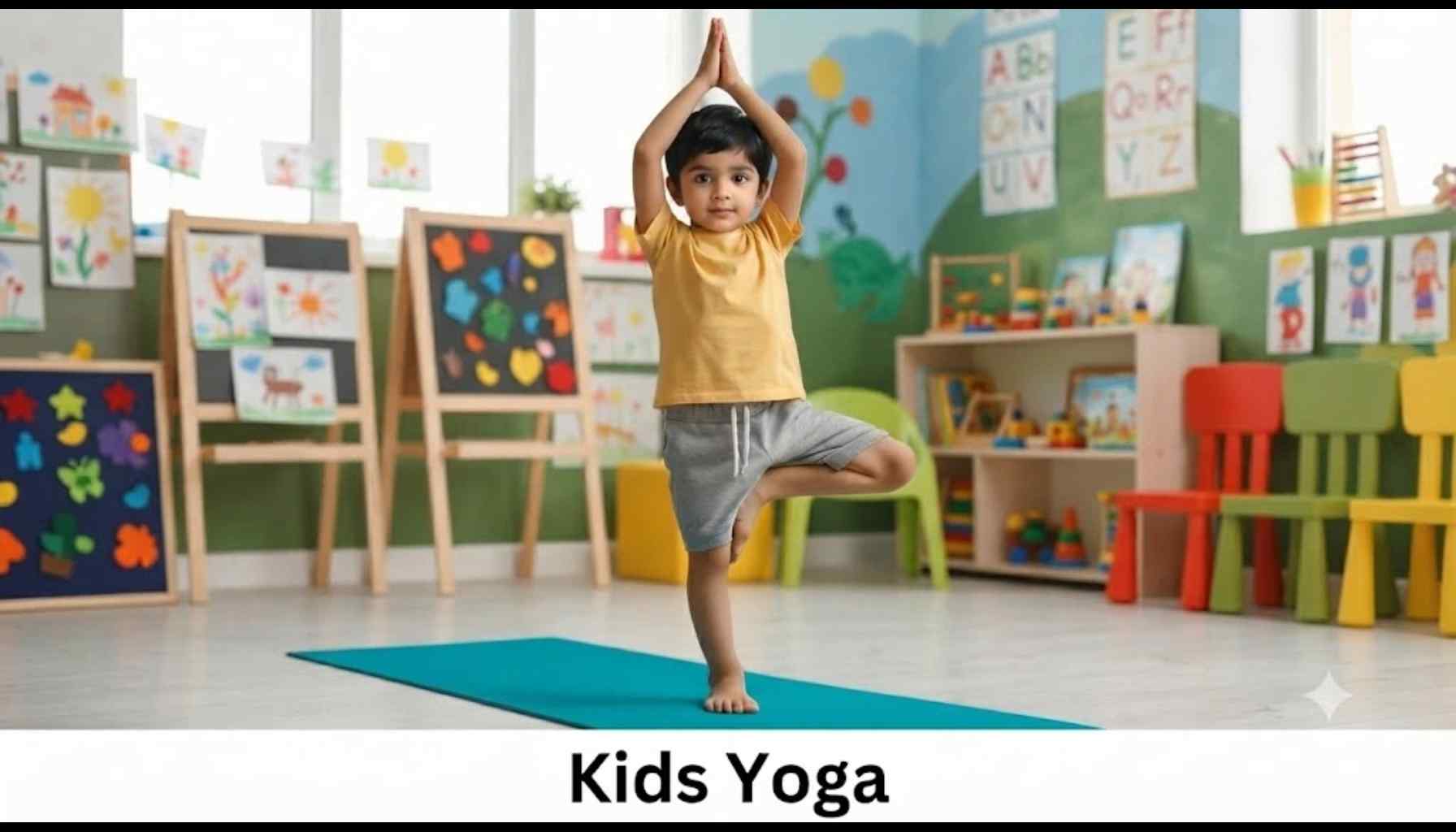
Kids Yoga: Benefits
Kids yoga adapts traditional postures, breathing exercises, and mindfulness into a playful, age-appropriate format that helps children build strength, flexibility, and emotional awareness. Rather than focusing on precision, kids yoga uses storytelling, animal poses, and games to keep young minds engaged while introducing them to focus, calm, and body confidence early in life.
Key Takeaways
- Poses use play, not perfect alignment, for kids.
- Breathing exercises help children manage big emotions.
- Consistency matters more than duration for young practitioners.
Benefits of Kids Yoga
- Increases flexibility, balance, and overall fitness levels
- Improves emotional control and self-awareness
- Enhances focus and concentration and improves school performance
- Decreases stress, anxiety, and restlessness
- Improves sleep habits
- Sharpens social skills by practicing in groups
- Boosts self-confidence and body awareness
Conditions often supported: Anxiety, concentration problems, stress-induced restlessness, ADHD and insomnia are some of the conditions that are often improved through kids yoga practice.
Yoga for Kids by Age Group
|
|
|
|
|
|
|
|
|
|
|
|
|
|
|
|
|
|
|
|
|
|
|
|
|
|
|
|
Yoga Poses for Kids Below 10 Years
- Cat-Cow Pose
- Get on hands and knees.
- Arch your spine like a frightened cat.
- Drop your tummy like a cow.
- Do it slowly with your breathing.
- Tree Pose
- Be straight like a tree.
- Place one foot onto the opposite thigh.
- Raise your arms like branches.
- Hold it and do it again on another leg.
- Butterfly Pose
- Sit down with your soles joined.
- Hold your feet.
- Flutter your legs like wings.
- Breathe and relax.
Yoga for Kids Above 10 Years - Key Poses
1. Warrior II Pose
- Place feet apart widely.
- Bend one knee deeply.
- Raise arms straight.
- Focus ahead and be still.
2. Downward Dog Pose
- Position body on all fours.
- Raise your hips to a high point.
- Extend your arms and legs straight.
- Assume the shape of an upside-down V
3. Boat Pose
- Sit with knees bent up.
- Lean back, lift your feet.
- Balance on your seat bones.
- Hold steady, then release.
How to Prepare Your Child for Kids Yoga
Dress your child in comfortable, stretchy clothing, clear a safe, open space, and expect a fun, energetic session focused on playful exploration rather than quiet perfection.
Tips for Parents
- Practice alongside your child to make it more engaging and fun
- Keep sessions short, playful, and free of pressure to "get it right"
- Use storytelling or animal themes to hold younger children's attention
- Celebrate effort and participation rather than perfect form
- Choose a consistent, quiet time of day for practice
- Let kids choose favorite poses to build enthusiasm and ownership
Incorporating Kids Yoga in Preschool
Yoga can be incorporated in preschool settings through animal postures and breathing games during circle time. The children will find it easier to calm themselves through yoga postures even when taking just five to ten minutes each day.
Precautions
- Avoid difficult and complicated stretches for young children
- Make sure there is a comfortable environment without any sharp furniture edges
- Avoid making a child do a posture when he/she indicates that it causes pain
- Watch out for balance postures to ensure children don’t fall
- Make sure you do not imitate adult yoga classes
- It is important to discuss with a pediatrician first if the child has any medical issues
Common Mistakes
- Making yoga sessions lengthy such that the kids get bored
- Demanding perfection from the kids instead of engaging them playfully
- Ignoring breathing exercises which are fundamental to yoga
- Comparing one child's flexibility or balance to another's
- Choosing overly complex poses unsuitable for a child's age
- Turning yoga into a rigid, disciplined routine instead of fun
Duration and Frequency: A kids yoga session usually lasts 15–30 minutes depending on age, and practicing two to three times a week is a good starting point for building lasting habits.
Who Benefits Most From Kids Yoga
- Anxious or easily overwhelmed children benefit from breathing techniques that build emotional regulation.
- Kids with attention or focus challenges gain calm and concentration through mindful movement.
- Physically active children build flexibility, strength, and body awareness through playful poses.
Wrapping Up
Kids yoga offers a fun, accessible way to introduce children to movement, mindfulness, and emotional balance from an early age. By keeping sessions playful and age-appropriate, parents and educators can help children build lifelong habits. Kids Yoga as an extracurricular activity in schools help children build creativity and confidence.
FAQs
1. At what age should a child start yoga?
Most children can begin simple, playful yoga poses and breathing exercises around age 4.
2. Which type of yoga is best for kids?
Gentle, playful kids yoga with animal poses and storytelling works best for young children.
3. How to teach yoga for kids?
Use fun themes, short sessions, and simple poses while practicing alongside them for encouragement.
4. What are 10 easy poses of yoga for kids?
Cat-Cow, Tree, Butterfly, Warrior II, Downward Dog, Boat, Child's Pose, Cobra, Mountain, and Frog Pose.
Also Read: Sahaja Yoga
By Umesh Kumar Khiri


Discussion (0)
No comments yet. Be the first to comment!
Leave a Comment
You need to login to post a comment.