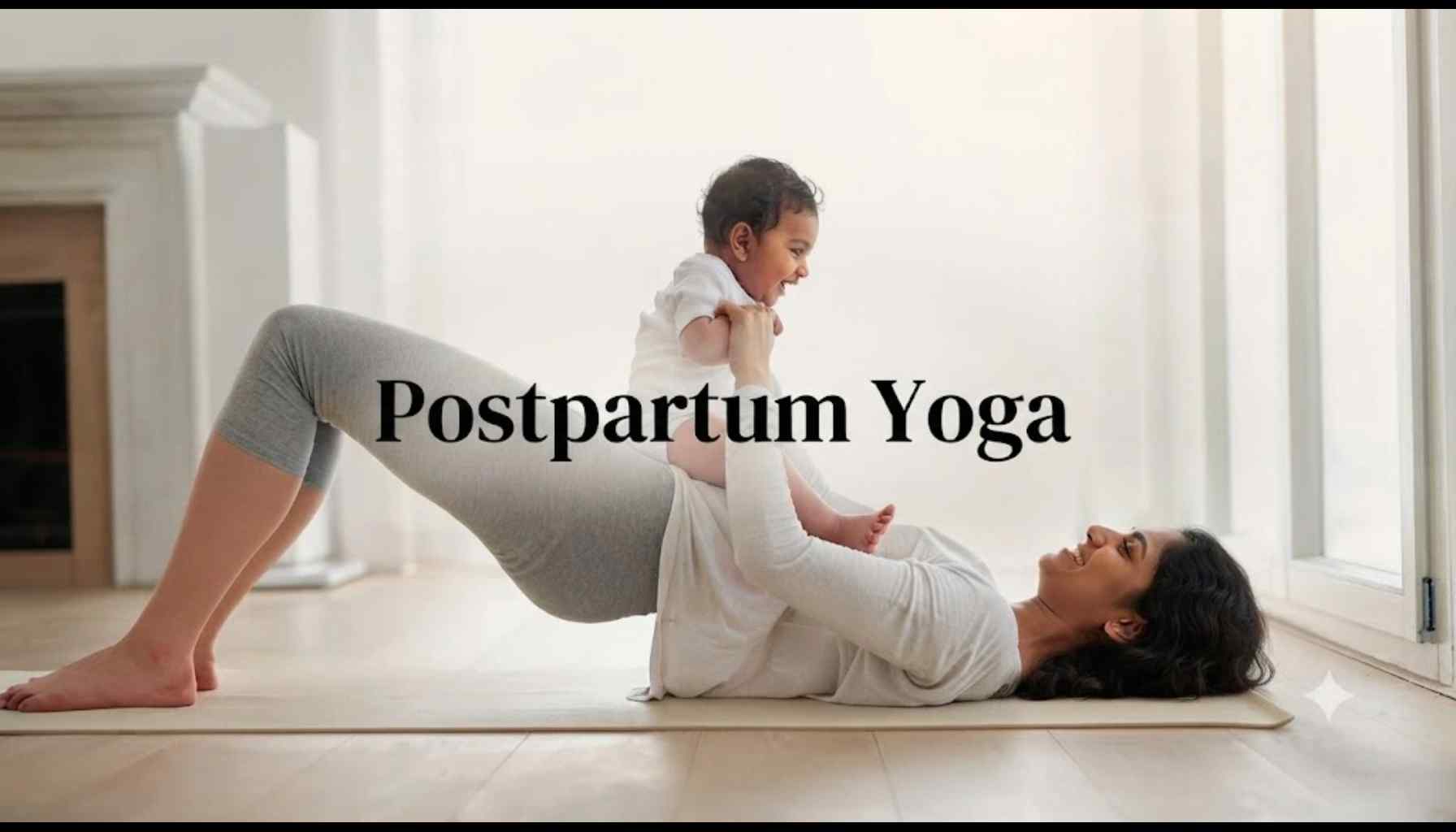
Postpartum Yoga: Gentle Poses and Benefits
Postpartum yoga offers new mothers a gentle, low-intensity way to heal the body and steady the mind after the demands of pregnancy and birth.
Key Takeaways
- Wait for medical clearance: roughly 6 weeks after vaginal birth, 8–12 weeks after a C-section to start postpartum yoga.
- Focus on breath, pelvic floor and gentle mobility before core work.
- Short, slow sessions beat rushing back to intensity.
What Is Postpartum Yoga?
Postpartum yoga, also called postnatal yoga, is a gentle and modified form of exercise designed specifically for the weeks and months after childbirth. It shifts focus away from strength and flexibility goals and toward recovery: rebuilding core and pelvic floor tone, easing new aches, and supporting emotional wellbeing during a demanding stage of life.
When Can You Start Postpartum Yoga?
Timing depends on your delivery and recovery. As a general guide:
- Vaginal birth: Many people are cleared around 6 weeks, after a postnatal check-up.
- C-section: Most providers recommend waiting 8 to 12 weeks, sometimes longer.
- Gentle breathing and pelvic floor awareness can often begin earlier, even within the first couple of weeks, if comfortable and approved.
Always get clearance from your doctor or midwife before beginning any postpartum exercise.
Benefits of Postpartum Yoga
Some of the benefits of postnatal yoga for new mothers are:
- It gently rebuilds core, pelvic floor and glute strength
- Eases neck, shoulder and lower back tension from carrying baby
- Supports better sleep and reduces cortisol-driven stress
- May lower the risk of postpartum anxiety and depression symptoms
- Encourages a slow, compassionate reconnection with your baby
6 Postpartum Yoga Poses
1. Cat-Cow (Marjaryasana-Bitilasana)
- Come to hands and knees, wrists under shoulders.
- Inhale, lift your tailbone and arch your spine gently.
- Exhale, round your spine, tucking chin to chest.
Benefit: It eases back stiffness from feeding and carrying.
Modification: Keep the movement small and slow.
2. Child's Pose (Balasana)
- Kneel with knees apart, sit back on your heels.
- Fold forward, arms extended or resting by your sides.
- Rest your forehead down and breathe slowly.
Benefit: It calms the nervous system and releases back tension.
Modification: Place a cushion between hips and heels.
3. Seated Pelvic Floor Breathing
- Sit comfortably, spine tall, hands resting on your belly.
- Inhale, let your belly and pelvic floor soften.
- Exhale, gently draw the pelvic floor upward and inward.
Benefit: It reconnects and gently retrains the pelvic floor.
Modification: Practise lying down if sitting feels tiring.
4. Bridge Pose (Setu Bandhasana)
- Lie on your back, knees bent, feet flat.
- Inhale, press feet down and lift hips slightly.
- Exhale, lower down slowly, and position your hands properly with arms extended.
Benefit: Gently strengthens glutes and lower back.
Modification: Lift only a few inches if you feel strain.
5. Seated Side Stretch
- Sit tall, cross-legged or in a chair.
- Inhale, raise one arm overhead.
- Exhale, lean gently to the opposite side.
Benefit: Relieves tightness from breastfeeding posture.
Modification: Keep the reach small and controlled.
6. Reclined Bound Angle Pose (Supta Baddha Konasana)
- Lie back, soles of your feet together and open your knees wide.
- Support your knees with cushions if needed.
- Rest hands on your belly and breathe slowly.
Benefit: It deeply relaxes the hips and nervous system.
Modification: Keep a rolled towel under each knee for support.
Counter Poses to Release Tension
a. Supine Knee-to-Chest (Apanasana)
- Step: Lie down and pull both knees towards your chest.
- Beneft: It helps relax the lower back post-Bridge and pelvic floor exercise.
b. Seated Forward Fold
- Step: Sit up straight, stretch legs, then bend slightly from the hip.
- Benefit: Helps release tightness resulting from long hours sitting while breastfeeding.
Postpartum Depression
Postpartum depression (PPD) is a mood condition that can develop in the weeks or months after childbirth, going beyond the brief "baby blues" that many new mothers experience in the first two weeks.
If you feel persistent sadness or experience severe mood swings, it's important to reach out to a doctor.
How Postnatal Yoga Can Help
Yoga is not a replacement for medical or psychological treatment; clinical experience suggests it can be a helpful complementary tool:
- Calms the nervous system: Slow breathing activates the parasympathetic nervous system, which can lower cortisol and ease anxiety.
- Improves sleep quality: Practices like gentle restorative poses and Yoga Nidra may support more restful sleep, even in short stretches.
- Creates space for support: Group postnatal classes can reduce isolation by connecting mothers with others going through the same stage.
Poses to Avoid in Early Postpartum
- Inversions (Headstand, Shoulderstand, Downward-Facing Dog pose done for long time): Due to loose ligaments and weakened pelvic floor, these poses are risky; they can provoke dizziness.
- Planks/Crunches: They put excessive tension to the abdominal wall, and they may cause worsening of diastasis recti (abdominal separation), as well as apply pressure to pelvic floor.
- Twisting postures: These are strong and place great stress to the abdominal area and any existing C-section scar. Practice only mild and open twists.
- Hot yoga: Heat can cause dehydration, overheating, and dizziness.
Precautions
- Seek medical clearance prior to beginning, particularly if you had a C-section.
- Don’t engage in deep core engagement or strong twisting actions for several weeks.
- If you experience pain, lightheadedness, or unexplained bleeding, stop immediately.
- Keep initial sessions brief, about 15 to 20 minutes.
Summing Up
Postpartum yoga is less about pushing your body and more about listening to it. With patience, medical clearance and gentle, consistent practice, it can support both physical recovery and emotional wellbeing during a profound stage of life. It can bring positivity into a mother’s life.
Frequently Asked Questions
1. When can I start postpartum yoga?
Around 6 weeks after a vaginal birth and 8 to 12 weeks after a C-section, once your doctor clears you.
2. What are some gentle postpartum yoga poses to start with?
Breath awareness, pelvic floor reconnection and gentle poses like Cat-Cow and Child's Pose are good starting postures.
3. What is not allowed after a C-section?
Avoid heavy lifting, intense abdominal work, driving, and strenuous exercise until your doctor confirms it's safe.
4. Can postpartum yoga help with postpartum depression?
Research suggests it may help reduce symptoms, though it isn't a substitute for professional mental health support if needed.
Also Read: Yoga Poses Easy
By Umesh Kumar Khiri



Discussion (0)
No comments yet. Be the first to comment!
Leave a Comment
You need to login to post a comment.