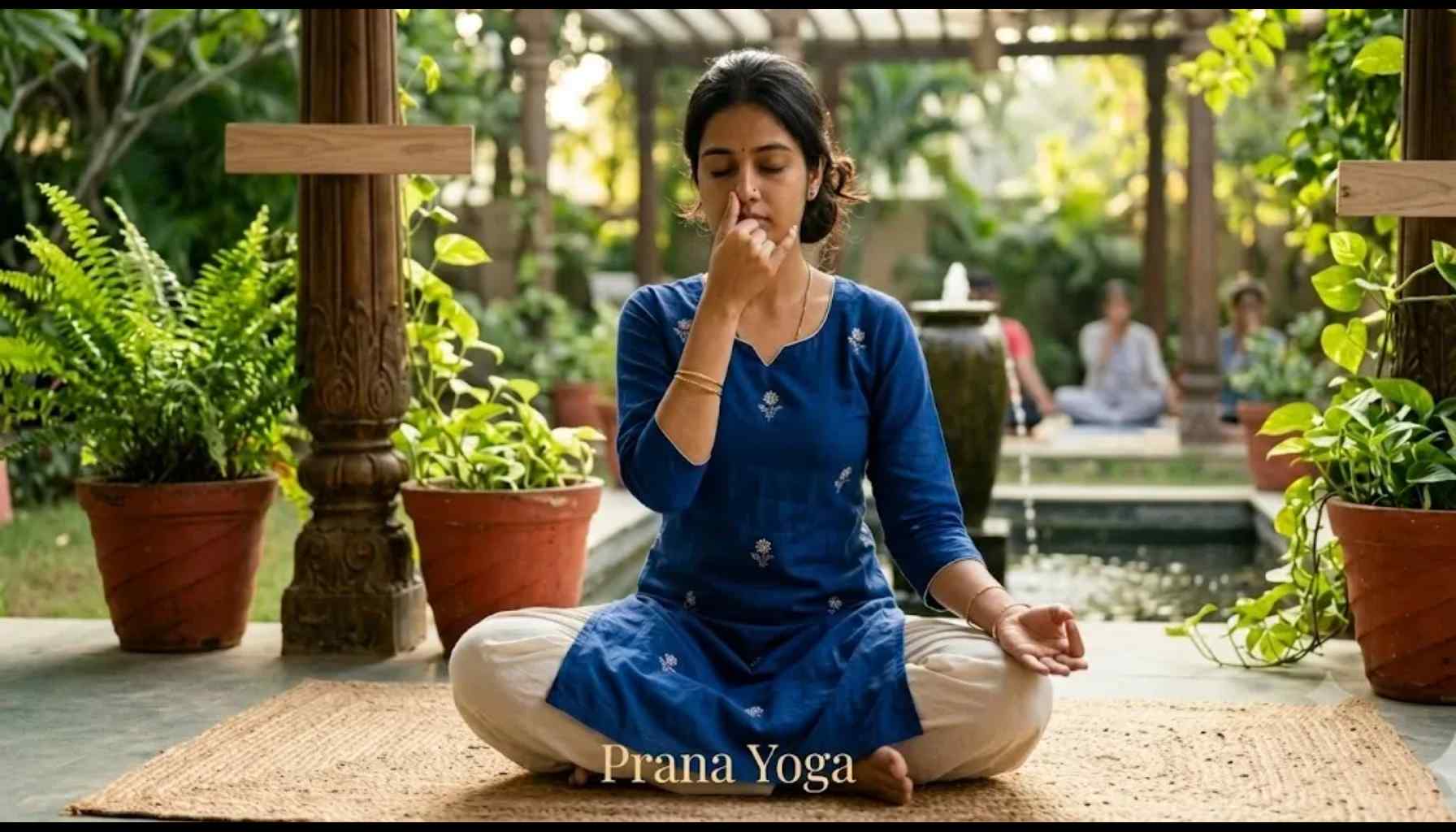
Prana Yoga: Harnessing the Universal Life Force
Prana Yoga shifts focus from external physical postures (Asanas) to the mastery of internal breath and energetic flow (Pranayama).
In today’s hectic world, it is quite common to have constant physical exhaustion, stress in one’s mind, and feeling disconnected. While physical movement and proper nutrition are essential, traditional yogic wisdom reveals that our fundamental vitality relies on Prana, the subtle life-force energy that permeates every living organism. By regulating the breath, practitioners tap into the body's subtle energetic pathways (Nadis), bringing harmony to the mind, body, and spirit.
Key Takeaways
- Prana Yoga regulates the subtle energy of life through conscious breathing.
- Daily practice of pranayama reduces stress and improves mental awareness.
- Control of five body vayus leads to physical and spiritual well-being.
What is Prana Yoga?
Prana Yoga centers on controlling, channeling, and expanding the cosmic life-force energy within the practitioner. As described in the fourth limb of Patanjali's classical Ashtanga Yoga, Pranayama (Prana = life force, Ayama = expansion or control) utilizes conscious breathing to purify the mind and awaken higher states of awareness.
Although conventional forms of exercise deal mainly with conditioning of muscles and cardio, Prana Yoga uses the nervous system to convert involuntary breathing into a means of self-cure and enlightenment.
The Five Vayus of Prana Yoga
In yogic anatomy, universal Prana divides into five distinct sub-energies called Vayus (winds). Each Vayu moves in a specific direction, resides in a distinct region of the body, and governs specialized physiological and psychological functions.
|
|
|
|
|
|
|
|
|
|
|
|
|
|
|
|
|
|
|
|
|
|
|
|
|
|
|
|
|
|
|
|
|
|
|
|
Practising Prana Yoga: Variations
1. Anulom Vilom (Alternate Nostril Breathing):
Steps:
- Sit straight, resting your left hand on your knee and your right thumb on your right nostril.
- Block the right nostril, breathe in using your left nostril while uttering "SO", then block the left nostril with your ring finger and breathe out via the right nostril while uttering "HUM".
- Breathe in from the right nostril, then breathe out from the left nostril for one complete breath cycle; do this for 5 to 10 minutes each day to relieve anxiety and reduce blood pressure.
2. Kapalabhati (Skull-Shining Breath):
Steps:
- Sit straight, inhale deeply using both nostrils and allow your stomach to naturally inflate.
- Exhale sharply through your nose by quickly drawing your navel back into your body while chanting "OM".
- Allow your stomach to release to let the natural inhalation happen; repeat 3 sets of 30 strokes each day.
3. Bhramari (Bee Breath):
Steps:
- Take a deep breath through the nostrils, then place your thumbs over the ears and rest your fingers over closed eyes.
- Slowly exhale through the nostrils while producing a soft humming sound similar to that made by a bee and vibrating the word "OM".
- Concentrate on the vibrations within your brain and repeat five to seven times daily to alleviate headaches, sleeplessness, and mental tension.
4. Ujjayi (Ocean Breath):
Steps:
- Sit comfortably and breathe in deeply through your nose while slightly constricting your throat, chanting silently "SO".
- Notice the smooth movement of air causing a gentle ocean wave-like sound in your throat.
- Breathe out slowly through your nose while constricting your throat slightly and chanting silently "HUM".
Duration: Practice Prana Yoga for 15 to 30 minutes daily, ideally every morning on an empty stomach.
Health Benefits of Prana Yoga
- Increases Lung Capacity: Enhances the ability to expand the lungs for efficient respiration.
- Stress Management: Alleviates stress by reducing the level of cortisol and stimulating the parasympathetic response.
- Heart Health Improvement: Helps to maintain normal blood pressure and increase blood circulation in the body.
- Increases Concentration: Improves focus and concentration.
- Boosts Immune System: Increases the flow of oxygen to the cells to detoxify and boost immunity.
Precautions
To safely receive the benefits of Prana Yoga without inducing physical strain or energetic imbalances, keep these guidelines in mind:
- Practice on an Empty Stomach: Always perform pranayama at least 3 to 4 hours after a heavy meal or 1 to 2 hours after a light snack.
- Maintain Upright Posture: Keep the spine, neck, and head aligned to ensure unobstructed flow through the central energy channel (Sushumna Nadi).
- Respect Physical Limits: Never force breath retention (Kumbhaka) if you experience dizziness.
- Avoid Practice During Acute Illness: Refrain from practicing intense pranayama if you have a fever, severe asthma attack, or recent abdominal surgery.
Common Mistakes
- Straining or jerky breathing
- Slumping over the spine:
- Breath retention for too long
Frequently Asked Questions (FAQs)
1. What is a prana in yoga?
Prana is the universal vital life-force energy that animates all living beings and governs physical and subtle bodily functions.
2. What are the five types of prana?
The five types of prana are Prana-Vayu, Apana-Vayu, Samana-Vayu, Udana-Vayu, and Vyana-Vayu.
3. Who should avoid doing Prana Mudra?
People experiencing acute chest congestion, severe colds, or hyper-Kapha imbalances should avoid practising Prana Mudra continuously.
4. What foods are high in prana?
Fresh organic fruits, raw vegetables, sprouted grains, nuts, seeds, and fresh dairy are naturally rich in high-prana energy.
Also Read: Halasana
By Umesh Kumar Khiri

Discussion (0)
No comments yet. Be the first to comment!
Leave a Comment
You need to login to post a comment.