Pregnancy Yoga: Benefits
Pregnancy yoga is a form of yoga exercise adapted for the needs of expectant mothers. It keeps the breathing, mobility and relaxation of traditional practice while adjusting postures for a growing belly, looser joints and shifting balance.
Pregnancy asks a lot of your body, and yoga can offer support through every trimester. Done thoughtfully, it combines gentle movement, mindful breathing and rest into one routine you can adapt as your body changes.
Key Takeaways
- Pregnancy yoga is generally safe for healthy pregnancies, but always get your doctor's or midwife's approval first.
- Choose gentle, supported movements over deep stretches, intense heat or lying flat on your back late in pregnancy.
- Listen to your body: comfort matters more than depth or flexibility.
Is Pregnancy Yoga Safe?
Yes, for most women who have a low-risk pregnancy. Prenatal yoga is generally recognized as a safe exercise program. But if you have problems such as placenta previa, preeclampsia, bleeding, or preterm labor risk, then this might not be suitable for you. It is best to consult with your doctor first before doing yoga.
Pregnancy Yoga Across the Trimesters
- First trimester: Focus on gentle movements, breathing and relaxation, adjusting practice for fatigue and nausea.
- Second and third trimesters: Use supported poses, widen your stance and prioritise balance, comfort and gentle mobility.
Pregnancy Yoga Benefits
- Relieves tension in the back, hips, and shoulders
- Helps you get better sleep and lessens stress
- Enhances physical strength and endurance
- Breathing techniques are taught for childbirth
- Promotes good posture due to changes in center of gravity
- Reduces stress and anxiety: Research suggests prenatal yoga may help reduce stress, anxiety and depressive symptoms.
How Pregnancy Changes Your Yoga Practice
Hormones like relaxin loosen your ligaments, so it's easy to overstretch without noticing. Your balance changes, your belly limits forward folds, and your energy may swing from week to week. Move slowly, keep your range of motion moderate and use props such as blocks, bolsters and walls.
Pregnancy Yoga in Everyday Life
- Mobility: Gentle hip circles and shoulder rolls keep joints comfortable.
- Breathing: Slow belly breaths calm your nervous system at any time of day.
- Relaxation: Even five minutes of quiet, supported rest resets your energy.
- Posture: Standing tall with relaxed shoulders reduces strain on your lower back.
- Gentle strength: Supported standing poses build leg and core stability without strain.
Pregnancy Yoga Poses
1. Marjaryasana–Bitilasana (Cat-Cow Pose)
Start from all four limbs. Inhale and then arch the back and lift the chest. Exhale and round the spine gradually. It enhances the flexibility of the spine and relieves minor stress in the back.
2. Balasana (Child's Pose)
Kneel down in such a manner that the knees are comfortably apart. Now sit back slowly and stretch the arms in front, letting the forehead rest on a cushion. It helps relax the back and the hips.
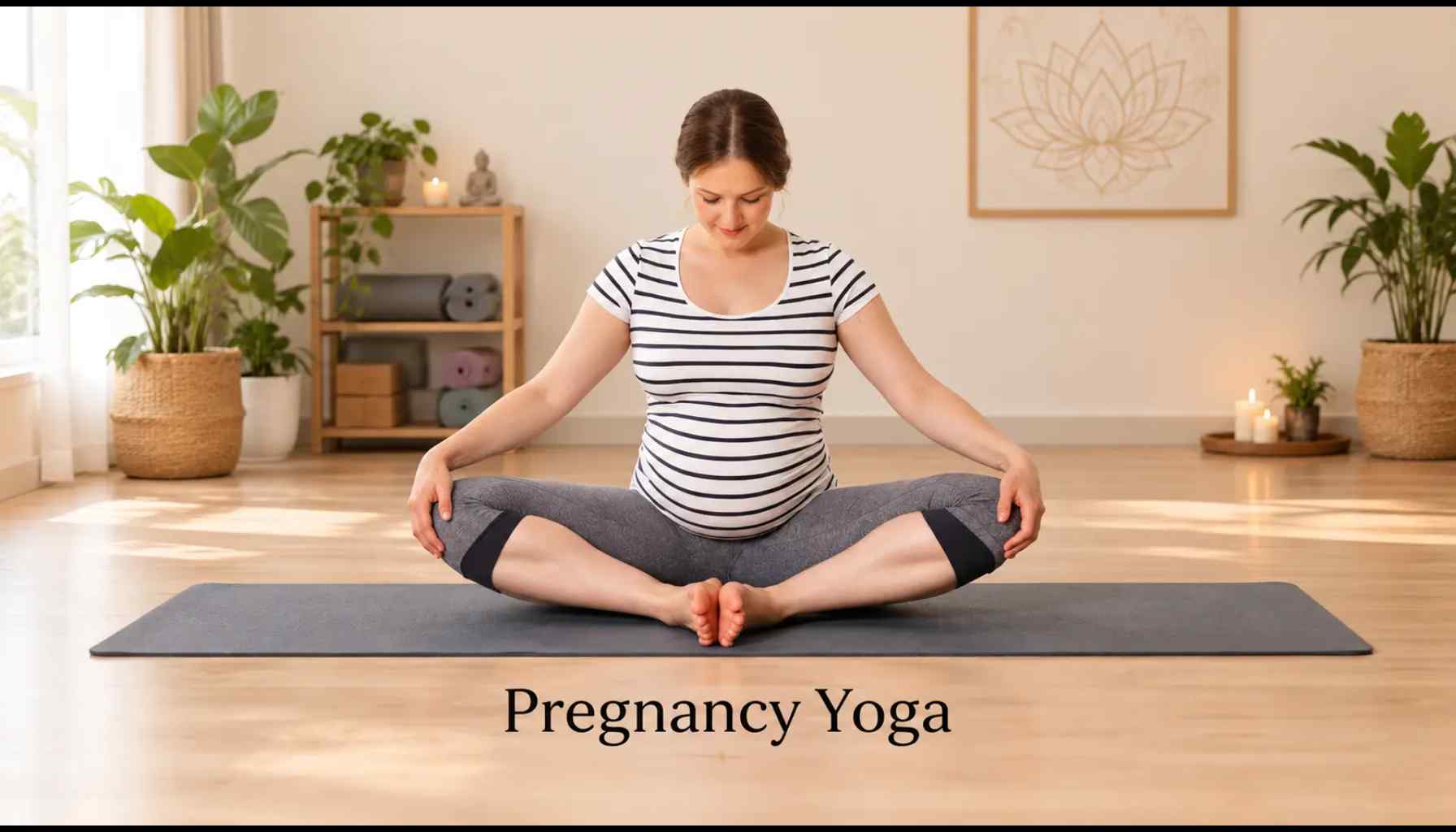
3. Baddha Konasana (Bound Angle Pose)
Sit upright, and have the soles of the feet together. Let your knees rest on cushions with the spine erect. It is a gentle stretching of the inner thighs and helps improve the flexibility of the hips.
4. Virabhadrasana II (Warrior II Pose)
Stand upright and have the feet wide apart. Turn one foot outwards and bend the knee. Now stretch the arms to the sides comfortably. It helps strengthen the legs and enhances the stability.
5. Malasana (Garland Pose)
Stand upright and have the feet comfortably apart. Squat down gradually and let the knees be apart. Have support under the hips through a yoga block or a bolster.
6. Parsva Savasana (Side-Lying Relaxation Pose)
Lie on your left side with one pillow below your head and another pillow between your legs. A cushion can be placed below your tummy for support.
Precautions: Practise pregnancy yoga after seeking advice from your obstetrician. Cushions should be used while doing pregnancy yoga and deep squats should be avoided. Prolonged lying down on the back position is to be avoided too.
Prenatal Yoga Practices for Common Pregnancy Discomforts
- Pain in Back: Do Cat-Cow and pelvic tilts
- Hip Pain: Perform bound angle pose with support or slow squats
- Leg Swelling: Lift up your legs with support and perform slow ankle rolls.
- Fatigue: Go for restorative postures and slow breathing.
- Stress: Perform deep breathing of diaphragm or do brief relaxation.
What to Avoid During Pregnancy Yoga
- Avoid hot yoga and exercise in very warm conditions because overheating increases the risk of heat-related illness; choose a cool, well-ventilated room and drink water regularly.
- Twisting postures that apply pressure on the abdominal muscles.
- Inversions and balance postures in yoga.
- Backbends that are deep and stretch the belly
- Lying flat on the back after the second trimester.
- Breathing techniques that involve holding your breath.
How to Modify Your Existing Yoga Practice
Increase the distance between your legs, balance against a wall and substitute closed twisting postures with open ones where you twist away from the belly. Substitute hard core strengthening postures with milder ones and shorten your routine and take breaks when needed.
When to Stop and Seek Medical Advice
Do stop and talk to your healthcare provider in case of:
- Vaginal spotting or leaking
- Dizziness, lightheadedness or breathlessness
- Chest pain or fast heartbeat
- Contractions or abdominal pain
- Headache, pain in calf or swelling
- Decreased fetal movements
Pregnancy Yoga for Beginners
Are you a beginner? Try a prenatal yoga class taught by a trained instructor or try guided programs. Begin with 10 to 15 minutes of practice with emphasis on breathing and basic postures. Dress comfortably and have some water with you. Practise in a cool room, stay hydrated and gradually adjust movements to your comfort.
To Conclude
Pregnancy yoga can contribute to physical comfort, relaxation, and deep breathing during the pregnancy period. With the help of professional advice, it can be incorporated into your lifestyle safely.
Frequently Asked Questions
1. When should you start pregnancy yoga?
Many people begin in the second trimester once early symptoms ease, but you can start earlier with your provider's approval.
2. Which yoga is good for pregnancy?
Gentle prenatal yoga, restorative and Hatha yoga are the best fits.
3. What not to do at 7 weeks pregnant?
Avoid overheating, hot yoga, heavy lifting, alcohol, smoking and any strenuous new exercise without medical clearance.
4. Can I do planks while pregnant?
Modified planks may be fine early on, but avoid them if you feel strain or belly doming, and ask your provider first.
Also Read: Somatic Yoga
By Umesh Kumar Khiri


Discussion (0)
No comments yet. Be the first to comment!
Leave a Comment
You need to login to post a comment.