
Raga Music for the emotionally disturbed
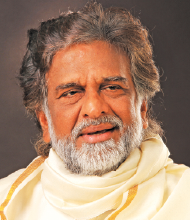
By T V Sairam
The ancient raga system of India is well-known for centuries for its emotional content and impact. The ragas have been selectively used along with appropriate rhythms and beats to address the turbulent minds and to balance the emotional upheavals during unbearable losses, trauma and whatnot experienced by our forefathers. ‘Raga Chikitsa’ was one of the ancient texts which had dealt with the therapeutic role of ragas.

Recent years have witnessed the revival of research on Indian ragas for their therapeutic role. We all know that Indian ragas can effectively address the emotional needs of humans in a subtle and unpretentious way. Thus, it can be an adjunct to counseling.
Ragas have been known for their emotional impact in humans for a very long time. Most of the ancient texts and manuscripts, depicting ragas as a medical intervention (e.g., Raga Chikitsa) are still untraceable and some of them are totally lost with the passage of time. However, some of the remnants of these texts are fortunately available to this day, thanks to the efforts made by the Tanjore Saraswati Mahal Library, since independence. They all go to show that Indian musicology had given adequate emphasis on the emotional role of ragas through trials and errors and had come out with a choice of tones (swaras) that affect tje emotional needs of listeners.
It appears that these therapeutic concepts were well-developed and practiced in India by the 12 th-13 th century, but were lost therafter. Improvising music to inculcate pleasant feelings have been dealt with in Sangita Sudha, a 17 th Century work, authored by the Nayaka King Raghunatha Nayak and his minister Govinda Dikshitar.
The ancient Indian musicologists were not only conderned with the aesthetic role in experiencing raga, but had also emphasized on their therapeutic impact on emotional situations. In this context the Sanskrit term bhaava, which denotes the emotional bed that infuses life to the scale of a raga was regarded as the ‘soul’ of music. Thus, while laying down the aesthetic norms, the classical musicologists were researching on the ability to fill a raga-scale with bhaava. In fact this has made Indian ragas, an ideal tool for emotional healing which includes addressing the various conditions of mental imbalances such as anxiety, stress, trauma and whatnot.
The Raga as a Therapy for Emotional Victims
Various ancient musicological on this aspect of music, as collected by then King Sahaji (1684-1711) were fortunately preserved in the Thanjavur Saraswathi Mahal Library in the form of several palm leaf manuscripts. After independence, these were studied by music scholars and published as series of books by this Library. From here we are able to understand how our ancient musicologists manipulated the raga structure to derive maximum benefits out of raga system.
Raga Alap or Improvisation
Expanding a raga structure is referred to as alap or raga alapana. This process of rendering involves a right combination of imagination, aimed at a determined intention. To achieve a consistent bhaava, the musicologists had, in the past, worked on various ‘catches’ (pidi in Tamil), which inculcate pleasant feelings in listeners.
The pidis are the note-clusters, which form the building blocks for a raga. Thus, for example, let’s take five pidis: SA, SA RI, SA RI GA, SA RI GA MA, SA RI GA MA PA. These are the five pidis, which can be found within the body of a typical; Indian raga. Based on years, decades and even of centuries of experimentations with such clusters, keenly observing their impact on the minds of listeners, certain conclusions and generalization have been drawn which will benefit the music therapists in arriving at the ‘appropriate’ raga structures to address various mental ailments.
Based on the understanding that a pidi that satisfies the mind alone can be therapeutic, they devised ways and means to execute through imagination the right kind of pidis that could satisfy the listeners instantly.
Out of the five pidis, as illustrated above, it was observed that it is either SA RI GA MA OR SA RI GA MA PA which give maximum satisfaction to the listeners with a sense of complection. Where as the remaining three pidis namely SA, SA RI and SA RI GA are just capable of creating a sense of expectation in the minds of the listeners and never a sense of completion which alone renders satisfaction. In these “incomplete” examples, only suspences is created in the minds as there is no sense of completion. While listening to these pidis, the listeners are bound to feel certain inadequacy, and at the same time certain curiosity to reach a conclusion or completion.
The Probable Reason for Completion felt through the selected Pidis
The swaras SA and MA are considered samvadi swaras, the same way SA and PA are heard. Samvaadi swaras are the friendly notes which are close to each other. THE SAME mSound
Aalaap for Emotional Healing
Aalaap or improvisation of a raga is one of the many popular areas of classical music in India. Aalaap ins regularly practiced by both Carnatic as well as Hindustani musicians. As aalaap refers to the contemplative exposition of a raga with irregular phrase sans rhythm, it is highly intutive and emotional incharacter. It helps the musician and his or her listener in channelizing and expressing the emotional horizons freely with-out bothering for the social etiquette or behavioural restraints in normal social living.
Aalaap, (also referred to by some as ‘aalaapana’ according to the musical traditions, can be divided into the following five parts:
Akshiptika (Also, Aayatham): Aayatham is a Tamil word, which means ‘preparation’. The Sanskrit word ‘akshiptika’. refers to ‘throwing out in all directons’. Here, the emphasis just to commence the musical experience with a selected ragapiece, by pronouncing the swaras (notes) in an enjoyable way, so as to bring out the subtle emotion (raga bhaava) from a centre-point. It involves a slow, smooth and leisurely way of extending the emotional nuances hidden behind these swaras, by exploring both elevation (aaroha) and downfall (avaroha). It is like switching on an airplane by the cockpit crew before its take off. The detailed description of this stage has been described in Sangita Ratnakara, the oldest text available on music.
Raga Vardhani (Also, Eduppu): Raga vardhani refers to the take offstage in raga experience. The Tamil word. ‘eduppu’ here connotes the beginning of the expansion of the chosen raga. Having acquired a clear from by now, the musician is ready for a take-off. Raga vardhani thus begins its voyage!
Makarini (Also Vartani) In this form of aalaap, all the saras show their heads. It refers to the top of expansion of the raga.
Muktayi (Also, Nyasa) All good things have to come to an end! it refers to the finale of the aalaap.
Conclusion:
Aalaap, the ancient form of contemplative music has many advantages as it exercises the brain and regulates the emotional flow in a pleasant manner. Though the negative emotions such as fear, anger, melancholy etc are expressed through ragas, they are expressed so pleasantly that they do not have any adverse effect on the listeners. On the other hand, it is this author’s experience that such negative expressions, expressed so pleasantly through the ragas, help in addressing similar negative emotions suppressed by listeners. On the other hand, it is this author’s experience that such negative expressions, expressed so pleasantly through the ragas, help in addressing similar negative emotions suppressed by listners. With powerful tones and tunes, sounds and beats, it is possible to address such emotional incrustations through catharsis.
References
Sastri, K. Vasudeva 1958. Raga Alapanas and Thayams Tanjore: Saraswati Mahal Library
Sairam, T.V. 2004 Raga Therapy Chennai: Nada Centre for Music Therapy.
:

Discussion (0)
No comments yet. Be the first to comment!
Leave a Comment
You need to login to post a comment.