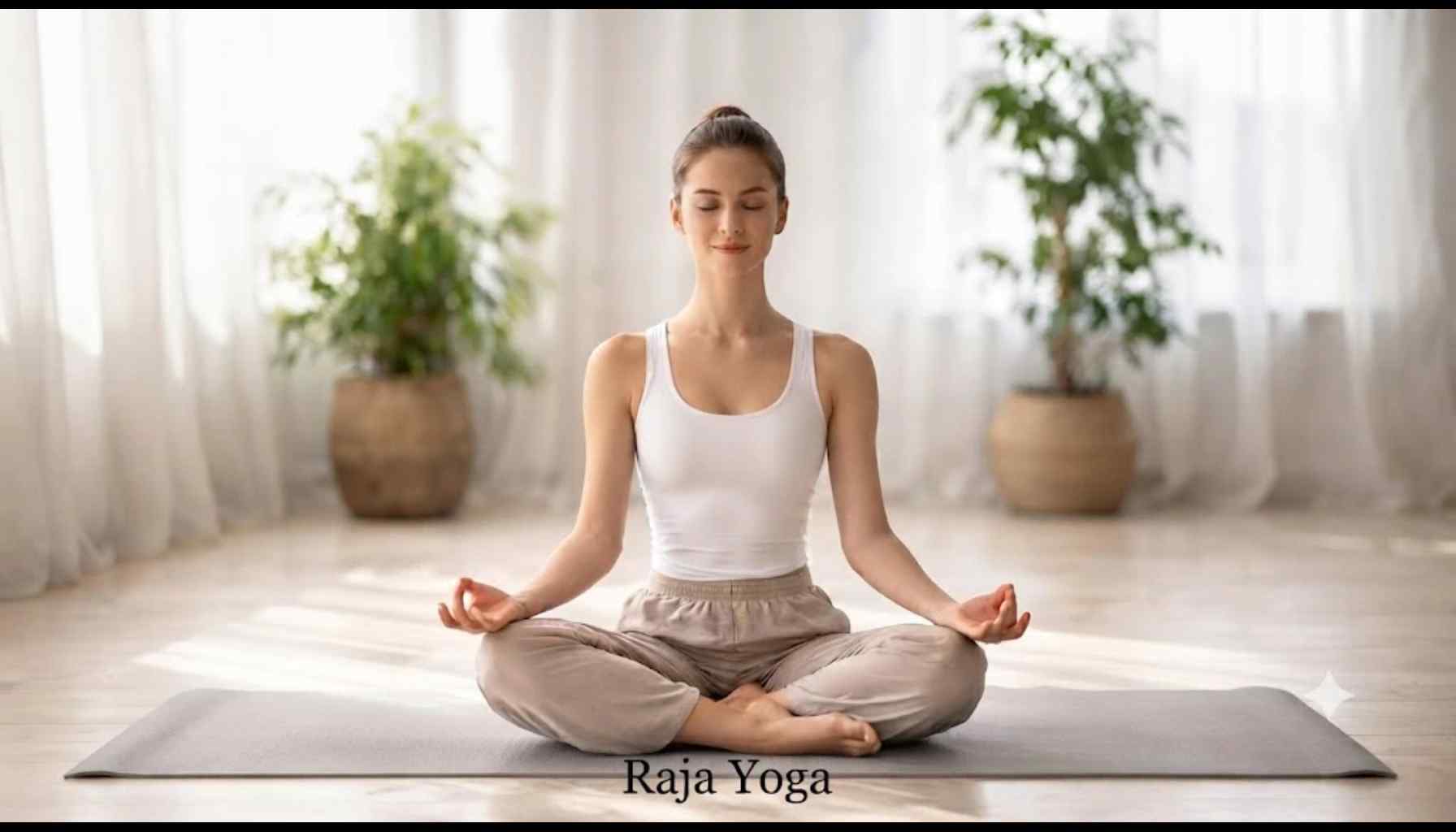
Raja Yoga: Poses and Benefits
Raja Yoga is traditionally described as a path of self-discipline, concentration, meditation, and inner awareness. It is also a form of Ashtanga Yoga, meaning the eight-limbed path.
Unlike yoga styles that mainly emphasize physical exercise, Raja Yoga gives significant importance to training the mind. Asana and pranayama support this process, while practices such as Pratyahara, Dharana, and Dhyana turn attention inward.
History of Raja Yoga
It originated from the practices of yogis and meditators of ancient India and has come to be linked with Patanjali Yoga Sutras, which formalized the eightfold path of yoga. These eight parts move from ethical living and physical preparation toward breath awareness, concentration, meditation, and Samadhi.
The name was popularized by Swami Vivekananda in his book called Raja Yoga, published in 1896, in which he explained the teachings of Patanjali.
What Does Raja Yoga Mean?
Raja Yoga means the “royal path” of yoga, emphasizing mastery of the mind through concentration, meditation, and inner discipline.
It is traditionally associated with Patanjali’s eight-limbed system, progressing from ethical practices toward deeper meditation and Samadhi.
Raja Yoga vs Ashtanga
Raja Yoga and Ashtanga Yoga are often used interchangeably when referring to Patanjali’s eight-limbed path of Yama, Niyama, Asana, Pranayama, Pratyahara, Dharana, Dhyana, and Samadhi.
However, “Ashtanga” literally means “eight limbs,” while Raja Yoga emphasizes the mind, meditation, and inner mastery within that framework.
Raja Yoga and Its Eight Limbs
The eight limbs traditionally associated with Raja Yoga are Yama, Niyama, Asana, Pranayama, Pratyahara, Dharana, Dhyana, and Samadhi.
|
|
|
|
|
|
|
|
|
|
|
|
|
|
|
|
|
|
|
|
|
|
|
|
|
|
|
|
|
|
|
|
|
|
|
|
1. Yama: Yama is a practice of ethics through non-violence, truthfulness, non-theft, moderation, and non-possessiveness.
2. Niyama: Niyama emphasizes individual discipline through cleanliness, contentment, austerity, study, and devotion.
3. Asana: Asana ensures a steady and comfortable body posture that facilitates breath control and meditation.
4. Pranayama: Pranayama is a breathing technique that creates awareness and steadiness.
5. Pratyahara: Pratyahara is the practice of withdrawal of senses.
6. Dharana: Dharana develops concentration by maintaining focused attention on a chosen object or point.
7. Dhyana: Dhyana is sustained meditation in which attention flows continuously toward the chosen focus.
8. Samadhi: Samadhi describes a profound state of meditative absorption traditionally associated with deep realization and spiritual awareness.
Meditative Postures in Raja Yoga
A stable sitting posture can make longer meditation sessions more comfortable.
1. Padmasana – Lotus Pose
Sit up straight, and put each foot on the other thigh, but only if your hips permit you to do so. The Padmasana pose is usually linked with meditation and stillness. If you are a beginner, you may use the cross-legged sitting posture instead.
2. Siddhasana – Accomplished Pose
Sit in a comfortable posture for your legs, keeping your spine erect and your hands on your knees. Siddhasana offers a stable posture for breathing and meditation.
3. Sukhasana – Easy Pose
Sit comfortably with your legs crossed, stretch your spine, relax your shoulders, and breathe normally.
Counter Poses
After seated meditation or pranayama, gentle movements can release stiffness.
- Balasana – Child's Pose: Kneel, sit toward the heels, fold forward gently, and relax the arms and shoulders.
- Pavanamuktasana – Wind-Relieving Pose: Lie on your back, draw one or both knees toward the chest, and breathe comfortably.
These poses are optional and should remain comfortable rather than forced.
Pranayama for Raja Yoga
Pranayama is the fourth limb and involves conscious regulation of breathing. The Yoga in Daily Life system places breath practices alongside physical exercises as preparation for greater control of the mind.
Nadi Shodhana – Alternate Nostril Breathing
Close one nostril, breathe through the other, change sides, and exhale slowly. Nadi Shodhana is often practiced as a breath for relaxation. New practitioners should take slow and relaxed breaths and not hold their breath without proper guidance.
Full Yogic Breath
Breathe in deeply, moving your stomach, rib cage, and upper chest out, and breathe out effortlessly. It promotes body-breath awareness and prepares the mind for meditation.
Duration and Frequency: Practise Raja Yoga for 20–30 minutes daily, five to six days weekly, beginning with shorter sessions and gradually increasing duration.
Health Benefits of Raja Yoga
Raja Yoga combines movement, breathing, concentration, and meditation. These practices may support general physical and mental wellbeing when performed consistently.
|
|
|
|
|
|
|
|
|
|
|
|
|
|
|
|
|
|
|
|
|
Diseases Managed: Raja Yoga may complement lifestyle management for stress-related concerns, sleep difficulties, anxiety symptoms, and some chronic-condition-related wellbeing needs.
Precautions and Common Mistakes
|
|
|
|
|
|
|
|
|
|
|
|
|
|
|
|
|
|
|
|
|
People with significant medical conditions, recent injuries, or breathing problems should seek appropriate medical guidance before beginning intensive practices.
Conclusion
The Raja Yoga provides an organized path for achieving physical stability, awareness of breath, concentration, and meditation. The eight limbs go beyond mere physical exercises and motivate one to live a disciplined life and practice introspection. Beginners may start with easy-to-do seated poses, simple pranayama, and brief meditations.
Frequently Asked Questions
1. What is the difference between Hatha and Raja Yoga?
Hatha Yoga places greater emphasis on physical postures and breath practices, while Raja Yoga emphasizes mental discipline, concentration, meditation, and its eight-limbed framework.
2. What are the types of Raja Yoga?
Raja Yoga is primarily presented as an eight-limbed path rather than a collection of separate types, although different traditions may describe its practices differently.
3. How to activate Raja Yoga?
Raja Yoga is developed through consistent ethical living, asana, pranayama, sense withdrawal, concentration, meditation, and gradual inner discipline.
4. What are the 8 steps of Raja Yoga?
The eight steps are Yama, Niyama, Asana, Pranayama, Pratyahara, Dharana, Dhyana, and Samadhi.
Also Read: Bhakti Yoga
By Umesh Kumar Khiri

Discussion (0)
No comments yet. Be the first to comment!
Leave a Comment
You need to login to post a comment.