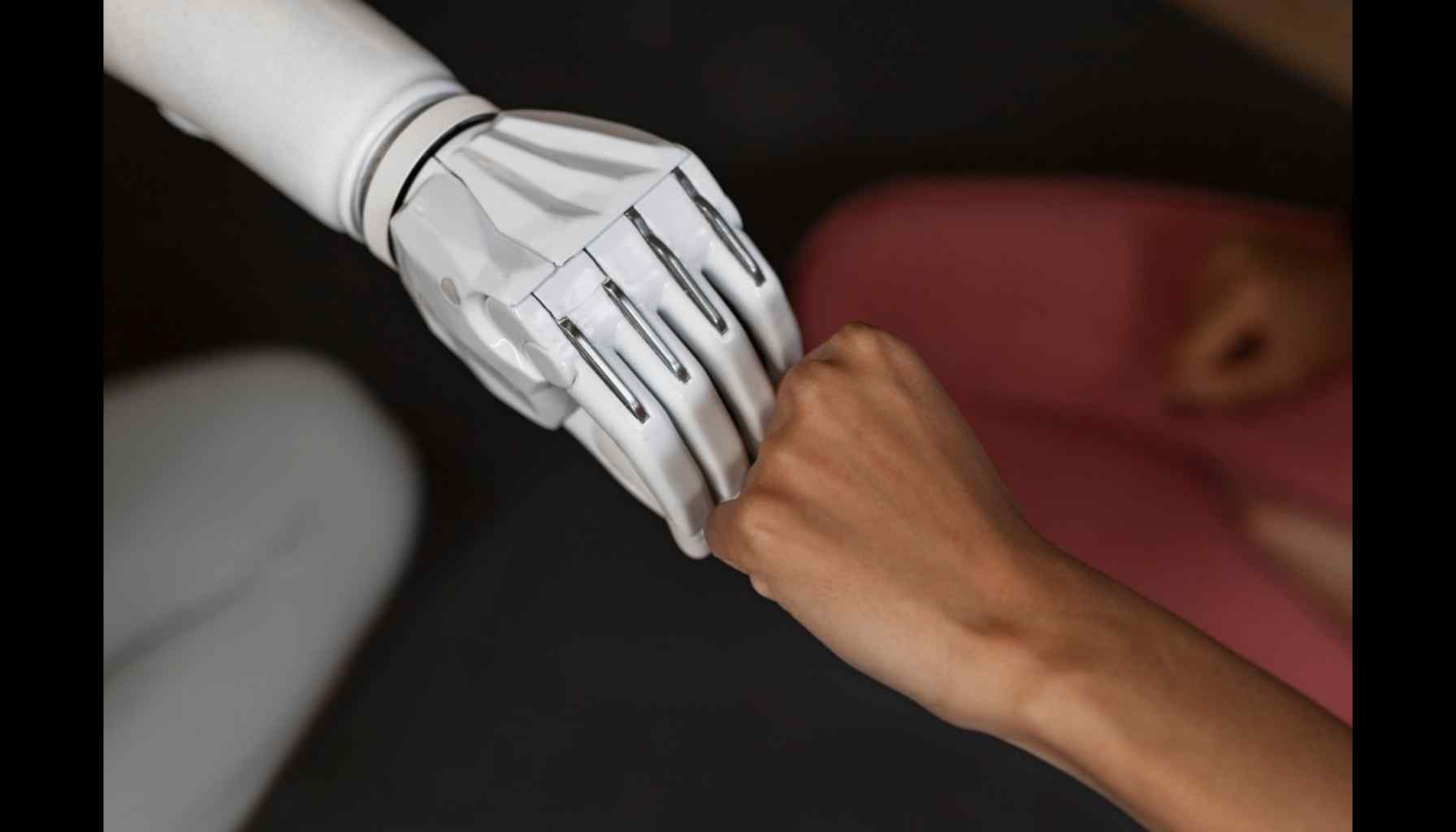
Kenya introduces robotic arms to speak to the deaf
In Kenya, a startup called Zerobionic is developing robotic limbs and humanoid robots that translate spoken language into sign language in real time, specifically to help deaf students access education—particularly in STEM subjects where technical vocabulary is often missing from local sign dialects .
The Technology: From Hands to Humanoids
Zerobionic's core technology focuses on converting a teacher's spoken words into sign language gestures almost instantly.
The Robotic Hand: The initial prototype was a 3D-printed mechanical hand that physically performs signs. It uses AI to translate speech and boasts a 92% accuracy rate with a translation speed of under two seconds .
The Signing Suit: To build their database, deaf teachers wear a sensor-fitted bodysuit that records and stores their signing movements. This helps standardize signs and expand the vocabulary available for teaching complex concepts .
The Humanoid (AF1): The project evolved from a hand to a semi-autonomous humanoid robot (standing about 5'7") named AF1 (Africa's First). It includes facial expressions and non-verbal cues, which are critical for accurate sign language communication .
Addressing a Critical Gap in Kenya
The initiative directly tackles a significant educational barrier. While roughly 300,000 children in Kenya have hearing impairments, only about 20,000 were enrolled in schools as of 2024 . A major reason is the lack of standardized signs for technical subjects like physics, biology, and math, forcing teachers to improvise and creating inconsistencies across schools .
Affordability and Scalability
Zerobionic designed the technology to be accessible and sustainable for African schools:
Cost: Each robotic hand costs approximately $350 and can last up to two years .
Materials: The external casings are made from recycled plastics collected from the environment, reducing costs by over 60% .
Reach: The systems are already in 78 schools across Kenya. By 2024, Zerobionic reported reaching over 500,000 students across Africa and had expanded into countries like Switzerland .
Building an African Dataset
A unique challenge was the lack of a standardized African sign language dataset. Norah Kimathi, co-founder of Zerobionic, noted that they had to "start from scratch" because no one had built such a resource on the continent . By recording signs with the bodysuit, the team is actively building an open-source database that combines English, American, and Kenyan signs to help innovators create more inclusive technologies .
A great initiative. We wish them all the best.
By Jamuna Rangachari
Discussion (0)
No comments yet. Be the first to comment!
Leave a Comment
You need to login to post a comment.