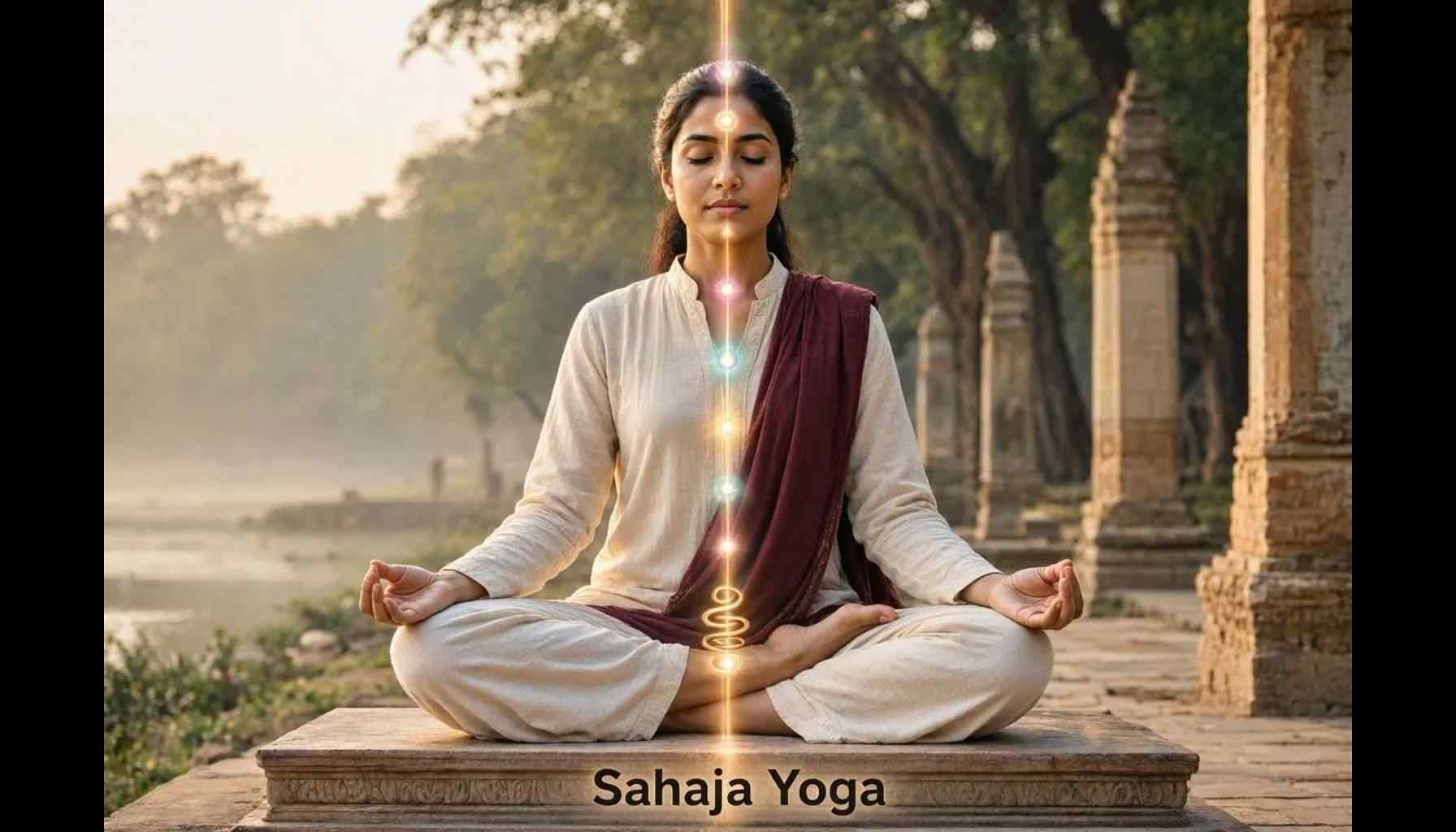
Sahaja Yoga: Meditation Benefits
Sahaja Yoga is a meditation-based practice centred on self-realization and kundalini awakening. The modern Sahaja Yoga movement was founded by Shri Mataji Nirmala Devi, who introduced this method in 1970.
The word Sahaja is commonly explained within the tradition as spontaneous or innate, while Yoga refers to union. Sahaja Yoga therefore focuses on discovering an inner state of awareness rather than treating yoga only as physical exercise.
Key Takeaways:
- Sahaja Yoga is popular worldwide having roots in India.
- Kundalini awakening promotes deep inner stillness.
- Daily meditation supports long-term emotional balance.
What Is Sahaja Yoga?
Sahaja Yoga combines meditation, attention, breath awareness, and the traditional concepts of Kundalini, chakras, and subtle energy channels. Its central practice is Self-Realization, which practitioners describe as an awakening of the Kundalini energy.
The practice does not require strenuous physical postures. Instead, practitioners generally sit comfortably, place their hands in specific positions, use affirmations, and meditate quietly.
The global organizational structure of Sahaja Yoga operates under the name of Vishwa Nirmala Dharma (Sahaja Yoga International).
Main Elements of Sahaja Yoga
|
|
|
|
|
|
|
|
|
|
|
|
|
|
|
|
|
|
|
|
|
Kundalini: In Sahaja Yoga, Kundalini is described as an innate spiritual energy dormant within the sacral bone that can be awakened to achieve Self-Realization and inner stillness.
Energy Channels (Nadis): These are traditional subtle pathways through which spiritual energy flows within the human system, helping balance mental, emotional, and physical awareness.
Chakras: These are subtle energy centres along the subtle system, each associated with specific spiritual qualities, virtues, and aspects of human well-beans. Sahaja Yoga focuses on seven primary chakras.
How Does Sahaja Yoga Work?
According to Sahaja Yoga teachings, the process begins with Self-Realization, during which the Kundalini is believed to awaken and rise through the subtle system toward the Sahasrara or crown centre.
A beginner may sit comfortably with the palms open and follow guided instructions. The practice uses attention, affirmations, and meditation to encourage a quiet state of mind.
Awareness is an important experience of the practice. This refers to a state in which attention becomes present without being dominated by continuous thoughts.
Sahaja Yoga Meditation: Simple Practice
This simple technique can be done by following these simple steps:
- Sit down comfortably: Sit straight and keep your feet comfortable.
- Make your body relax: Let go of all the unnecessary tension in your shoulders, face, and hands.
- Set the intention: Make yourself express your genuine wish to achieve Self-Realization.
- Affirmations: Use affirmations that are traditionally used in guided meditation.
- Focus on the crown of your head: Focus your mind above your head.
- Meditate silently: Sit quietly and do not follow your thoughts.
Duration and Frequency: Practise Sahaja Yoga meditation for 10–15 minutes daily, gradually extending the session according to comfort and guidance.
Benefits of Sahaja Yoga
The practice may offer several wellbeing-related benefits when incorporated into a balanced routine.
- Relaxation: Silence meditation could assist in reducing the mental stress that we face on a regular basis.
- Focus: Concentration through meditation practice could lead to increased focus.
- Awareness: Meditation provides time for individuals to reflect on their mental state.
- Balancing emotions: The peaceful process could aid meditators in becoming more thoughtful.
- Reflection: The technique allows one to explore one’s own mind both spiritually and personally.
- Mindfulness: Meditation would increase awareness throughout the day.
Precautions
It is normally easy to practice meditation through Sahaja Yoga since there is no need for strenuous exercise. Some precautions to take when practicing meditation include the following:
- Avoid forced experiences that are physically or emotionally unusual.
- Sit comfortably instead of assuming a position that is painful to you.
- If meditation makes you very uncomfortable, discontinue.
- Those being treated for any psychological or physical ailment must continue to do so.
- Use instructional materials and experts when learning new techniques.
Final Thoughts
Sahaja Yoga offers a meditation-focused approach to spiritual practice and self-awareness. Its central concepts include Self-Realization, Kundalini, chakras, nadis, and thoughtless awareness. Beginners can start with short, comfortable meditation sessions and explore free programs through Sahaja Yoga centres. While practitioners may describe various physical, emotional, and spiritual benefits, these experiences should be distinguished from medically established treatments.
Frequently Asked Questions
1. How many countries practice Sahaja Yoga?
The Sahaja Yoga practice has spread to more than 130 countries worldwide.
2. How does Sahaja Yoga differ from other yogas?
Sahaja Yoga primarily emphasizes Self-Realization, Kundalini meditation, subtle-system awareness, and thoughtless awareness rather than physical exercise.
3. How to join Sahaja Yoga?
You can join free Sahaja Yoga meditation programs or locate a nearby centre through the official centre-search facility.
4. How does Sahaja Yoga work?
Sahaja Yoga traditionally works through Self-Realization, meditation, and Kundalini awakening, which practitioners associate with greater awareness and inner stillness.
Also Read: Yoga of Awareness
By Umesh Kumar Khiri


Discussion (0)
No comments yet. Be the first to comment!
Leave a Comment
You need to login to post a comment.