
Salamba Sirsasana and Salamba Sarvangasana
July 1999
SALAMBA SIRSASANA
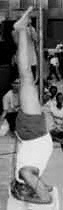 (Salamba: supported; Sir: head)
 In Salamba Sirsasana, the head supports the whole body.
Technique (for beginners)
1. Fold a blanket about three or four times and place it on the floor. It should be a few inches away from the wall.
2. Place forearms on the blanket, taking care that the distance between the elbows is not wider than the shoulders.
3. Interlock fingers so that the palms form a cup, and place them on the blanket.
4. After adjusting the arms, place the head on the blanket in such a way that the back of the head is perpendicular to the wall and the crown of the head is resting on the blanket.
5. Raise buttocks, lift knees off the floor, and move the toes closer to the head.
6. Exhale, slowly lifting legs off the floor. Rest the back of the heels against the wall.
7. Stay in this inverted position for 20-30 seconds, breathing normally. As you gain in confidence, you can stay in this position for as long as 10 minutes.
8. Exhale, bend the knees and slowly bring your feet down on the floor.
Special Instructions
This pose should not be attempted by women during menstruation. Also, people suffering from hypertension should perform this asana only under the supervision of an expert.
Benefits
• The asana enhances blood supply to the brain.
• It gradually activates the endocrine glands.
• Regular practice increases intellectual clarity, improves will power, respiration and digestion.
• Minor ailments such as common cold, cough and sore throat can be cured.
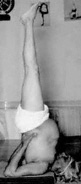 SALAMBA SARVANGASANA
(Salamba: with support; Sarvang: entire body)
As the entire body benefits from this pose, this asana is generally known as Sarvangasana. In the classical pose, the hands support the back. This is called Salamba Sarvangasana.
Technique
1. Spread a fourfold blanket on the floor. Lie flat on your back with both legs and feet touching each other. Keep your palms facing the floor.
2. Exhale and bend knees over the chest. Press hands down on the floor and, with a swing, raise waist and hips.
3. Support hips with the hands and lift the trunk.
4. Raise hips and thighs further, supporting them with the back of your hands. From the shoulders to the knees, the body should be perpendicular to the floor.
5. Straighten legs towards the ceiling.
6. Stay in this position for two-three minutes. Gradually increase the duration to about seven-eight minutes.
7. Exhale. Bend the knees and gradually slide down buttocks and back. Release hands from the back and extend legs on the floor.
Special Instructions
• Elbows should be spread as wide as the shoulders.
• If you experience difficulty in breathing, raise the height of the blanket by folding it further.
• This asana should not be performed during menstruation
Benefits
• This asana develops patience and emotional stability. It is particularly beneficial and soothing for the nervous system.
• It helps relieve ailments of the chest such as bronchitis, asthma, and breathlessness. It also helps decrease anemic conditions.
• It helps better digestion and hastens recuperation from any long illness.
Discussion (0)
No comments yet. Be the first to comment!
Leave a Comment
You need to login to post a comment.