Sculpt Yoga: Benefits and Practice
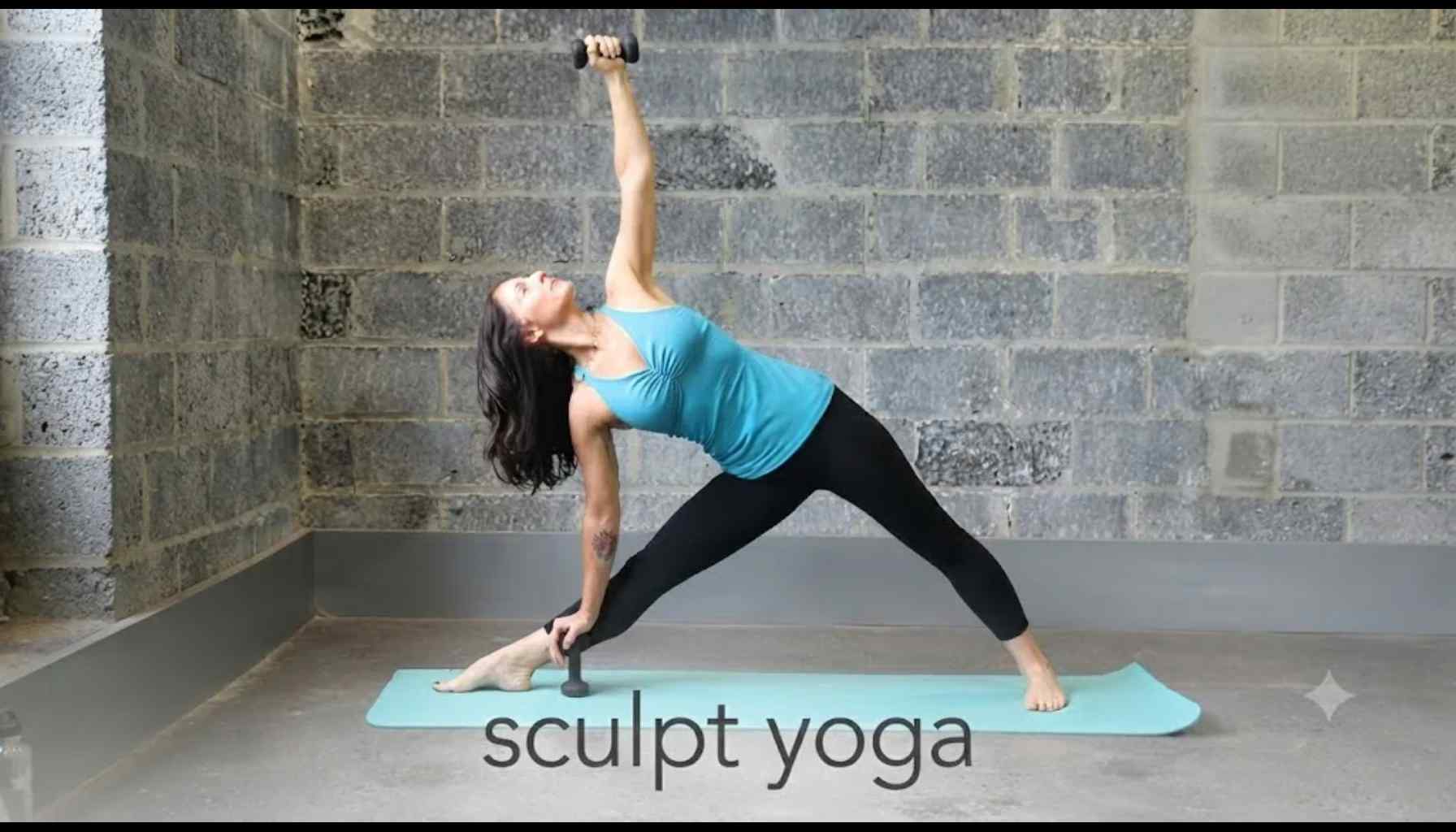
Sculpt Yoga, also called Yoga Sculpt, is a modern fitness-focused practice combining yoga movements with strength training and cardio intervals. It can include light weights, resistance bands, bodyweight exercises, and traditional yoga postures.
Unlike slower yoga styles, Sculpt Yoga usually follows a faster pace. It aims to combine flexibility, muscular endurance, balance, and cardiovascular conditioning within one workout. Some classes use light hand weights, commonly around 0.5–2.3 kg per hand.
What Is Sculpt Yoga?
Sculpt Yoga is a form of yoga that incorporates elements of strength training along with yoga. A usual Sculpt Yoga practice session can involve switching from yoga postures to squats, lunges, core work, and brief cardio sessions.
A Sculpt Yoga practice session may consist of:
- Yoga postures
- Use of light weights or resistance bands
- Body weight training
- Core workouts
- Brief cardio workouts
- Awareness of breathing
- Stretching and relaxing
Intensity can be increased or decreased through variation of weights, speed, repetitions, and difficulty of movements.
Cardio Workout
- Includes fast and fluid motions that raise your heart rate and improve your cardiovascular endurance.
- Features high-intensity interval training (HIIT) intervals to burn fat and increase metabolic efficiency.
Strength Training
- Uses hand weights and body resistance to build lean muscle mass and tone your major muscle groups.
- Employs holding challenging yoga poses to enhance your muscular endurance.
Who Benefits Most From Sculpt Yoga?
Sculpt Yoga is most useful for athletes and sportsmen who need a more intense type of exercise routine. It also benefits individuals who want to improve flexibility with weight training.
How to Prepare for Sculpt Yoga
Stay well hydrated, wear comfortable workout shoes or practise barefoot, and bring a towel.
Choose breathable clothing and arrive ready for a dynamic, strength-focused session.
Five Sculpt Yoga Poses
1. Utkatasana – Chair Pose
Kneel down, move your hips back, raise your arms, and keep your chest up. Utkatasana strengthens the thighs, butt, and core. Using lightweight may enhance strength training.
2. Virabhadrasana II - Warrior II
Take big steps forward, bend your front knee, stretch your arms, and keep your upper body upright. This pose will build up endurance in the lower body as well as challenge your stability and focus.
3. Phalakasana – Plank Pose
Keep your hands under your shoulder blades, stretch your legs backward, and hold a straight line of your body. Plank is a good body-weight exercise for your core, arms, shoulders, and legs.
4. Utkata Konasana – Goddess Pose
Keep your legs apart, point your toes outwards, bend your knees and squat down while lifting your chest. Goddess Pose may work on strengthening your legs and butt. Besides, you can add controlled movements of the arms to the pose or use light weights.
5. Naukasana – Boat Pose
Sit up straight, lift your feet, balance on your sitting bones and keep your chest opened. Boat Pose will be good for your abdominal and hip flexor muscles. Beginners can have their knees bent or feet lowered.
Counter Poses
The Sculpt Yoga may prove to be challenging for the body and, therefore, it is important to use some easy counter poses in order to ease into the recovery process.
a. Balasana – Child’s Pose
From a kneeling position, move towards the heels and bend the body forward. Arms and shoulders should be relaxed. Child's Pose provides a gentle resting position after strength-based movements.
b. Paschimottanasana – Seated Forward Bend
Straighten your legs and extend the spine before bending your body forward from the hips. This posture provides a comfortable stretch for the back of the legs after a dynamic workout.
Health Benefits of Sculpt Yoga
Sculpt Yoga combines multiple forms of movement, making it more physically demanding than many gentle yoga practices.
|
|
|
|
|
|
|
|
|
|
|
|
|
|
|
|
|
|
|
|
|
|
|
|
Diseases Managed: Helps manage and mitigate chronic conditions such as high blood pressure, lower back pain, and arthritis-related joint stiffness.
Difference Between Yoga Sculpt and Pilates
Yoga Sculpt and Pilates both include core-focused movements and controlled bodyweight exercises. However, they have different foundations.
|
|
|
|
|
|
|
|
|
|
|
|
|
|
|
|
|
|
Class Length and Frequency: Typically, a Sculpt Yoga session takes 45 to 75 minutes and can be performed up to three to four times a week, providing enough time for recovery from hard classes. It is recommended that beginners begin with shorter sessions and lower resistance. Recovery days are necessary because strength exercises put extra stress on the muscles.
Precautions
- Begin with a proper warm-up.
- Start with light weights.
- Learn correct alignment before increasing resistance.
- Keep movements controlled rather than chasing speed.
- Stay hydrated, especially during heated classes.
- Modify poses for existing injuries or mobility limitations.
- Pregnant individuals and people with medical conditions should seek appropriate professional guidance.
Common Mistakes
|
|
|
|
|
|
|
|
|
|
|
|
|
|
|
|
|
|
|
|
|
Ending Notes
Sculpt Yoga offers a connection between yoga and contemporary exercise programs. The program incorporates yoga poses, resistance training, cardio training, and core training, thus providing an effective body exercise routine. Given appropriate modifications and rest periods, Sculpt Yoga can be a component of your fitness training at home.
Frequently Asked Questions
1. What is Sculpt Yoga?
Sculpt Yoga is a modern workout combining yoga poses with strength training, light weights, core exercises, and cardio intervals.
2. Is yoga sculpt like Pilates?
Yoga Sculpt and Pilates both train the core, but Yoga Sculpt generally adds yoga poses, weights, and cardio intervals.
3. What is the difference between yoga and yoga sculpt?
Yoga encompasses many physical, breathing, meditation, and philosophical practices, while Yoga Sculpt specifically blends yoga movements with fitness conditioning.
4. Is sculpt yoga difficult?
Sculpt Yoga can be moderately to highly challenging, but beginners can reduce weights, slow the pace, and use easier variations.
Also Read: Naukasana
By Umesh Kumar Khiri

Discussion (0)
No comments yet. Be the first to comment!
Leave a Comment
You need to login to post a comment.