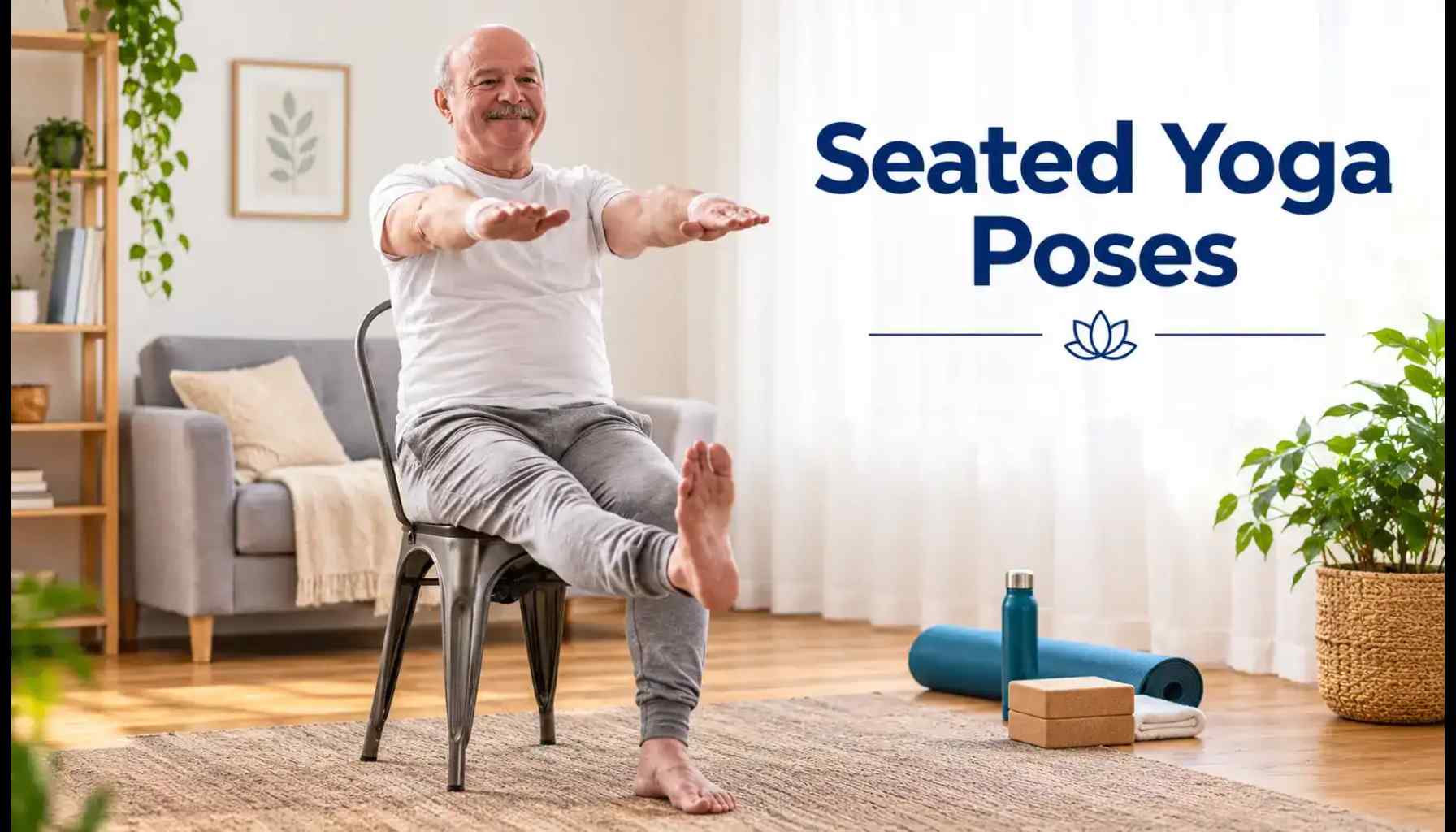
Seated Yoga Poses: Gentle Stretches
Seated yoga poses are a simple, low-pressure way to stretch your body, steady your breath, and quiet your mind, whether you're on a mat, a cushion, or a chair. They don't ask for strong balance or deep flexibility, so almost anyone can start today. This guide covers different seated yoga poses and their benefits.
Key Takeaways
- Seated yoga poses are gentle, beginner-friendly, and can be done on the floor or in a chair.
- Props like cushions, blankets, and straps make poses safer and more comfortable.
- Start with a few poses, move slowly, and stop if you feel sharp pain.
Why Seated Yoga Poses Are Worth Practicing
Being on the floor means you have a solid base, therefore you don’t have to worry about balance and can relax freely.
Here's what regular practice can offer:
- Better flexibility: Stretching of the hips, hamstrings, calves and the back side of the body in a controlled way
- Calmer nervous system: The grounded feeling of sitting supports slow breathing and can ease stress.
- Improved posture: Holding the tall position in a seated pose works on the spinal muscles.
- A lower injury risk: You remain closer to the floor and have more control than in the standing postures.
- A natural bridge to meditation: Seated shapes make a comfortable base for breathwork and stillness.
6 Easy Seated Yoga Poses to Try
Move slowly, keep your spine long, and stop if you feel sharp pain.
1. Easy Pose (Sukhasana): Position yourself cross-legged with your hands placed on your knees. Sit with your bottom elevated on a cushion in case your knees are above your hips. This is where you will breathe and concentrate from.
2. Seated Cat-Cow (Marjaryasana-Bitilasana): Place your hands on your knees and arch your chest while rounding your spine with each breath you take. It stimulates your back muscles and stretches away any stiffness created by prolonged sitting.
3. Staff Pose (Dandasana): Sit straight with your legs extended in front of you and feet flexed. Ground your hands by your hips and elongate your spine. This helps learn how to sit properly in all poses.
4. Seated Forward Bend (Paschimottanasana): From staff position, bend forward and try to touch your toes or shin bones. If you have any discomfort in your lower back region, you can bend your knees or use a strap to secure your foot. Remember that your hamstrings are stretching, not your neck.
5. Bound Angle Pose (Baddha Konasana): Bring the soles of your feet together and let your knees fall open. Sit tall or fold forward gently to open the inner thighs and hips. Support your knees with pillows if they float high.
6. Seated Twist (Ardha Matsyendrasana, easy version): Cross one leg over the other, or keep your legs extended, and turn your torso toward the bent knee. Keep your spine tall and twist from your middle, not your neck. Repeat on the other side.
How to Sequence Seated Yoga Poses Practice
It is important to establish an order in practice. Seated yoga is a safe, gentle way to improve flexibility and posture while staying comfortable and supported.
- Ease into Easy Pose and breathe a little.
- Move through Seated Cat-Cow to warm up the spine.
- Stretch the hips with Bound Angle Pose.
- Move into Staff Pose and then Seated Forward Bend.
- Practice the Seated Twist gently on both sides.
- Return to a comfortable seated position and breathe quietly.
Chair Yoga Version
If floor sitting is uncomfortable, these chair-based poses offer simple alternatives. Use a sturdy chair without wheels and keep both feet supported when needed.
1. Seated Mountain Pose: Sit tall with both feet grounded and your hands resting on your thighs.
2. Seated Cat-Cow: Place your hands on your thighs and alternate gently between arching and rounding your spine.
3. Seated Side Stretch: Raise one arm overhead and gently lean to the opposite side, then switch sides.
4. Seated Twist: Sit tall, place one hand on the opposite thigh, and gently rotate your torso to that side.
Seated Yoga for Seniors or Older People
Seated yoga can be a comfortable option for older people who find floor poses difficult. Chair support can make gentle stretching and breathing easier while reducing the need to get down to the floor.
Choose movements that feel stable and comfortable, and avoid forcing any joint into a deeper range of motion.
Common Mistakes to Avoid
- Slouching: This will shorten the stretch. Sit on a cushion or bend the knees to maintain an upright posture.
- Forcing the stretch: The stretch should be mild. If there is pain in the knees, back or ankles, it is better to release the pose.
- Holding your breath: If breathing turns shallow, you've gone too far.
- Twisting from the neck: Rotate from your ribs and let your head follow.
- Skipping props: Props aren't a sign of weakness. They help your body stay aligned and comfortable.
Final Thoughts
To practice seated yoga positions, you don't have to be flexible. Just pick two or three asanas, utilize lots of props, and pay attention to your body. A couple of minutes spent on the mat or in a chair will relax you.
Frequently Asked Questions
1. What are seated yoga poses?
They are yoga postures performed with your buttocks on the floor, a cushion, or a chair. They include cross-legged shapes, forward folds, and twists.
2. What are the benefits of seated yoga poses?
They can improve flexibility in your hips, hamstrings, and spine, support better posture, and help you feel calmer.
3. What happens after 30 days of yoga?
After 30 days of regular seated yoga poses practice, many people notice better flexibility, easier movement, and a calmer mind.
4. Can chair yoga be just as effective as traditional mat yoga?
Yes. Chair yoga or accessible yoga provides the same foundational benefits; such as improved flexibility, joint mobility, stress reduction, and muscular strength.
Also Read: Chair Yoga Poses
By Umesh Kumar Khiri

Discussion (0)
No comments yet. Be the first to comment!
Leave a Comment
You need to login to post a comment.