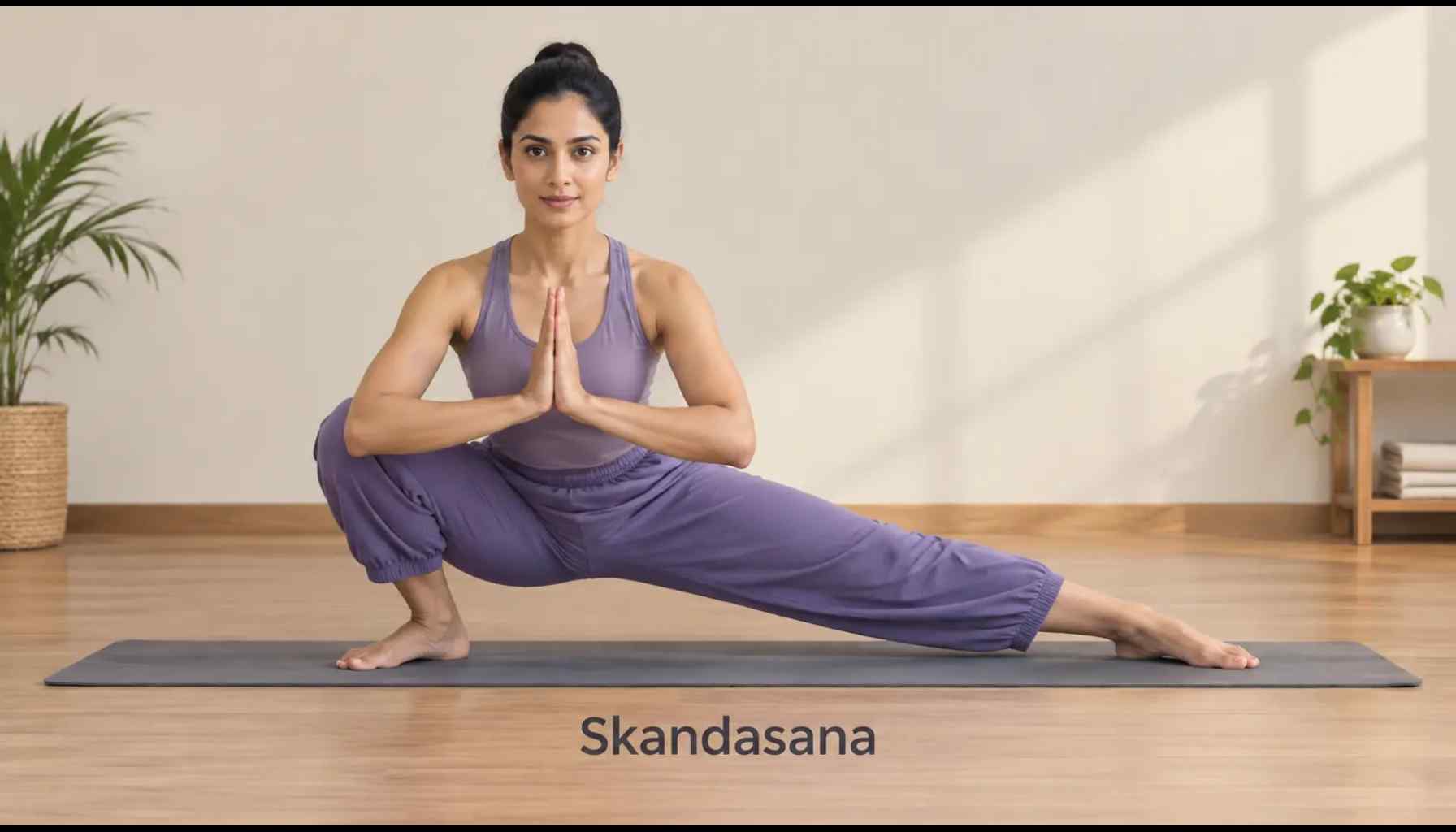
Skandasana (Side Lunge Pose): Benefits
Skandasana, frequently called the Half Squat or Side Lunge Pose, derives its name from Skanda, the Hindu deity of war and son of Lord Shiva. This dynamic lateral standing posture transitions the body into a deep asymmetrical hip opening while building functional lower-body mobility and agility. By shifting weight into a deep squat on one leg while fully extending the opposite leg, Skandasana challenges balance, stretches tight inner thighs (adductors), and strengthens the stabilizer muscles of the feet, ankles, and core.
Key Takeaways
- Lateral Hip & Groin Opening: Stretches the adductors and hamstrings on the extended leg while opening the hip capsule of the lunging leg.
- Ankle & Calf Dorsiflexion: Enhances ankle joint mobility.
- Functional Balance & Agility: Strengthens core stability and lower-body proprioception required for side-to-side movement.
Mastering Skandasana: Alignment & Biomechanics
Skandasana requires careful attention to joint tracking to protect the knees and lower back. Keeping the grounded heel flat on the floor (or supported on a prop) ensures proper weight distribution through the pelvis and prevents unnecessary pressure on the knee joint.
Variations of Skandasana
Some of the common variations of Skandasana:
|
|
|
|
|
|
|
|
|
|
|
|
|
|
|
|
|
|
|
|
|
|
|
|
|
How to Perform Skandasana (Side Lunge Pose)
Follow these steps to practice Skandasana (Side Lunge Pose):
- Wide-Legged Base: Stand in Prasarita Padottanasana (Wide-Legged Forward Fold), with feet hip-width apart and 3.5 to 4 feet distance between them.
- Shifting Body Lateral: On inhalation, half-rise from this position, followed by exhaling, bending your right knee to a maximum extent and leaning down, with the hip coming close to your right heel.
- Extension of the Opposite Leg: Your opposite leg should be kept completely straight, along with turning your left toes in an upward position towards the ceiling to ensure that the heel touches the ground.
- Knee Alignment: Align your lunging knee of the right leg with the right toe direction and keep your right heel on the ground, if possible.
- Hand Placement & Spinal Position: Place your hands in Anjali Mudra (prayer pose) position at your heart center, or simply keep your fingers touching the floor for stability.
- Side Transition: Rise back to center wide fold, pressing your right foot and inhaling, and then repeat this process on your other side.
Health Conditions Managed by Skandasana
Some of the health conditions and diseases that can be managed by performing the Side Lunge POse regularly are as follows:
- Groin & Inner Thigh Stiffness: Releases chronic tension stored in the adductor muscle group and hip flexors.
- Poor Ankle & Calf Mobility: Improves range of motion in stiff Achilles tendons and ankles, reducing risk of lower-body strains.
- Sluggish Pelvic Circulation: Increases blood flow to the reproductive organs, hips, and lower abdominal region.
- Postural Instability: Strengthens stabilizing muscles around the hips and ankles to improve overall balance and athletic agility.
Key Precautions
Follow these measures while practising Skandasana:
- Knee Joint Strain: Do not allow the lunging knee to collapse inward; keep it tracking directly over the toes.
- Meniscus or Ligament Tears: Avoid sinking deep into the squat if you have active meniscus or collateral ligament injuries.
- Severe Ankle Stiffness: Place a rolled mat or blanket under the lunging heel to prevent lifting or twisting the ankle joint awkwardly.
- Pregnancy Considerations: Keep the hips slightly higher and use blocks under hands to avoid over-stretching the pelvic ligaments due to relaxin hormones.
Wrapping Up
Skandasana provides a powerful blend of lateral hip opening, ankle mobility, and functional lower-body strength. By respecting your body’s current range of motion and utilizing helpful props like blocks or blankets, you can safely cultivate flexibility in the inner thighs and adductors. Incorporating this dynamic side lunge into your routine enhances joint agility, balances pelvis alignment, and fosters centered focus both on and off the mat.
Frequently Asked Questions
1. Why is Skandasana so hard?
Skandasana is challenging because it requires deep ankle dorsiflexion, open adductor muscles, and strong single-leg balance simultaneously. If any of these areas lack mobility, staying stable in the deep lateral lunge becomes difficult.
2. What is Skandasana good for?
The Side Lunge Pose deeply stretches the inner thighs, hamstrings, and calves while strengthening the core, ankles, and quadriceps. It also improves lateral pelvic mobility and enhances body control for multi-directional movement.
3. Can beginners practice Skandasana safely?
Yes, beginners can practice Skandasana by placing yoga blocks under their hands for balance or supporting their lunging heel with a folded blanket. Keeping the hips elevated slightly higher also reduces strain on the knees and groin.
4. Is Skandasana a standing pose or a floor pose?
Skandasana is classified as a low standing posture or dynamic transition pose. It bridges standing wide-legged forward folds with deep seated hip openers in modern vinyasa sequencing.
Disclaimer: The content on LifePositive.com, including articles/blogs on yoga, acupuncture, naturopathy, and other alternative healing modalities for holistic wellness, is for informational and educational purposes only. It is not a substitute for professional medical advice, diagnosis, or treatment. Always consult a qualified healthcare provider before starting any new health protocol or making changes to an existing treatment plan.
Also Read: Karandavasana
By Umesh Kumar Khiri

Discussion (0)
No comments yet. Be the first to comment!
Leave a Comment
You need to login to post a comment.