Stay in shape with yoga
New Year, new you! Bring in 2018 with this amazing practice and enjoy health and well-being all year round, says Malvika Dadoo Agrawal
Any time is a great time for personal transformation, but there’s something about New Year that offers a fresh outlook. This New Year, give your resolutions a yogic twist! Enhance your body, mind, and spirit with five to 10 rounds of Surya Namaskara daily.
Surya Namaskara has been handed down to us by enlightened sages of the Vedic age. The sun symbolises spiritual consciousness, and in yoga, the sun is represented by pingala or surya nadi, the pranic channel which carries the vital, life-giving force. Surya Namaskara is a complete sadhana and spiritual practice in itself, for it includes asana, pranayama, mantra, and meditation techniques. It is an effective way of loosening up, stretching, massaging, and toning all the joints, muscles, and internal organs of the body. Its versatility and application make it one of the most useful methods of inducing a healthy, vigorous, and active life, while at the same time preparing for spiritual awakening.
General contraindications (conditions or factors that serve as a reason to withhold a certain medical treatment due to the harm that it would cause the patient):- the practice of Surya Namaskara should be immediately discontinued if a fever, acute inflammation, boils, or rashes occur due to excessive toxins in the body. When the toxins have been eliminated, the practice may be resumed. It should not be practised by people suffering from high blood pressure, coronary artery diseases, hernia, intestinal tuberculosis, slipped disc, and sciatica.
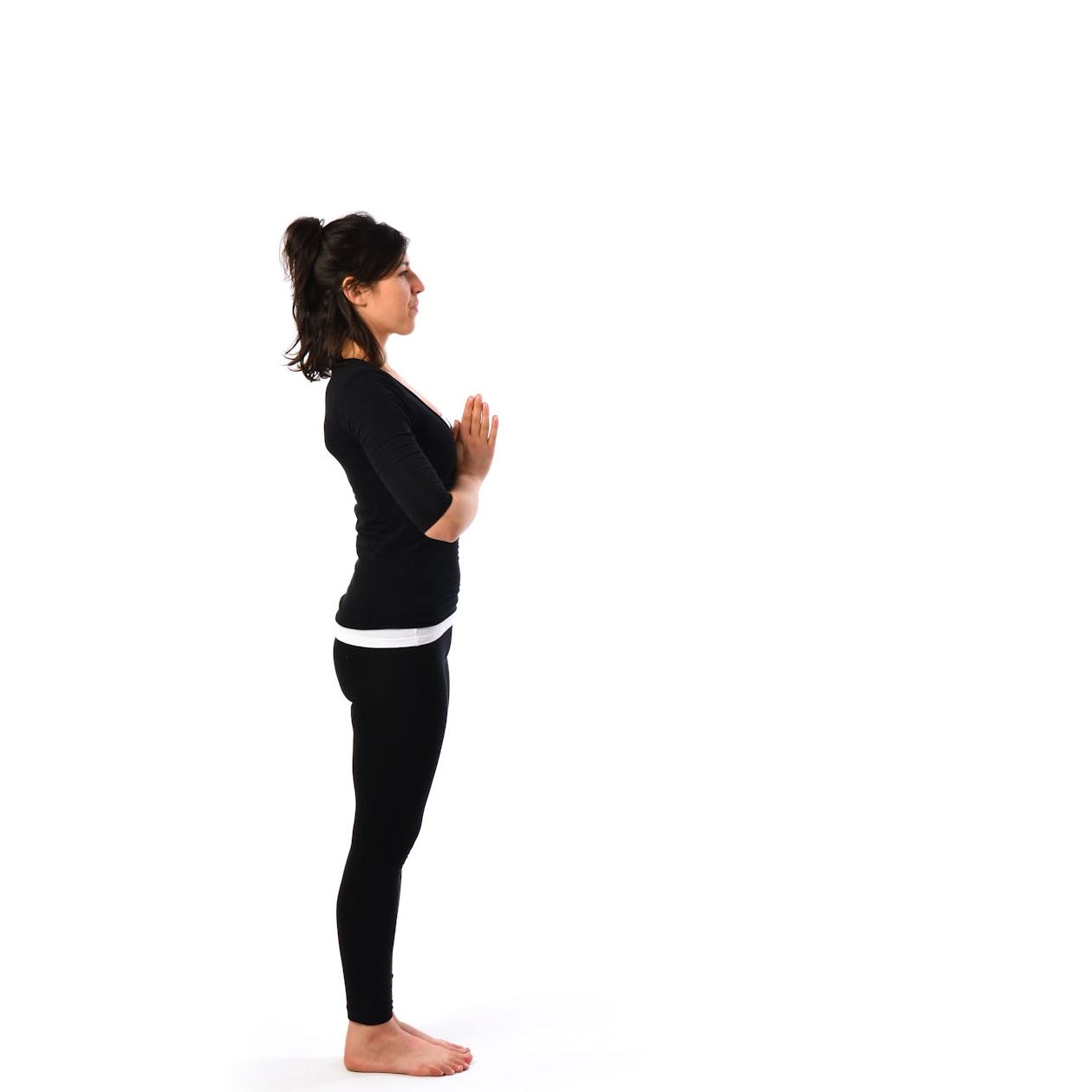
Position one—Pranamasana
Keep the eyes closed. Remain standing upright with the feet together. Slowly bend the elbows and place the palms together in front of the chest in Namaskara mudra, mentally offering homage to the sun, the source of all life. Breathe normally and relax the whole body. This pose establishes a state of concentration and calmness in preparation for the practice to be performed.
Position two—Hasta Utthanasana
Separate the hands, and raise and stretch both arms above the head, keeping them shoulder width apart. Inhale while raising the arms. Bend the head, arms, and upper trunk slightly backward.
Position three—Padahastasana
Exhale and bend forward from the hips until the fingers or palms of the hands touch the floor on either side of the feet. Bring the forehead as close to the knees as is comfortable and keep the knees straight. Contract the abdomen to expel the maximum amount of air from the lungs. People with back problems should not bend forward fully.
Position four—Ashwa Sanchalanasana
Place the hands on the floor besides the feet. Inhale and stretch the right leg back as far as it is comfortable. At the same time, bend the left knee, keeping the left foot on the floor in the same position. Keep the arms straight. In the final position, the weight of the body should be supported on both hands, the left foot, right knee, and toes of the right foot. The head should be tilted backwards, the back arched, and the inner gaze directed upward to the eyebrow centre.
Position five—Parvatasana
Keep the hands and right foot still. Exhale and take the left foot back beside the right foot. Simultaneously, raise the buttocks and lower the head between the arms so that the back and legs form two sides of a triangle. The legs and arms straighten, and the heels come down towards the floor in the final position. Try bringing the head and shoulders towards the knees, but do not strain. This pose strengthens the nerves and muscles in the limbs and back, stimulates blood circulation and helps increase height.
Position six—Ashtanga Namaskara
Keep the hands and feet in place. Lower the knees, chest, and chin; the feet will come up on the toes. In the final position, only the toes, knees, chest, and chin touch the floor. The buttocks, hips, and abdomen should be raised. The breath is held in this pose; there is no respiration. This pose strengthens the legs and arm muscles, develops the chest and exercises the region of the spine between the shoulder blades.
Position seven—Bhujangasana
Keep the hands and feet in place. Slide the chest forward and first raise the head and the shoulders. Then, straightening the elbows, arch the back into the cobra pose. This will lower the buttocks, thighs, and hips to the floor. Inhale, bend the head back, and direct the gaze upward to the eyebrow centre.
Position eight—Parvatasana
The limbs do not move from position seven. Exhale and assume Parvatasana.
Position nine—Ashwa Sanchalanasana
Keep the palms flat on the floor and the right foot in place. Bend the left leg and bring the left foot forward between the hands. Simultaneously, lower the right knee so that it touches the floor and push the pelvis forward. Inhale and tilt the head backward. Arch the back and gaze at the eyebrow centre.
Position 10—Padahastasana
Exhale and bring the right foot forward next to the left foot. Straighten both legs and bring the forehead as close to the knees as possible, without straining.
Position 11—Hasta Utthanasana
Keep the arms and spine in a straight line. Inhale and raise the torso and stretch the arms above the head. Keep the arms separated, shoulder width apart. Bend the head, arms, and upper trunk slightly backward.
Position 12—Pranamasana
Exhale and bring the palms together at your chest.
For spiritual benefits, practise three to 12 rounds slowly. For physical benefits, practise three to 12 rounds more quickly. Beginners should start with two or three rounds and add one more round every week to avoid fatigue. Regular yoga practitioners may practise a greater number of rounds.
Malvika D Agarwal is a yoga therapist, and Public Relation and Social Media Manager at Life Positive.

Discussion (0)
No comments yet. Be the first to comment!
Leave a Comment
You need to login to post a comment.