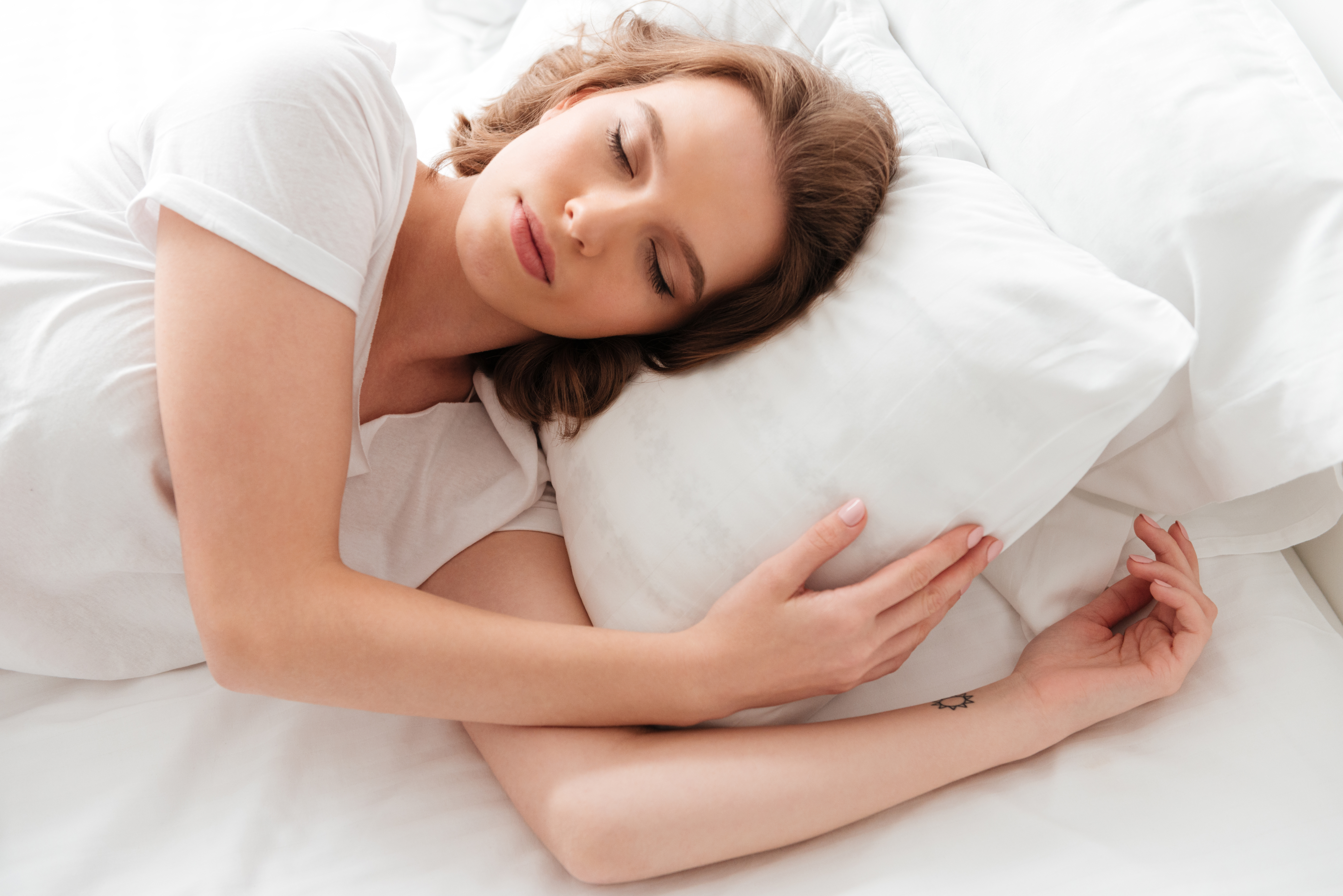
Sweet slumber
September 2024
Sweet Slumber
As we are well aware, lack of soundsleep can give rise to physical and mental problems. To ensure a
good night’s rest, you could followthe suggestions given by Jamuna
Rangachari in the next few pages
My grandmother’s advice had a good impact on my well-being and, consequently, my results too. Whenever I neglected this aspect even later in life, it proved to be detrimental to me. So, remembering my grandmother’s wisdom, I still switch off the lights at 10 p.m. and go to sleep, ignoring all that is happening around me.
Many causes of insufficient and disturbed sleep can be taken care of by modifying our food habits and lifestyle, with a little help from some techniques that are simple to incorporate into our lives.
Yoga
Saraswati Vasudevan, a yoga therapist from Chennai says that yoga, when combined with lifestyle changes, can be of help. She asks people to have a physically active lifestyle in tandem with slowing down their activities towards the evening. A relaxing evening practice with seated and lying postures with a focus on long exhalations during asanas and pranayama will help the body and mind to relax.
As most of us have a sedentary lifestyle, Saraswati asks us to start the day with a rejuvenating morning practice. Dynamic asana sequences with conscious breath regulation, keeping inhalations equal to exhalations, with a few seconds of breath retention after inhalations in postures, clear out tamasic energy.
An evening practice, again with long inhalations and exhalations, in a slow dynamic asana practice, with a longer pause after exhalations, will shift the focus from the mind to the body and release stagnant energy. Saraswati adds that this can be followed by some seated and lying postures that involve staying with long inhalations, exhalations, and retention after exhalations. This is best done a couple of hours before dinner. She also suggests Viparita Karani (half-shoulder stand), which is an excellent posture for promoting relaxation and sleep, and offers a simplified version which all of us can practise.
To practise this posture, we need to place a few floor cushions against the wall and sit on the cushions with one side of the body touching the wall. After this, we need to turn around and lie down facing the wall, with our hips on it, using any available support. Our head and chest should lie on the mat, with a support there also if required. Then, we need to put our legs up on the wall, stretch them as much as possible, and keep our arms open in a comfortable position. We could combine this with pranayama practice: inhaling with a soft hissing sound in the throat, which is Ujjayi Pranayama, and exhaling long and deep with a humming sound, which is Bhramari Pranayama. We could also chant OM, keeping the exhalations as long as possible. This posture should be maintained for 10–20 breaths. It is best to practise this at bedtime or about two hours post dinner.
Acupressure
Acupressure too can help solve your sleep problems. Mumbai-based Purvi Maru, a healer trained in acupressure, says, “Massaging our wrist daily once or twice a day gives good results for promoting sound sleep as there are three very good acupressure points situated there: H7, P7, and Lu9.”
Alternatively, we can press these points daily for one to two minutes each on both hands, especially before going to sleep. This simple technique has helped many people in ensuring good sleep.
Mudras
Abhay Kumar Shah, a mudra therapist, tells us that we need to go to the root cause of the problem that causes insomnia and states that there are certain common elements which need to be addressed. People wish to achieve too much in today’s world. We need to remain calm instead of overthinking and make our mind healthy so that it responds positively under all circumstances. To take control of our emotions and thoughts, and to keep alertness at a normal level, here are some mudras which thousands of people have benefitted from. Abhay says that many who were on sleeping pills for years together stopped taking them.
Common instructions for all the following mudras: Sit straight in a comfortable position on the floor or a chair or sofa. Place the back of your palms on your knees or thighs after forming the mudra.
• Jnana Mudra: Touch the tip of the index finger to the tip of the thumb, keeping the remaining three fingers straight.
• Prana Mudra: Touch the tips of the ring and little fingers to the tip of the thumb, keeping
the remaining two fingers straight. These two mudras will reduce anxiety, overthinking, negativity, and ill thoughts, and will calm the mind.
Practise Jnana Mudra for 48 minutes followed by Prana Mudra for 16 minutes.
• Shakti Mudra: Touch the thumb to the palm, with the index and middle fingers, overlapping the thumb. Then touch the backs of the bent fingers of both hands. Hold this gesture near your sternum or at the lower abdomen, fingers pointing upwards.
Do this in the evening for at least 16 minutes. This mudra improves our sense of being grounded and will induce good sleep as it increases the energy required for sleep.
• Shoonya Vayu Mudra: Touch the tips of the index finger and the middle finger to the root of the thumb. Put the thumb on the bent fingers and press a little. Keep the remaining two fingers comfortably straight.
Yoga and Mudras can help you sleep better
Yoga Nidra
When I went to yoga classes in Mumbai, my teacher made us do yoga nidra once a week for 30 minutes. This routine is practised even today in the Bihar School of Yoga. It is a kind of guided meditation cum yoga technique that asks us to focus on each part of our body, beginning with the toe, right up to the top of our head. Our instructor played an audio tape that asked us to focus on each part of our body. An option was to choose a sankalp, or affirmation, if we wanted to, for any aspect of life. She asked us to do this every day at home too by just ensuring silence and focus.
I do this whenever possible, and it does help me relax. Once again, it shows us that sleep does indeed come with relaxation.
Sound and music
Have you ever noticed how the sound of rain can instantly make you feel relaxed and at ease? It’s not just your imagination; there is scientific evidence to support this phenomenon. The sound of rain that is rhythmic can be very soothing, acting as a natural form of white noise that helps drown out other distractions and induce a sense of tranquillity.
Apart from this, gentle chants and soothing sounds are also useful for promoting restful sleep, which is why most mothers use lullabies to put their children to sleep.
Lifestyle
Lifestyle is deeply connected with sleep. Luke
Coutinho, a Integrative Lifestyle Expert from Mumbai, has the following suggestions:
• Align with the cycles of nature.
• Enjoy natural light or gentle sunlight in the morning.
• Have your last meal of the day before or close to sunset. Keep it light.
• Have a fixed sleep and wake-up time. • Do not consume stimulants (coffee/tea/ alcohol/spicy foods) and disturbing news or have acrid conversations before bed. • Practise gadget detox 30 minutes to one hour before bedtime. Why? The blue light from these gadgets suppresses melatonin, the hormone responsible for regulating sleep. • Do activities that help you unwind: read, solve crossword puzzles, play sudoku, and have conversations with the family. • Make your sleep environment pitch dark. • Reflect: What went well for me? Offer thanks
• Make love to release feel-good and love hormones like oxytocin and prolactin. These relax you and help you sleep.
Peace within
Apart from all the techniques, we need to connect within for peace to get blissful sleep. All our issues, if any, are then taken care of. A well-known Hindi proverb says, “Chintan karo, chinta nahin,” which loosely translates as “Reflect instead of worrying.” Perhaps, this is the most effective way to be enveloped by sweet slumber.
Jamuna Rangachari, the former assistant editor of Life Positive, has authored two books for children, and compiled and interpreted Teaching Stories-I and II for Life Positive. Write to her at

Discussion (0)
No comments yet. Be the first to comment!
Leave a Comment
You need to login to post a comment.