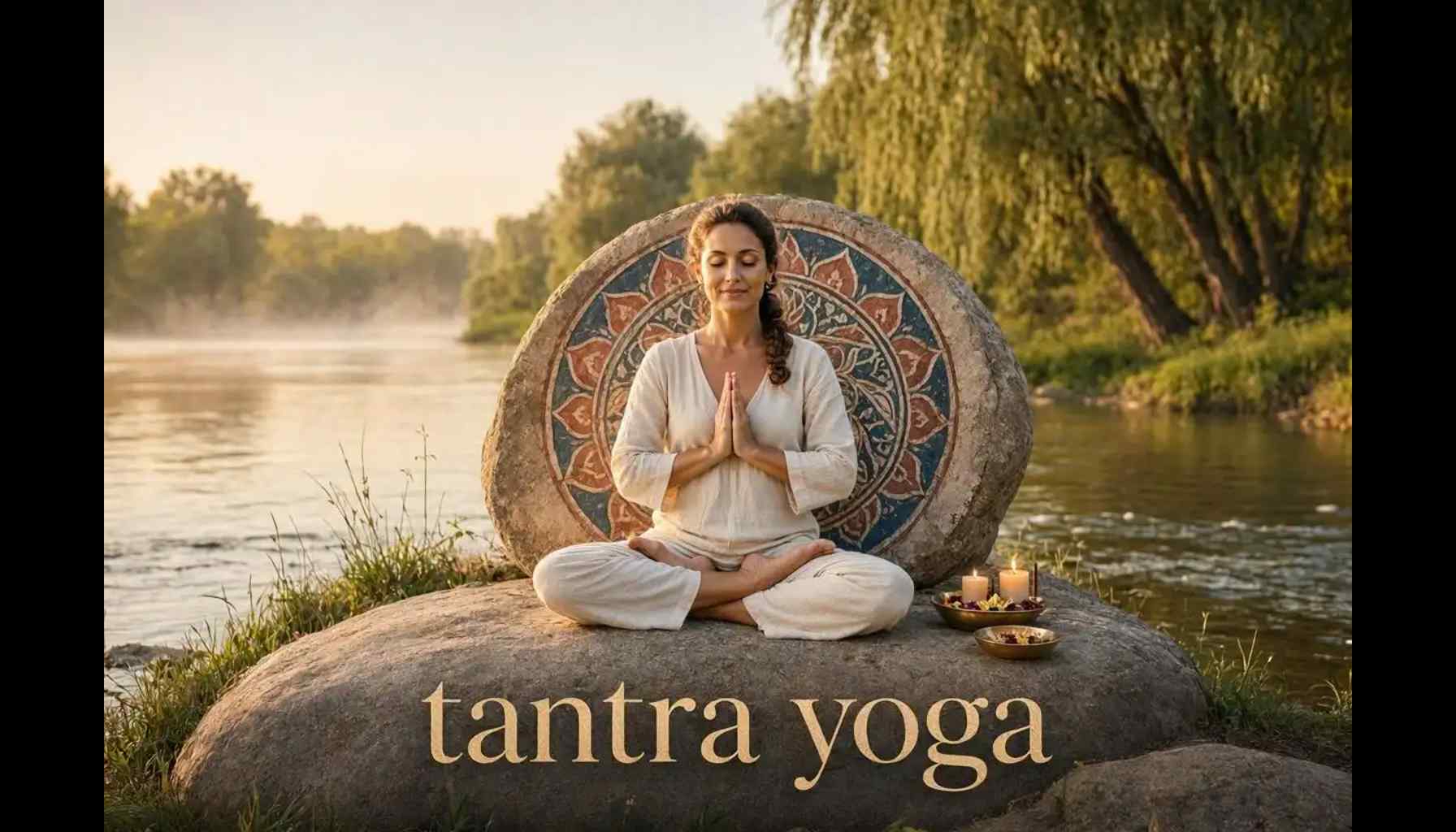
Tantra Yoga: Poses & Benefits
Tantra yoga is a traditional yogic approach that combines physical postures, breath awareness, meditation, mantra, visualization, and focused attention. Unlike yoga practiced only for flexibility or fitness, Tantra places greater emphasis on awareness of the body, mind, breath, and subtle energy. The term Tantra is associated with ideas of weaving different aspects of experience into a unified practice.
Key Takeaways
- Tantra yoga combines movement, breath, mantra, and meditation.
- Regular practice supports awareness, relaxation, and focus.
- Beginners should practice gently with proper guidance.
What Is Tantra Yoga?
Tantra yoga makes use of the body and breath to develop awareness. For instance, a session of tantra yoga will involve performing an asana, controlled breathing, meditating, visualizing, and mantra chanting. Instead of forcing themselves into a particular state of energy, participants of tantra yoga usually proceed slowly and focus on bodily sensations, breathing, and mind.
In history, tantra yoga originated as a series of Hindu and Buddhist traditions from India, with tantric elements gaining significance during the Middle Ages in yoga.
Sexuality in Tantra Yoga
Tantra Yoga views sexuality not as a distraction, but as a sacred expression of divine cosmic energy (Shakti) to be harnessed for spiritual awakening. Through mindfulness, breathwork, and emotional connection, intimate union is transformed into a pathway for elevated consciousness and self-transcendence.
Main Elements of Tantra Yoga
|
|
|
|
|
|
|
|
|
|
|
|
|
|
|
|
|
|
|
|
|
|
|
|
Tantra Yoga Poses
The following poses can be incorporated into a gentle Tantra-inspired sequence. The aim is steady awareness rather than maximum stretching.
1. Padmasana – Lotus Pose
Padmasana is traditionally associated with meditation and seated awareness. Sit tall, bend your knees, position your feet comfortably, place your hands on your knees, and breathe naturally. Beginners can practice Sukhasana if Lotus Pose creates discomfort.
2. Tadasana – Mountain Pose
The Tadasana pose helps to cultivate awareness of standing balance, grounding, and the relationship between breath and balance. Stand upright with feet comfortably apart, relax your shoulders, lengthen your spine, and breathe slowly while maintaining balance.
3. Setu Bandhasana – Bridge Pose
The bridge pose is known for its gentle back strengthening and opening of front body, along with the awareness of breathing. Lie down with knees bent, keep your feet flat, lift your hips gently while breathing slowly, then lower with control.
4. Paschimottanasana – Seated Forward Fold
This posture can encourage inward attention and relaxation. Sit tall with legs extended, lengthen your spine while inhaling, fold forward from your hips while exhaling, and breathe slowly.
5. Bhujangasana – Cobra Pose
Cobra Pose introduces gentle spinal extension and can be practiced with a relatively low lift. Lie on your stomach, place your palms beside your ribs, gently lift your chest while inhaling, then lower slowly while exhaling.
6. Sukhasana – Easy Pose
Sukhasana provides a comfortable alternative to Lotus Pose and can be used for meditation, breathwork, and mantra practice. Sit comfortably with legs crossed, lengthen your spine, rest your hands on your thighs, and observe your natural breathing.
Duration & Frequency: Practise Tantra Yoga for 20-30 minutes, at least 3 to 4 times weekly.
Health and Wellness Benefits of Tantra Yoga
Tantra yoga should not be considered a treatment or cure for disease. However, its combination of gentle movement, breathing, and meditation may support general physical and mental well-being.
|
|
|
|
|
|
|
|
|
|
|
|
|
|
|
|
|
|
|
|
|
|
|
|
Tantra Yoga Sequence for Beginners
A simple 25–30 minute practice can follow this order:
Centering → Tadasana → Bhujangasana → Setu Bandhasana → Paschimottanasana → Sukhasana/Padmasana → Mantra → Meditation → Relaxation
Mantras Used in Tantra-Inspired Practice
Mantras vary considerably between tantric traditions and lineages. Common introductory options include:
- Om – used for focused, contemplative practice.
- So Hum – traditionally coordinated with natural breathing.
- Om Namah Shivaya – associated with Shiva-centered traditions.
- Om Shakti Namah – used in practices invoking Shakti.
Precautions
Tantra yoga must be done gradually, particularly when there are techniques involving breath holding, intense visualization, bandhas, or energy techniques.
- Do not try to force any asana or stretching.
- Pause if you feel pain, dizziness, or anything out of the ordinary.
- Those who are beginners should refrain from doing energetic practices on their own.
- Those with injuries or illnesses should consult the proper professionals.
Common Mistakes in Tantra Yoga
1. Viewing Tantra as a solely sexual activity
The practice of Tantra includes many more things beyond sexuality such as meditation, mantras, rituals, visualizations, and yoga.
2. Looking for sensational experiences
Patience, observation, and continuity are the right approaches to the practice.
3. Maintaining the posture under pain
There should be no discomfort in holding the posture.
4. Breathing with excessive force
It is not necessary to breathe heavily especially for new practitioners.
5. Neglecting meditation
Tantra yoga is not merely physical exercises.
Final Thoughts
The practice of tantra yoga involves integrating movement, breathing, meditation, chanting mantras, and consciousness in such a way that it integrates the practitioner rather than physically challenges him. It is possible to start learning this type of yoga with the help of a few simple movements, breathing, and meditation.
Frequently Asked Questions
1. What happens during Tantra yoga?
During Tantra yoga, practitioners may combine slow asanas, breathing, mantra, meditation, visualization, and focused awareness. The practice generally emphasizes observing the body and mind rather than pursuing physical intensity.
2. What is Tantra yoga?
Tantra yoga is an awareness-oriented yogic approach that integrates body, breath, meditation, mantra, visualization, and concepts of subtle energy. It is broader than the modern association of Tantra with sexuality.
3. What are the five forbidden things in Tantra?
They are the Pancha Makara: madya (wine/alcohol), mamsa (meat), matsya (fish), mudra (parched grain in this context), and maithuna (sexual union). Interpretations differ across tantric traditions.
4. What are the four types of Tantra?
In the Sarma Tibetan Buddhist classification, they are Kriya Tantra, Charya Tantra, Yoga Tantra, and Anuttarayoga Tantra.
Also Read: Merudandasana
By Unesh Kumar Khiri

Discussion (0)
No comments yet. Be the first to comment!
Leave a Comment
You need to login to post a comment.