
Vaping
October 2023
The epidemic of vaping
Call it the desire to look hip or being unable to resist the temptation of getting a high, youngsters are rapidly falling prey to the habit of vaping. Dr Riya Gupta warns youngsters of the risks of vaping and shares methods on how to overcome it
Man has been addicted to intoxicants
for as long as human memory can recall it.
From the Somras mentioned in the ancient texts to the current-day liquors, humans have a strange fascination for various forms of socially permitted inhalants. Most consider it a part of adulting and a rite of passage. Others do it to show off and appear trendy and hip. Yet, others develop this habit because it gives them a temporary kick and relief from stress.
Vaping is the new entrant in the long list of addictive substances which have gripped the younger generation. It is an act of inhaling and exhaling vapour containing nicotine and flavouring substances produced by a device called e-cigarettes (also known as electronic cigarettes, Vape Pens, or Pen Hookahs).
26 LifePositive | OCTOBER 2023
How did vaping develop?
Tobacco use has a history of about 8,000 years. It gained widespread popularity in Europe and China after it was claimed to have medicinal properties. Initially in India, it was used as a product to be smoked (hookah) and then gradually smokeless forms like Paan, Khaini were introduced.
To create a more accessible form of tobacco, cigarettes were developed.
But slowly the ill effects of tobacco use on human health were recognised, which led to wide campaigns against cigarette smoking. Cigarettes were thought to be harmful because of incomplete combustion of cigarette products at the cigarette bud.
To overcome this, HTP’s (heated tobacco
products) and e-cigarettes were developed. In HTP’s, the tobacco was heated not burnt. It was marketed in the form of IQOS: ‘I quit ordinary smoking.’
The underlying intention of the tobacco industry was to diversify its revenue streams and hook a new generation of users to its products as they understood that they would eventually go out of business after their current customers have either quit or passed away.
The tobacco industry then developed e-cigarettes (the first e-cigarette was developed in China in the year 2003). These e-cigarettes are marketed as ‘Harm reduction products’ (not risk-free products).
The main component of e-cigarettes is called e-liquid, which contains nicotine.
Why is nicotine addictive?
Nicotine is the chemical in tobacco that keeps you addicted to smoking. When a person smokes a cigarette, the nicotine reaches the brain within seconds of taking a puff. In the brain, nicotine increases the release of brain chemicals such as dopamine. When we eat something delicious, like an apple, the brain releases dopamine. Dopamine makes a person feel good. Other things that we can do to release dopamine are reading books, walking, and listening to music. The amount of dopamine released through food is always more than with other activities. That is, if you go two days without food and activities, your body will crave food rather than activities. This is known as ‘survival of hierarchy.’
However, with nicotine, the amount of dopamine released is more than what is released from food or any other activity. Now, because nicotine releases more dopamine than food does, the body thinks that nicotine is more important

than food. This is how nicotine hijacks the first spot in our survival of hierarchy. The person thinks that they will die if they don’t consume tobacco. This is an extreme case of addiction. It is not only a bad habit but also a brain disease which can increase with casual use.
Research shows that adolescents are more vulnerable to nicotine addiction because they are still in their developing stage, and their brains are highly susceptible to a false sense of dopamine released by nicotine.
By 21 years of age, the brain becomes more mature and survival of hierarchy becomes more permanent and less susceptible to getting hijacked. In fact, by the age of 21, it becomes comparatively more difficult to remove these harmful substances from the survival hierarchy.
This addiction process is well understood by cigarette companies and they take advantage of this.
What are e-cigarettes?
E-cigarettes are nothing but a fancier form of cigarettes.
An e-cigarette consists of three parts:
1. Cartridge
2. Heating element or atomizer
3. Rechargeable battery
The cartridge contains an e-liquid (consisting of propylene glycerol, nicotine, and flavours derived from Vitamin E-acetate). Some of the added substances are chemical compounds such as propylene oxide, acrolein, acetaldehyde, formaldehyde, acetamide, metal particles (copper, nickel, and silver) and silicate particles.
A myth circulating among most of the population is that e-cigarettes are not as harmful as conventional cigarettes. But the truth is that these e-cigarettes are just as harmful.
The e-liquid in these devices is converted to aerosol and not to vapour as commonly believed.
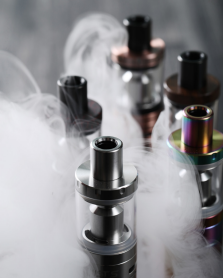
Vaping is the new craze in the younger generation
Lack of awareness, a desire to stay in the ‘cool’ group, and getting attracted to the packaging have led to an increase in the usage of vaping products among adolescents.
According to The Lancet, 2019, worldwide vaping sales reached $15.7 billion in 2018 and they are expected to reach $40 billion by 2023. According to the National Youth Tobacco Survey, 2022, 2.14 million high school students are reported to use e-cigarettes.
E-cigarette companies market their product as a ‘No tobacco product,’ but the e-liquid contains nicotine; hence the FDA still considers it a tobacco product.
E-cigarette companies have an approach of targeted marketing wherein the advertisements cast young models wearing trendy clothes. Colourful, artistic, and calm backgrounds also attract people to buy their products.
What are the harmful effects of E-cigarettes and vaping?
• Lung diseases: In 2019, the Centre for Disease Control coined the term, EVALI (e-cigarettes-or-vaping product-use associated lung injury).’ The harmful effect was due to diacetyl present in e-cigarettes causing ‘Popcorn lung injury,’ which makes breathing worse.
Damage to the lung tissue can lead to a chain of other health complications. Young adolescents who try vaping early in their teens have a higher chance of getting heart disease
• Heart health: Aerosols impair blood vessel function by making the blood vessels stiff, thereby decreasing the blood flow throughout the body and increasing the risk of blood clotting or heart attack.
• Oral and dental diseases: The sweet flavours of the e-cigarettes seem to be
attractive but this can lead to tooth decay and gum problems. Vaping has also been found to lead to oral cancer.
• Fertility issues: Vaping causes hormonal imbalances leading to delayed egg production in females and erectile dysfunction in males.
• Cancer: E-cigarettes contain many carcinogenic substances. If the e-liquid in the e-cigarette overheats, it forms formaldehyde, which is a cancer-causing substance. Vaping can cause any cancer from head to toe.
• COVID infection: COVID-19 has shown how important lung health is. Vaping damages not only the respiratory system but also the immune system, leading to increased chances of COVID infection.
• Others side effects: Stomach issues: Increase in heartburn and acid reflux.
Central Nervous System: Nicotine in e-liquid hijacks and rewires the adolescent brain. E-cigarettes have also been found to increase the chances of diabetes and disturb the sleep cycle.
Does vaping decrease stress?
Vapers often report that vaping helps them relieve stress. However, adolescent vapers report an increase in stress levels as they develop a regular pattern of vaping, and subsequently, tobacco cessation can help them reduce stress.
Nicotine creates an immediate sense of relaxation, so people vape in the belief it reduces stress and anxiety. This feeling is temporary and soon gives way to withdrawal symptoms and increased cravings. Vaping reduces the withdrawal symptoms but does not
reduce anxiety or deal with its reasons.
Thus, the apparent relaxation effect of vaping only reflects the reversal of the tension and irritability that develop during nicotine depletion. This is confirmed in the daily mood patterns described by vapers, with normal moods during vaping and worsening moods between vaping.
Far from acting as an aid for mood control, nicotine dependency seems to exacerbate stress.
Which is more dangerous, conventional cigarettes or e-cigarettes?
People considering e-cigarettes as a form of tobacco cessation are being misguided and should not use these products. E-cigarettes are marketed as less harmful alternatives to conventional tobacco products. However, all tobacco products are equally harmful.
How do I know if my child is vaping? In 2020, The Centers for Disease Control and Prevention (CDC) stated that one in five high school students used e-cigarettes.
This statistic is very alarming, especially for parents or caregivers.
According to research published in JAMA Paediatrics, February 2021, these are some of the tell-tale signs that your child is hooked: • Fruity or candy-like smell from the mouth • Unexplained cough
• Mouth sores
• Increased thirst
• Nose bleeds
• Throat clearing
• Increased irritability
• Mood swings
Above all this, e-cigarettes are very easy to carry and they look like normal USB drives which children can easily hide in their pockets or bags.
How to help vapers
It is very important to understand that tobacco or nicotine dependence is a chronic disease that requires repeated interventions and multiple attempts to quit.
If any of your loved ones is a vaper, it is important to understand that they are not only addicted but are also suffering from brain disease.
You will have to be non-judgemental and supportive, and remember never to make them feel guilty in their vaping cessation journey. Resist telling them what to do, understand their motivation, listen with empathy, and empower them (work with your friend to set achievable goals).
Set a goal
• Cultivate the willpower to prepare yourself to maintain a no-vaping routine.
• Identify your own motivation to quit. • Maintain trust and confidence in yourself. • Create a desire to quit and resolve to do so. • Set a quitting date—ideally within two weeks. • Tell your family, friends, and co-workers about quitting and ask for support.
• Anticipate challenges to the upcoming quitting attempts (withdrawals, cravings, and triggers) and prepare to deal with them. • Remove triggers such as tobacco products, ashtrays, and souvenirs from your environment, and make your home smoke-free.
• Track your progress and talk to your tobacco cessation specialist to help you to quit.
Steps you can take
• Drink eight to ten glasses of water a day to overcome cravings and withdrawal symptoms. • Do deep breathing exercises, such as 10 cycles of pranayama, three times a day, to kick stress and cravings away.
• Increase the time between each vaping at least by one hour.
30 LifePositive | OCTOBER 2023
• Engage in your favourite hobby to distract from the need to vape.
• Have a well-balanced diet that includes milk and dairy products, which is effective in improving sleep quality.
• Include soluble and insoluble fibre sources like whole cereals, millets, pulses, fruits, and vegetables to avoid constipation. Have small quantities of frequent meals, and try to eat any fruit as an evening snack.
• Share problems with your family members, friends, and your tobacco cessation specialist. • Take your prescribed medicine under the supervision of your certified tobacco cessation specialist.
• Physical activity throughout the cessation journey has been shown to reduce weight gain associated with withdrawal.
• Other non-pharmacological therapies are guided imagery, breathing techniques, music therapy, spiritual practices, and environment modification.
Benefits of quitting vaping
• After 20 minutes, blood pressure and pulse drop to normal, and hands and feet start to warm up.
• After eight hours, the carbon monoxide level in the blood drops to normal. You feel more energised.
• After 24 hours, the chances of a heart attack decrease.
• After 48 hours, the senses of smell and taste improve, and nerve endings start to regrow. • After 72 hours, bronchial tubes relax. • After two weeks to three months, circulation, lung function, and stamina improve. • After one month to nine months, coughing and shortness of breath decrease, and cilia regrow in the lungs.
• After one year, the risk of heart disease drops to half that of a smoker.
• After five years, the risk of stroke and cervical cancer is the same as that of a non-smoker.
The risk of oral cancer of the mouth, throat, oesophagus, and bladder is cut to half. • After 10 years, lung cancer risk is half that of a smoker. The risk of pancreatic cancer is roughly the same as a non-smoker.
• After 15 years, the risk of heart disease is that Laughter therapy
of a non-smoker, and the risk of death is nearly the same as that of a non-smoker.
As an adolescent, it is very important to decide what kind of life you want to lead—a life enslaved by nicotine or a life full of accomplishment and success.
Stress is a major problem due to which some adolescents start vaping. However, laughter therapy is an effective, non-pharmacological therapy to reduce stress. It can enhance pleasure hormones like dopamine, serotonin, and oxytocin.
Laughter therapy includes:
• Clapping of hands four times
• Pranayama
• Stretching of hands
• Laughing to the rhythm of ho-ha-ha
Throw-away exercise (basically, throw away all your stress)
• Sit straight.
• Take a deep breath.
• Put your arms straight.
• Take your arms near your ears.
• With a deep breath, try to take all your stress in your fist.
• With a deep breath, keep on tightening your arms.
• With a deep breath, take your arms behind your head.
• Just straighten your hands and, with a jerk, just throw away all your tension. • Throw it away in such a way that the sound “Ahh” emanates from your mouth. • Repeat this exercise three times a day before going to bed at night.
Dr Riya Gupta is a dental surgeon and a certified tobacco cessation specialist based out of Lucknow ( UP). She is committed to providing personalised patient care through quality service and communication through leading newspapers and magazines



Discussion (0)
No comments yet. Be the first to comment!
Leave a Comment
You need to login to post a comment.