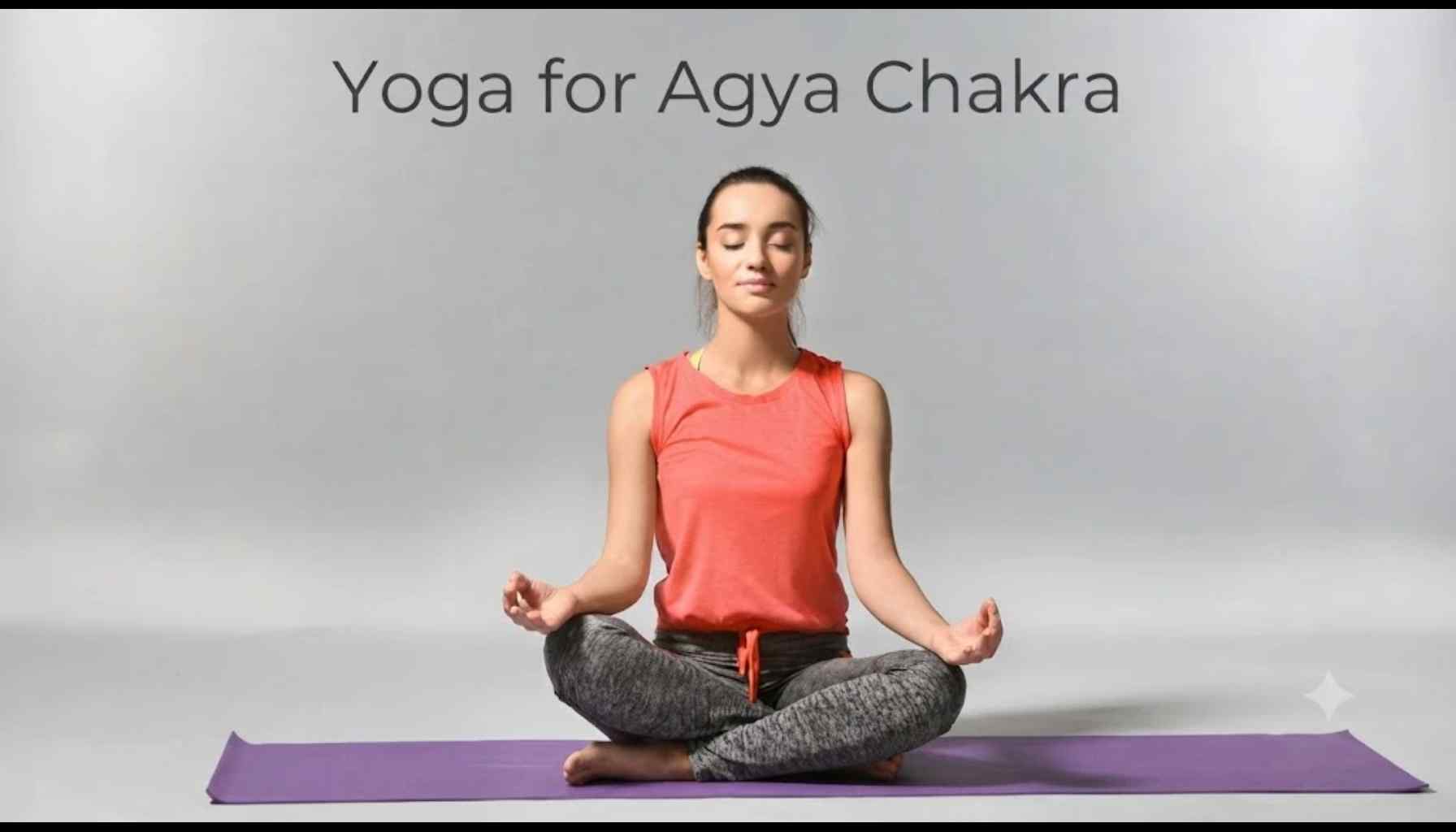
Yoga for Agya Chakra: 7 Poses for Focus and Inner Awareness
Yoga for Agya Chakra combines mindful movements, breathing exercises, and meditation to encourage concentration, self-awareness, and mental clarity. Known as Ajna Chakra or Third Eye Chakra, it is the sixth main chakra in yogic beliefs. This chakra is related to intuition, insight, wisdom, and self-awareness.
The Agya Chakra is situated between the eyebrows and has indigo as its color. The practices for this chakra help practitioners become aware of their thoughts and concentrate on their decisions.
Key Takeaways
- Agya Chakra Yoga focuses on concentration, intuition, and mindfulness.
- Child's Pose, Tree Pose, and Easy Pose make great yoga poses for this chakra practice.
- Combine gentle movements with meditation and natural breathing.
Understanding Yoga for Agya Chakra
Agya Chakra, alternatively Ajna Chakra, is the sixth chakra as per yogic philosophy. It is referred to as the Third Eye Chakra and represents intuition, wisdom, perception, and awareness.
In yoga philosophy, this chakra represents the capacity to be able to view the situation objectively and analyze one’s thoughts. Yoga exercises related to it involve calmness, concentration, and breathing.
Yoga exercises like the Child’s Pose and the Downward-Facing Dog are gentle postures that will aid in relaxing and becoming more aware of the body during meditation. It should however be noted that chakras are not scientific anatomical aspects but spiritually-related. Yoga will assist in overall well-being but cannot give supernatural powers.
Yoga for Agya Chakra - 7 Best Poses
1. Child's Pose (Balasana)
Steps:
- Get into a kneeling position and sit on your mat with your buttocks resting on your heels.
- Forward fold and extend your arms or keep them by your sides.
- Place your head on your hands and breathe normally for five breaths.
2. Downward-Facing Dog (Adho Mukha Svanasana)
Steps:
- Begin on all fours with your hands beneath your shoulders.
- Raise your hips and stretch your legs as much as you can.
- Relax your neck and stay in the posture for three breaths.
3. Easy Pose (Sukhasana)
Steps:
- Sit in a comfortable position with your spine erect.
- Place your hands on your knees and relax your shoulders.
- Close your eyes and observe your breathing for two minutes.
4. Standing Forward Bend (Uttanasana)
Steps:
- Stand with your feet hip-width apart and soften your knees.
- Hinge forward from your hips, allowing your upper body to relax.
- Hold your elbows or rest your hands on your legs for three breaths.
5. Tree Pose (Vrksasana)
Steps:
- Stand upright and place one foot against your ankle or inner calf.
- Bring your hands together at your chest and focus on one point.
- Hold for three breaths, then switch sides.
6. Seated Forward Bend (Paschimottanasana)
Steps:
- Sit down with your legs outstretched and spine elongated.
- Fold forward from your hips in a relaxed manner without strain.
- Remain in the pose for three breaths before slowly coming up
7. Corpse Pose (Savasana)
Steps:
- Lay down flat with your legs wide apart.
- Place your hands next to your body and close your eyes.
- Breathe naturally for three to five minutes.
Benefits of Yoga for Agya Chakra
Yoga for Agya Chakra combines physical postures with practices traditionally associated with intuition and mental clarity.
|
|
|
|
|
|
|
|
|
|
|
|
|
|
|
|
|
|
Breathing and Meditation for Agya Chakra
Some breathing exercises could enhance the practice of yoga, focusing on mindfulness of the present moment.
- Sit with an erect spine.
- Breathe gently in and out of the nose.
- Notice your breathing without any attempt to control it.
- If comfortable, you may focus your awareness at the point between your brows without straining your eyes.
- Do this for two minutes before opening your eyes gradually.
The bija (seed) mantra associated with this chakra is “Om” (Aum). You can whisper or silently recite this sound during meditation.
Precautions for Third Eye Chakra Yoga
Practise within your comfort level and avoid forcing stretches. Beginners should use cushions for seated poses and bend their knees during forward folds when necessary.
Do not attempt any inversion poses without proper training. In case of any injury or disease, do consult your doctor. Also, do not attempt the pose in case of pain or dizziness.
The Bottom Line
Yoga for Agya Chakra offers a mindful approach to concentration, relaxation, and self-awareness. Some of the yoga poses that you can try are Child’s Pose, Easy Pose, Tree Pose, and Savasana.
Combination of gentle postures with natural breathing and meditation is recommended. Attention should be paid to regularity; one should not hope for quick spiritual enlightenment or special powers.
Frequently Asked Questions
1. What does the Agya Chakra do?
The Agya Chakra is traditionally associated with intuition, wisdom, perception, and inner awareness.
2. Which yoga poses are best for the Agya Chakra?
Child's Pose, Downward-Facing Dog, Easy Pose, Tree Pose, and Savasana are commonly associated with Third Eye Chakra practices.
3. What is the mantra for the Agya Chakra?
The traditional seed mantra for the Agya Chakra is Om, also written as Aum.
4. How can you balance the Agya Chakra naturally?
Traditional practices include meditation, gentle yoga, mindful breathing, and focused reflection.
Also Read: Yoga for Lethargy
By Umesh Kumar Khiri

Discussion (0)
No comments yet. Be the first to comment!
Leave a Comment
You need to login to post a comment.