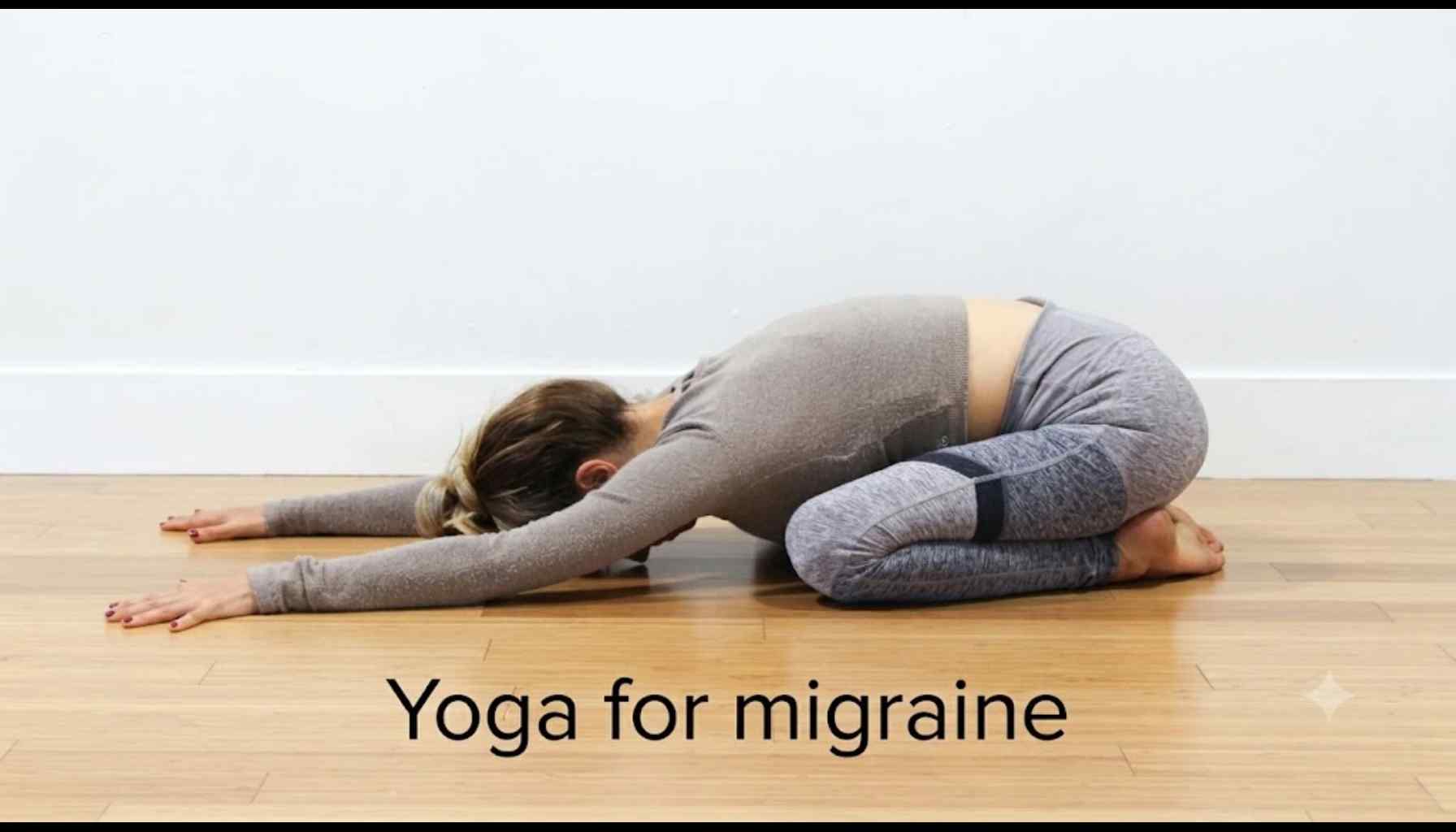
Yoga for Migraine: Calming Asanas For Relief
Performing targeted yoga for migraine soothes the nervous system and clears mental congestion. It lowers sympathetic nervous system activation, reducing cortisol levels and encouraging steady vasodilation,
Migraines are complex neurological events characterized by throbbing head pain, sensory sensitivity, and nausea. While trigger factors vary widely, from stress to hormonal fluctuations, chronic muscle tension in the neck, shoulders, and upper back frequently exacerbates these episodes. Yoga offers a holistic, non-pharmacological approach to managing migraine frequency and intensity.
Key Takeaways
- Stress & Tension Reduction: Calms the central nervous system to lessen stress-induced vascular constriction in the head and neck.
- Improved Cerebral Blood Flow: Gently regulates circulation to the brain without increasing intracranial pressure.
- Somatic Relaxation: Releases muscular knots throughout the shoulders, cervical spine, and abdominal organs.
Restorative Yoga for Migraine Relief
Practising gentle, restorative postures helps balance blood pressure, release deep fascia, and transition the body into a healing parasympathetic state. Regular sessions of yoga for migraine can help prevent severe headaches.
|
|
|
|
|
|
|
|
|
|
|
|
|
|
|
|
|
|
|
|
|
|
|
|
|
|
|
|
|
|
|
|
|
|
|
Steps to Do Yoga for Migraine
The steps and benefits of the key asanas helpful for migraine are as follows:
1. Garbha Pindasana (Embryo in Womb Pose)
- How to Do It: Sit in Padmasana (Lotus Pose). Thread your arms through the gap between your calves and thighs until your elbows bend, then lift your legs and bring your hands up to touch your ears or chin, balancing steadily on your sit bones.
- Benefit: Deeply compresses the abdominal cavity to stimulate the vagus nerve, helping ease gastric-related migraine triggers and promoting internal stillness.
2. Viparita Karani (Legs-Up-the-Wall Pose)
- How to Do It: Sit close to an open wall, swing your legs up against it, and lay your back flat on the floor with arms resting open at your sides.
- Benefit: Reverses gravity to enhance venous return to the heart and reduce blood pressure spikes associated with stress headaches.
3. Uttanasana (Supported Standing Forward Fold)
- How to Do It: Stand with feet hip-width apart, hinge at your hips to fold forward, micro-bend your knees, and let your head and arms hang heavy toward the floor (or rest your forehead on a block).
- Benefit: Releases tight trapezius and neck muscles that restrict healthy blood flow to the occipital region of the skull.
4. Balasana (Child’s Pose)
- How to Do It: Kneel on your mat with big toes touching, widen your knees, drop your hips onto your heels, and extend your torso forward, resting your forehead flat on the mat.
- Benefit: Blocks out external visual stimuli, quieting sensory overload during early onset migraine stages.
5. Marjaryasana-Bitilasana (Cat-Cow Pose)
- How to Do It: Begin on hands and knees. Inhale to arch your back and lift your chest (Cow), then exhale to round your spine and drop your chin toward your chest (Cat).
- Benefit: Gently mobilizes the upper spine and shoulders to unbind structural stiffness around the cervical vertebrae.
6. Shavasana (Corpse Pose)
- How to Do It: Lie flat on your back with legs naturally falling open, arms resting alongside your body palms up, eyes softly closed, and breathe naturally.
- Benefit: Systematically removes physical tension across the jaw, forehead, and temples while resetting the autonomic nervous system.
Health Conditions Managed by Yoga for Migraine
Restorative yoga for migraine has therapeutic effects on the body.
- Chronic Tension Headaches: Soothes tight pericranial muscles and prevents tension propagation up the neck.
- Autonomic Dysregulation: Shifts the body away from flight-or-fight sympathetic dominance into peaceful parasympathetic rest.
- Stress-Induced Insomnia: Releases residual physical fatigue, enabling deeper, more restorative sleep cycles.
- Mild Digestive Sluggishness: Helps relieve gut-brain axis distress that frequently manifests as migraine-associated nausea.
Key Precautions
Follow these measures while practising restorative yoga for migraine:
- Avoid Intense Inversions: Skip active inversions like Sirsasana (Headstand) or Adho Mukha Vrksasana (Handstand) during an active migraine attack, as they increase cranial pressure.
- Modify or Skip Advanced Poses: For Garbha Pindasana, if full Lotus is inaccessible, avoid forcing the knee joint; substitute with a simple knees-to-chest position (Apanasana).
- Minimize Bright Lights and Noise: Practice in a dimly lit, quiet space to avoid triggering sensory discomfort.
- Discontinue on Sharp Pain: Never push through severe throbbing or nausea; transition immediately into a comfortable resting posture like Shavasana or Balasana.
To Conclude
Yoga provides a gentle, integrative approach to reducing the frequency and severity of migraine attacks. By incorporating restorative postures, conscious breathing, and mindful relaxation into your routine, you can effectively diffuse physical tension in the neck, shoulders, and head. Listening closely to your body’s signals and choosing gentle movements over exertion creates a calm internal environment.
Over time, consistent restorative yoga for migraine improves autonomic balance, enhances mental clarity, and offers lasting relief from chronic headaches.
Frequently Asked Questions
1. What are the 5 C's of migraines?
The 5 C's typically represent common triggers: Chocolate, Cheese, Citrus, Caffeine, and Climatological changes. Identifying and avoiding these dietary and environmental factors can help reduce the frequency of attacks.
2. What's the fastest way to stop a migraine?
Rest immediately in a dark, quiet room with a cold compress on your forehead. Combining this with hydration, prescribed acute medication, or gentle breathing exercises offers the fastest relief.
3. Is there a pressure point to stop a migraine?
Yes, the LI4 (Hegu) pressure point, located in the webbed space between your thumb and index finger, is widely used. Firmly massaging this area for a few minutes relieves head pain.
4. Does pranayama reduce migraine?
Yes, practicing gentle pranayama like Anulom Vilom and Bhramari calms the central nervous system. It lowers stress hormones, regulates cerebral circulation, and significantly reduces the frequency and intensity of migraine.
Disclaimer: The content on LifePositive.com, including articles/blogs on yoga, acupuncture, naturopathy, and other alternative healing modalities for holistic wellness, is for informational and educational purposes only. It is not a substitute for professional medical advice, diagnosis, or treatment. Always consult a qualified healthcare provider before starting any new health protocol or making changes to an existing treatment plan.
Also Read: Virabhadrasana
By Umesh Kumar Khiri


Discussion (0)
No comments yet. Be the first to comment!
Leave a Comment
You need to login to post a comment.