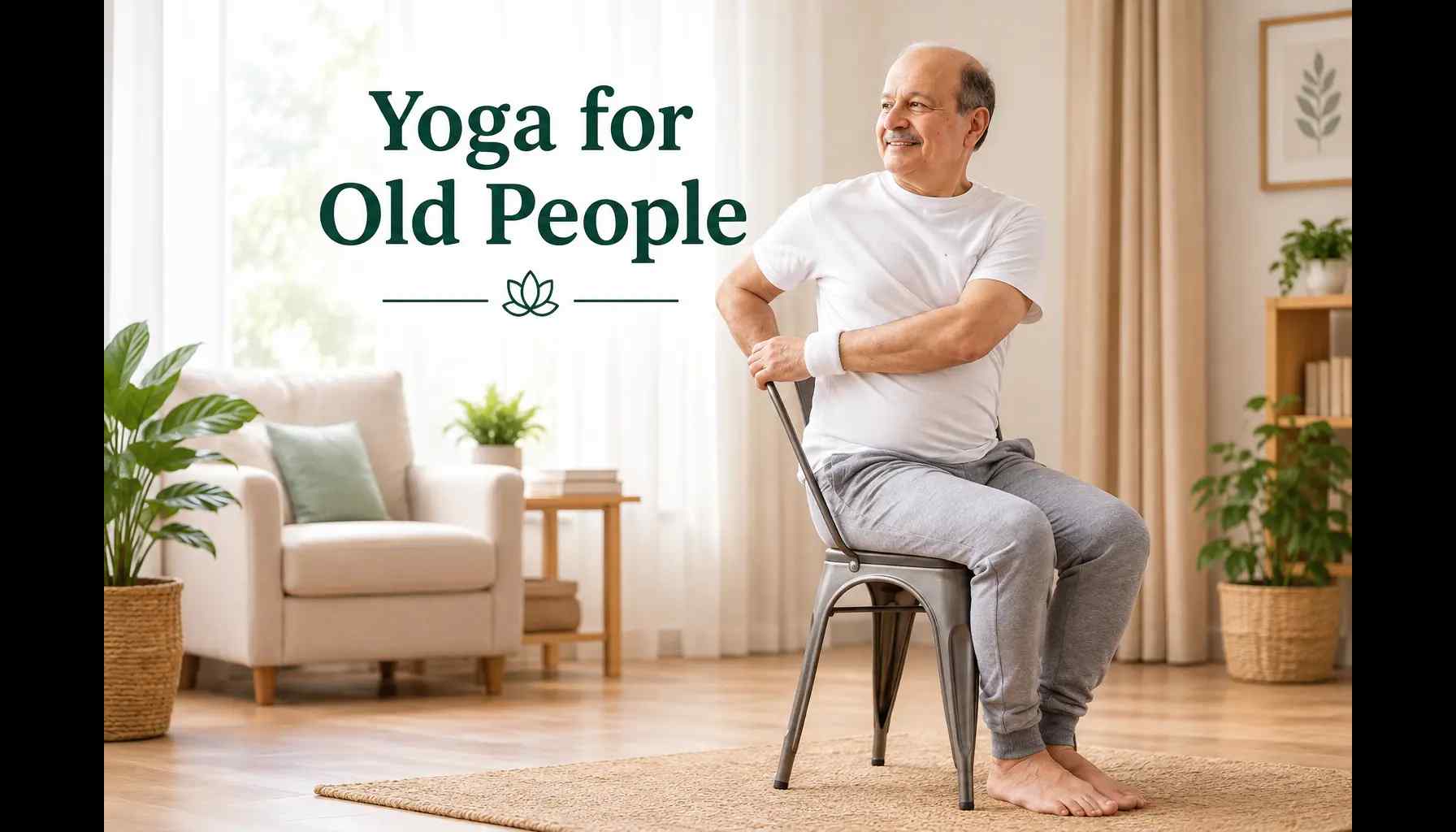
Yoga for Old People: Gentle Poses
Yoga for old people is a slow, low-impact way to stay mobile, steady and calm. Poses are adjusted so that nobody needs to kneel, balance on one leg without support, or hold a position until it hurts. A chair, a wall and a folded blanket are often the only equipment required. Yoga is a great stress management technique for seniors.
Key Takeaways
- Yoga for old people works best when it is slow, supported and pain-free.
- Short, regular sessions help more than occasional long ones.
- Check with a doctor first if you have a heart, bone, balance or blood pressure condition.
Understanding Yoga for Old People
Ageing often brings stiff joints, weaker muscles and less confidence on your feet. Yoga addresses all three without the pounding of running or the heavy loads of gym training. Each movement is linked to the breath, which keeps the pace unhurried and the mind settled. Group classes also offer company, which matters for people who spend long hours alone.
|
|
|
|
|
|
|
|
|
|
|
|
|
|
|
|
|
|
|
|
|
Yoga for Old People - Gentle Poses
Sit up straight on a sturdy chair with both feet planted on the ground. Stretch your spine, let your shoulders drop and breathe in deeply for five counts. This is your initial position.
2. Seated Cat & Cow: Put your hands on your knees. Inhaling, raise your chest a little; while exhaling, gently round your back. Do this eight times to get loose the spine.
3. Standing Mountain Supported by a Chair. Get yourself behind the chair, putting your fingertips on its backrest. Push firmly into the ground with your feet and breathe in deeply. This prepares you mentally for balancing poses.
4. Wall/Chest Tree Pose: Keep one hand on your support. Place the sole of one leg against the opposite ankle or the calf but not the knee. Hold for three to five breaths then change legs.
5. Seated Twist: Slowly turn the top half of your body towards one side, using the chair back to assist in your effort. Make sure that your hips are still facing the front.
6. Supported Bridge. Lie on your back with knees bent, then lift your hips a few inches. If you wish, slide a folded blanket or block beneath your pelvis. Lower slowly.
Finish with two minutes of lying or seated relaxation, letting your breathing return to normal.
A Simple Weekly Routine - Yoga for Seniors
Begin with 10 to 15 minutes, three days a week. After a month, extend your sessions toward 20 or 30 minutes, adding a fourth or fifth day if you feel good. The table below shows how you can arrange yoga for seniors:
|
|
|
|
|
|
|
|
|
|
|
|
|
|
|
|
|
|
|
|
Choose a time when you feel alert, and allow at least an hour after a heavy meal.
Safety Precautions
Follow these measures while doing yoga for seniors:
- Consult with your doctor first if you have osteoporosis, heart problems, uncontrolled high blood pressure, glaucoma, vertigo, or a surgery performed recently.
- Use a stable chair without wheels, preferably one that is fixed to a wall.
- Do not do strong forward bends, twist forcefully, or get into postures where your head is lower than your heart without a professional’s permission.
- Stop immediately if you experience dizziness, difficulty breathing, chest pain, or sharp pain in your joints.
- Take classes from a teacher familiar with older people.
Common Mistakes to Avoid
|
|
|
|
|
|
|
|
|
|
|
|
|
|
|
|
|
|
|
|
|
The Bottom Line
Yoga for old people is less about touching your toes and more about moving comfortably, staying steady and feeling at ease in your own body. Start with six simple poses, keep a chair or wall within reach, and build your practice slowly over several weeks. Consistency and care will take you much further than effort or ambition. If any pose feels wrong, change it or leave it out. It is never too late to get started with yoga practice.
Frequently Asked Questions
1. Is yoga good for elderly people?
Yes, gentle yoga may improve flexibility, balance, strength and mood when practised safely and with medical guidance where needed.
2. Which yoga is best for senior citizens?
Chair yoga, gentle Hatha and restorative yoga are popular choices because they are slow, supported and easy on the joints.
3. How long should an elderly person do yoga each day?
Start with 10 to 15 minutes and build gradually to 20 to 30 minutes, three to five days a week.
4. Can a 70-year-old start yoga?
Yes, many people begin in their seventies or later, ideally with a qualified teacher and modified poses suited to their health.
Also Read: Postpartum Yoga
By Umesh Kumar Khiri

Discussion (0)
No comments yet. Be the first to comment!
Leave a Comment
You need to login to post a comment.