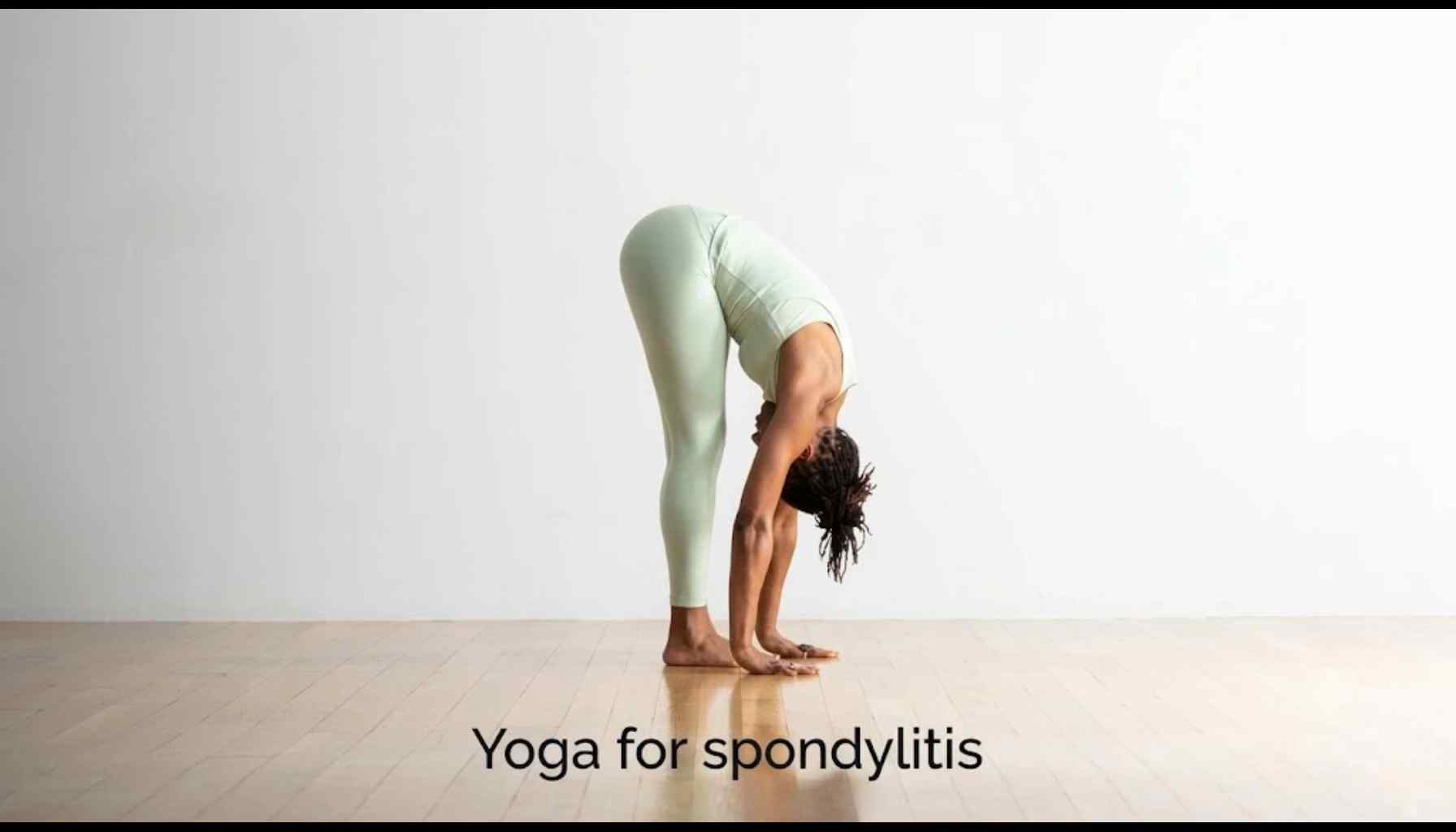
Yoga for Spondylitis: Relieve Spine Pain
Practising targeted yoga for spondylitis offers a gentle, non-invasive method to maintain spinal flexibility, reduce inflammation, and strengthen deep paraspinal muscles that support the vertebral column.
Spondylitis involves age-related wear, tear, or inflammation affecting the vertebral discs and joints of the spine. Whether localized in the neck (cervical) or the lower back (lumbar), this condition can cause severe stiffness, nerve compression, and localized back pain.
Key Takeaways
- Paraspinal Muscle Activation: Builds muscular support around the spine, distributing joint load evenly and alleviating spinal compression.
- Enhanced Spinal Range of Motion: Prevents stiffness and fusion by encouraging gentle, controlled movement through the vertebrae.
- Decompression & Pain Relief: Relieves pressure on spinal nerve roots and improves disc nutrition through gentle extension and rest.
Therapeutic Yoga for Spondylitis
Integrating low-impact extensions, mobility flows, and restorative postures stabilizes the back without forcing the spine beyond its comfortable, pain-free range. Regular yoga for spondylitis provides relief from shoulder and neck pain.
|
|
|
|
|
|
|
|
|
|
|
|
|
|
|
|
|
|
|
|
|
|
|
|
|
|
|
|
|
|
|
|
|
|
|
Effective Yoga Poses for Spondylitis
The steps and benefits of the key asanas helpful for spondylitis are as follows:
1. Salabhasana (Locust Pose)
- How to Do It: Lie face down on your mat with arms along your sides and palms facing up. Inhale deeply to lift your chest, arms, and legs slightly off the floor simultaneously, engaging your lower back and glutes without straining. Hold for 15–20 seconds, then slowly release.
- Benefit: Provides comprehensive paraspinal strengthening in an extension position that protects spondylitic joints and builds vital endurance along the back body.
2. Marjaryasana-Bitilasana (Cat-Cow Pose)
- How to Do It: Begin in a tabletop position on all fours with wrists under shoulders and knees under hips. Inhale to drop your belly and lift your collarbones (Cow Pose). Exhale to round your spine smoothly toward the ceiling, tucking your chin toward your chest (Cat Pose). Flow for 10–15 breath-synchronized rounds.
- Benefit: Provides segmental spinal mobilization from the neck to the lower back, increasing joint lubrication and circulation to compressed intervertebral discs.
3. Bhujangasana (Modified / Sphinx Pose Variant)
- How to Do It: Lie prone on the floor, placing forearms on the mat with elbows directly beneath shoulders. Press down gently through your palms and forearms to lift your upper chest, keeping your neck long and aligned. Hold for 20 seconds while taking smooth, steady breaths.
- Benefit: Offers gentle thoracic extension without over-compressing the lumbar vertebrae, counteracting rounded shoulder alignment and decompressing the spine.
4. Uttanasana (Supported Standing Forward Fold)
- How to Do It: Stand with feet hip-width apart, hinge at your hips to fold forward, micro-bend your knees, and let your head and arms hang heavy toward the floor (or rest your forehead on a block).
- Benefit: Releases tight trapezius and neck muscles that restrict healthy blood flow to the occipital region of the skull.
5. Urdhva Mukha Pasasana (Thread the Needle Pose)
- How to Do It: Start on all fours in a tabletop position. Slide your right arm under your body along the floor with palm facing up, lowering your right shoulder and ear down to the mat. Keep hips raised over knees and hold for 45–60 seconds before switching sides.
- Benefit: Maintains healthy thoracic rotation, releases inter-scapular tightness, and reduces upper back stiffness caused by posture strain.
6. Balasana (Child’s Pose)
- How to Do It: Kneel on your mat, sit your hips back toward your heels, and lower your torso forward. Rest your arms extended out in front or alongside your feet and rest your forehead on the floor or a yoga block. Hold restfully for 1–3 minutes.
- Benefit: Decompresses the lumbar region by eliminating axial loading, giving paraspinal muscles a chance to relax fully from compressive stresses.
Health Conditions Managed by Yoga for Spondylitis
Some of the diseases that can be treated by regular sessions of yoga are:
- Cervical & Lumbar Spondylosis: Reduces localized spinal stiffness and strengthens surrounding support structures to slow progressive degeneration.
- Paravertebral Muscle Spasms: Releases tight muscular guarding that develops as a protective reflex around inflamed joints.
- Nerve Root Impingement: Relieves shooting radiating pain or tingling in arms or legs by expanding intervertebral space.
- Postural Kyphosis: Opens tight anterior chest muscles and tones back extensors to prevent forward slouching habits.
Key Precautions
Follow these measures while practising yoga for spondylitis:
- Avoid Extreme Forward Bends: Steer clear of forceful forward folds like intense Uttanasana, which can increase compressive load on damaged spinal discs.
- Never Force Movements Past Pain: Always move within a painless range of motion; sharp pain indicates joint compression or nerve irritation.
- Keep Cervical Extensions Moderate: Avoid dropping the head backward aggressively in backbends if you suffer from cervical spondylitis.
- Use Props for Support: Utilize yoga blocks, bolsters, or folded blankets under the knees or chest whenever extra spinal support is needed.
The Bottom Line
Yoga for spondylitis offers a proven, gentle approach to relieving stiffness and maintaining functional mobility. Incorporating strengthening postures like Salabhasana alongside decompression poses like Balasana stabilizes the spine and protects inflamed joints. Respecting your body's daily boundaries and avoiding aggressive movements prevents flare-ups. With patient and consistent daily practice, you can successfully manage discomfort, protect spinal health, and regain long-term confidence in your movement.
Frequently Asked Questions
1. How to reduce spondylitis pain naturally?
You can reduce spondylitis pain naturally by practicing targeted gentle yoga, maintaining an ergonomic posture throughout the day, and applying warm compresses to relax stiff paraspinal muscles. Incorporating anti-inflammatory dietary choices and staying consistent with light daily stretches also helps keep the spine supple and comfortable.
2. What is the best exercise for spondylosis?
Gentle low-impact exercises that strengthen the core and back extensors, such as Salabhasana (Locust Pose), Sphinx Pose, and swimming, are among the most effective for spondylosis. These movements build essential paraspinal muscle support while decompressing worn intervertebral discs without joint impact.
3. Which yoga is not good for cervical spondylosis?
Advanced inversions like Sarvangasana (Shoulderstand) and Sirsasana (Headstand) should be strictly avoided as they place dangerous weight directly on the cervical spine. Deep forward folds and aggressive neck rotations that cause sharp pinching or strain must also be excluded.
4. What should be avoided in spondylitis?
Avoid prolonged periods of static sitting, heavy weight lifting, high-impact activities, and sudden jerky movements of the neck or back if you have spondylitis. Additionally, refrain from practicing deep, unassisted forward bending that compresses the anterior discs of the spine.
Disclaimer: The content on LifePositive.com, including articles/blogs on yoga, acupuncture, naturopathy, and other alternative healing modalities for holistic wellness, is for informational and educational purposes only. It is not a substitute for professional medical advice, diagnosis, or treatment. Always consult a qualified healthcare provider before starting any new health protocol or making changes to an existing treatment plan.
Also Read: Dandasana
By Umesh Kumar Khiri



Discussion (0)
No comments yet. Be the first to comment!
Leave a Comment
You need to login to post a comment.