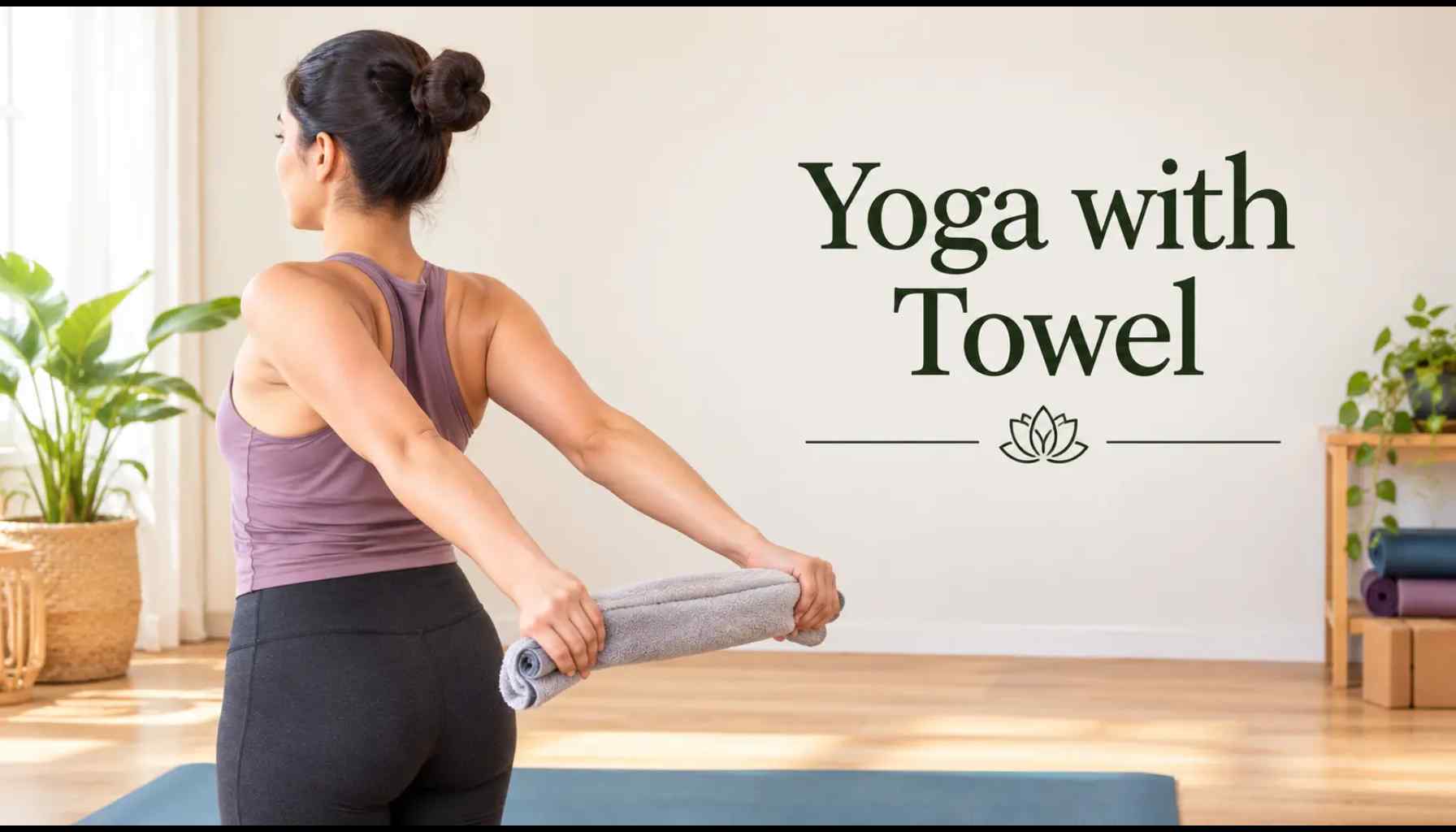
Yoga With Towel: Poses and Benefits
Yoga with towel is a simple way to make familiar stretches more accessible while adding support, reach, stability, or gentle resistance. A regular towel can provide cushioning under sensitive areas and help improve control during selected movements.
Unlike specialised yoga equipment, a towel is commonly available at home. With proper positioning, it can complement a beginner-friendly routine.
Key Takeaways
- Use a towel to improve reach, support, and flexibility safely.
- Practise six beginner-friendly towel-assisted yoga poses regularly.
- Avoid excessive pulling and always prioritise comfortable alignment during practice sessions.
What Is Yoga With Towel?
Yoga with towel involves using a towel as a practical prop during yoga postures and stretches. A long, sturdy towel can substitute for a yoga strap, while a folded towel can provide light cushioning or support.
The towel should never be used to force your body deeper into a posture. Instead, hold it comfortably and allow your flexibility to develop gradually.
Benefits of Yoga With Towel
Using a towel during yoga can make certain poses more comfortable and manageable.
- Improves reach: A towel can bridge the distance between your hands and feet during stretches.
- Provides support: Folding a towel can create gentle cushioning beneath knees, hips, or other sensitive areas.
- Encourages alignment: Holding a towel can help you maintain a more controlled position.
- Supports beginners: People with limited flexibility can practise variations without forcing their range of motion.
- Adds resistance: A firmly held towel can create mild muscular engagement during selected movements.
How to Use a Towel Safely for Yoga
Choose a clean, strong towel that does not easily stretch or tear. A bath towel works well for many exercises, while a longer towel can provide greater reach.
Keep the towel securely wrapped around your hands or feet when using it as an extension. Avoid pulling aggressively.
Your breathing should remain smooth throughout the practice. If you experience sharp pain, numbness, dizziness, or unusual discomfort, release the posture and rest.
Yoga With Towel - Poses with Steps
1. Seated Forward Bend (Paschimottanasana)
- Seat yourself with your legs stretched out, your spine straight, and feet together.
- Use the towel and loop it around your feet.
- Take a deep breath in, then bend forward using your spine and without too much curve in the body.
2. Cow Face Pose (Gomukhasana)
- Sit in a comfortable position and raise one of your arms while bending your other arm behind the back.
- Take hold of the towel in your two hands, making sure it is long enough.
- Try to bring your hands closer without pushing your shoulders or elbows.
3. Reclining Hand-To-Big-Toe Pose (Supta Padangusthasana)
- Lie in a comfortable position on your back and raise one of your legs.
- Use the towel to loop it around the raised leg and hold both ends of the towel firmly.
- Gently guide the leg toward you while keeping your opposite leg relaxed and grounded.
4. Bound Angle Pose (Baddha Konasana)
- Assume an erect posture, place your feet together, and let your knees bend outward.
- If you need extra lift, then use a rolled towel under your hips.
- Holding your feet lightly, keep your spine erect and breathe slowly.
5. Standing Towel Shoulder Stretch
- Stand straight and hold the towel with both hands behind your body.
- Keep your hands wider than shoulder-width apart and gently draw them away from your body.
- Slowly raise the towel behind you only as far as comfortable, keeping your chest open and avoiding rounding your shoulders or lower back.
- Lower the towel gently and repeat without forcing the movement.
6. Standing Side Stretch (Parsva Tadasana)
- Stand with your feet comfortably apart and hold the towel above your head.
- Keep both arms extended and slowly lean your torso toward one side.
- Return through centre, then repeat on the opposite side while breathing steadily.
Yoga With Towel vs Yoga Strap
A yoga strap is specifically designed for stretching and offers a secure grip. On the other hand, a towel is more versatile and convenient because it is already available in most homes.
Best Time to Practise Yoga With Towel
You can practise towel-assisted yoga in the morning, during an afternoon break, or in the evening. Follow a gentle routine when your body feels stiff after prolonged sitting.
How Often Should You Practise?
Those new to the routine may begin with 10-20 minutes three to five times per week, emphasizing easy movement without attempting to stretch quickly.
When the body gets used to the routine, you may slowly increase the amount of time for stretching exercises.
Common Mistakes to Avoid
- Pulling the towel aggressively during stretches.
- Using a slippery or damaged towel.
- Locking joints while creating tension.
- Holding your breath during challenging positions.
- Trying to match another person's flexibility.
- Ignoring pain or persistent discomfort.
Concluding Remarks
Yoga with towel offers a practical approach to modifying familiar yoga movements without investing in specialised equipment. Whether you need extra reach, cushioning, shoulder support, or gentle resistance, a towel can make selected practices more approachable.
With consistent practice, towel-assisted yoga can become a part of your simple home routine.
Frequently Asked Questions
1. Can I use a towel instead of a yoga strap?
Yes, a strong towel can substitute for a yoga strap for many gentle stretches, especially when you need additional reach.
2. Is yoga with a towel good for beginners?
Yes, beginners can use a towel to make selected poses more accessible while developing flexibility, balance, and body awareness.
3. Can I do yoga with a bath towel?
Yes, a clean bath towel can work for many exercises, although its thickness and length may affect grip and positioning.
4. How do you use a towel for stretching?
Wrap or loop the towel around the relevant body part, hold both ends comfortably, and use gentle tension without forcing the stretch. Also, follow safe stretching principles while practising.
Also Read: Seated Yoga Poses


Discussion (0)
No comments yet. Be the first to comment!
Leave a Comment
You need to login to post a comment.